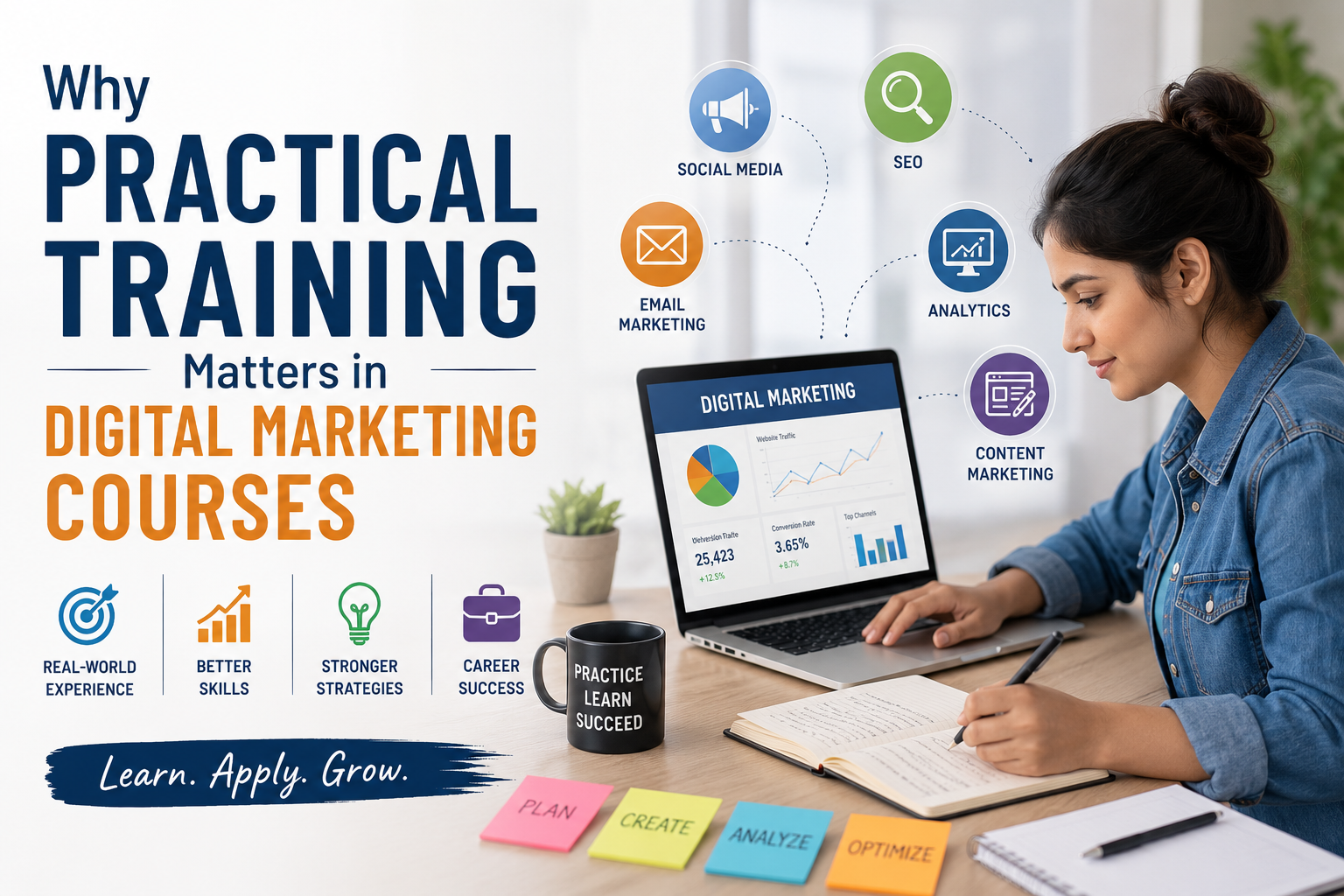
Introduction: Why Practical Learning Matters in Digital Marketing
The demand for digital marketing skills is growing faster than ever.
From startups and local businesses to global corporations, companies now depend heavily on digital platforms to attract customers, build brand awareness, and increase revenue.
As businesses continue shifting online, the need for skilled marketers has increased significantly. This growing demand is one reason more students and professionals are enrolling in Digital Marketing Courses.
However, there is one major challenge many learners face:
Not all digital marketing courses prepare students for real jobs.
Many programs focus heavily on theory but offer limited real-world application.
The result?
Students complete certifications but struggle to:
- Run real campaigns
- Generate leads
- Use marketing tools
- Perform in job interviews
This is where practical training becomes extremely important.
In today’s competitive market, employers don’t just want certificates.
They want professionals who can:
- Execute campaigns
- Analyze performance
- Solve marketing problems
- Deliver measurable results
Whether you are:
- A student exploring career options
- A working professional changing industries
- Someone interested in online business growth
choosing digital marketing courses with practical training can significantly improve your career opportunities.
In this guide, we’ll explain why practical learning matters, the difference between theory and hands-on training, and how to choose the right course for long-term success.
Read More : Digital Marketing Salary in India: Freshers vs Experienced
What Are Digital Marketing Courses?
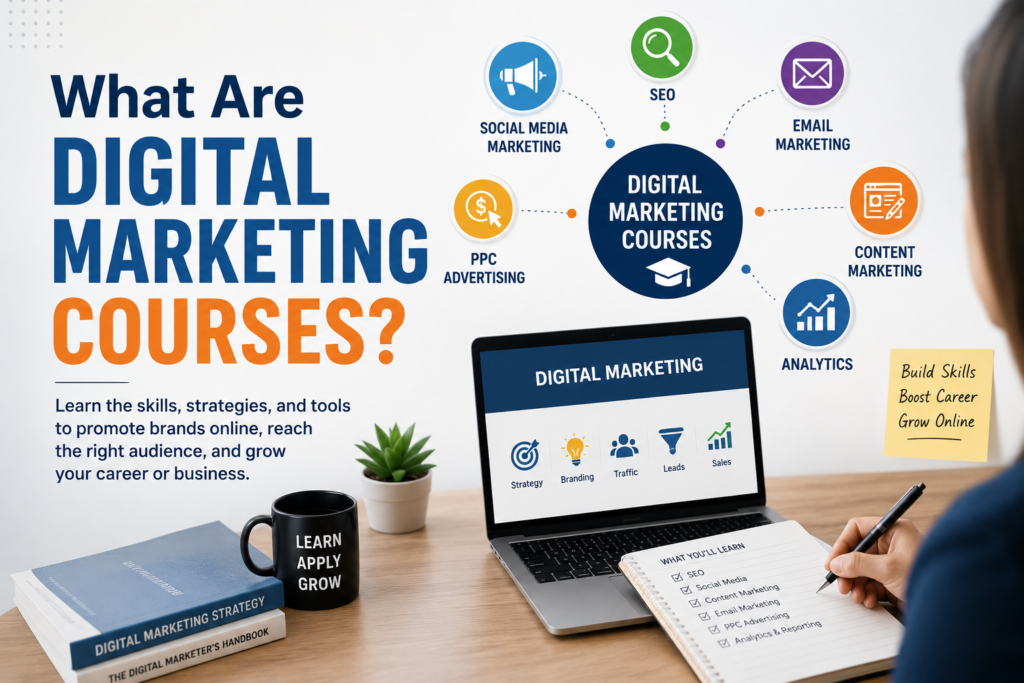
Before discussing practical training, let’s understand what digital marketing courses actually involve.
Digital marketing courses teach learners how businesses promote products and services online.
Modern digital marketing programs often include:
- Search Engine Optimization (SEO)
- Social Media Marketing
- Google Ads (PPC)
- Content Marketing
- Email Marketing
- Analytics & Reporting
- Website Optimization
The goal is simple:
Help businesses grow online.
Because digital marketing constantly evolves, companies prefer candidates who understand modern tools and platforms.
This is why the best digital marketing courses focus not only on concepts but also on real-world implementation.
Why Practical Training Matters in Digital Marketing Courses
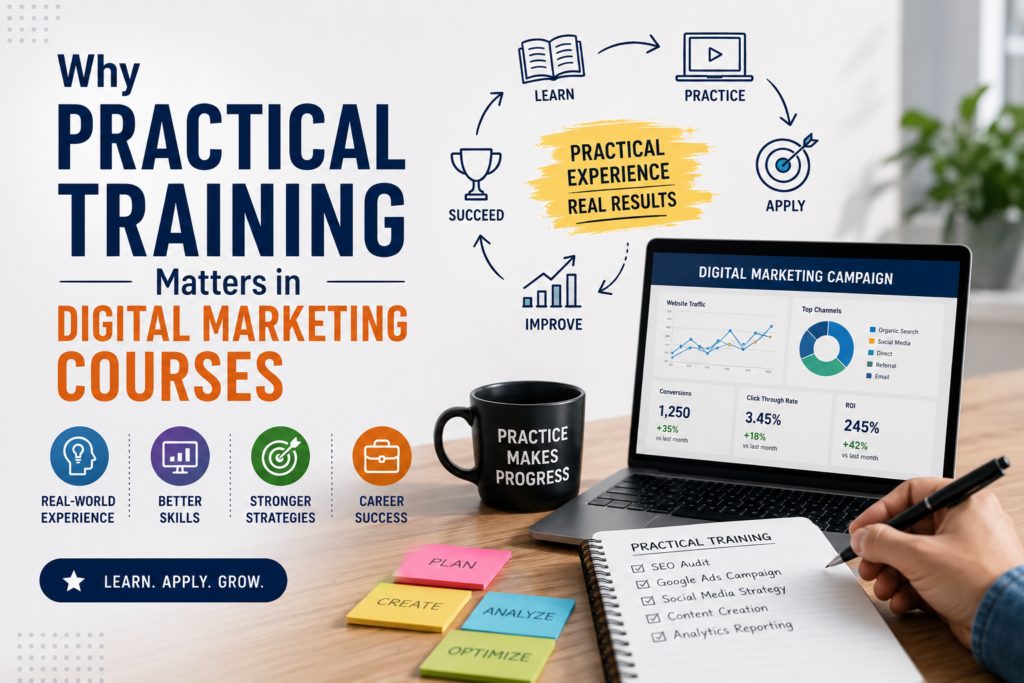
Many beginners assume theory alone is enough.
Unfortunately:
Digital marketing doesn’t work that way.
You cannot become job-ready simply by reading marketing concepts.
Imagine trying to learn driving without touching a car.
That’s exactly what theoretical digital marketing learning feels like.
Practical training helps students:
Apply Real Concepts
Students learn how strategies actually work in real campaigns.
Build Confidence
Hands-on execution improves problem-solving skills.
Understand Marketing Tools
Real campaigns teach students how to use:
- Google Ads
- Analytics platforms
- SEO tools
- Social media dashboards
Become Job-Ready Faster
Employers value candidates who already understand campaign execution.
This explains why hands on digital marketing training is becoming increasingly popular.
Read More : Top 10 Reasons Students Choose Digital Marketing Over MBA
The Problem with Theory-Only Digital Marketing Courses
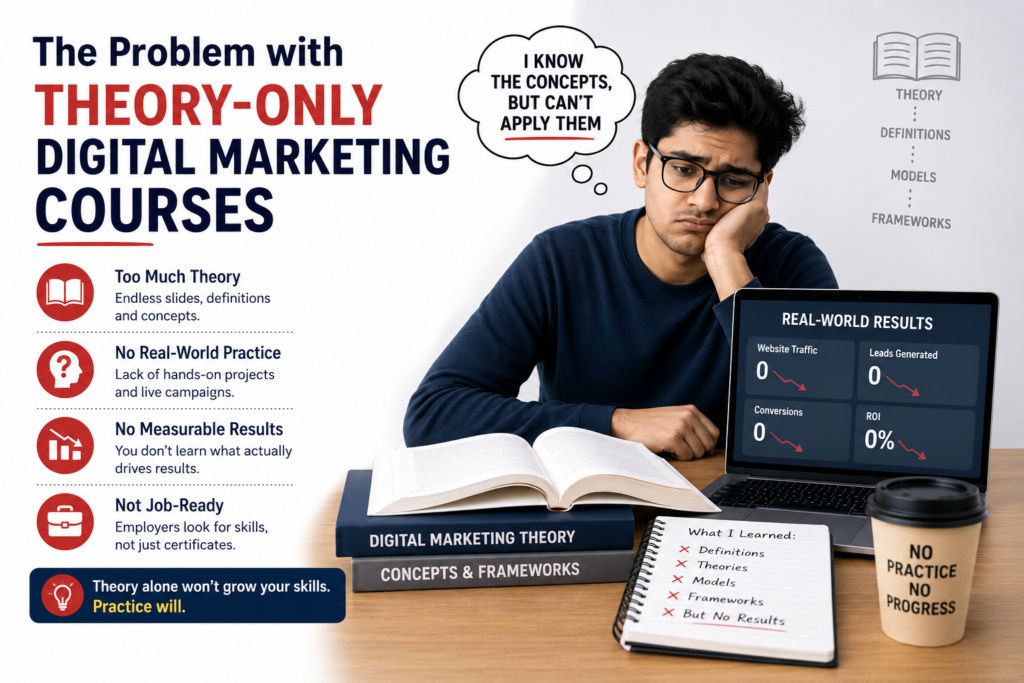
One of the biggest mistakes learners make is choosing programs focused entirely on classroom learning.
Why Theory Alone Fails
Digital marketing changes rapidly.
Algorithms update.
Platforms evolve.
Consumer behavior shifts constantly.
Without practical exposure, students may understand definitions but struggle to implement strategies.
Common Challenges Students Face
After completing theory-only programs, learners often struggle with:
- Running ads
- Ranking websites
- Campaign tracking
- Keyword research
- Performance optimization
This often affects confidence during job interviews.
Companies want professionals who can:
Actually do the work.
Not just explain the theory.
Benefits of Digital Marketing Courses with Practical Training
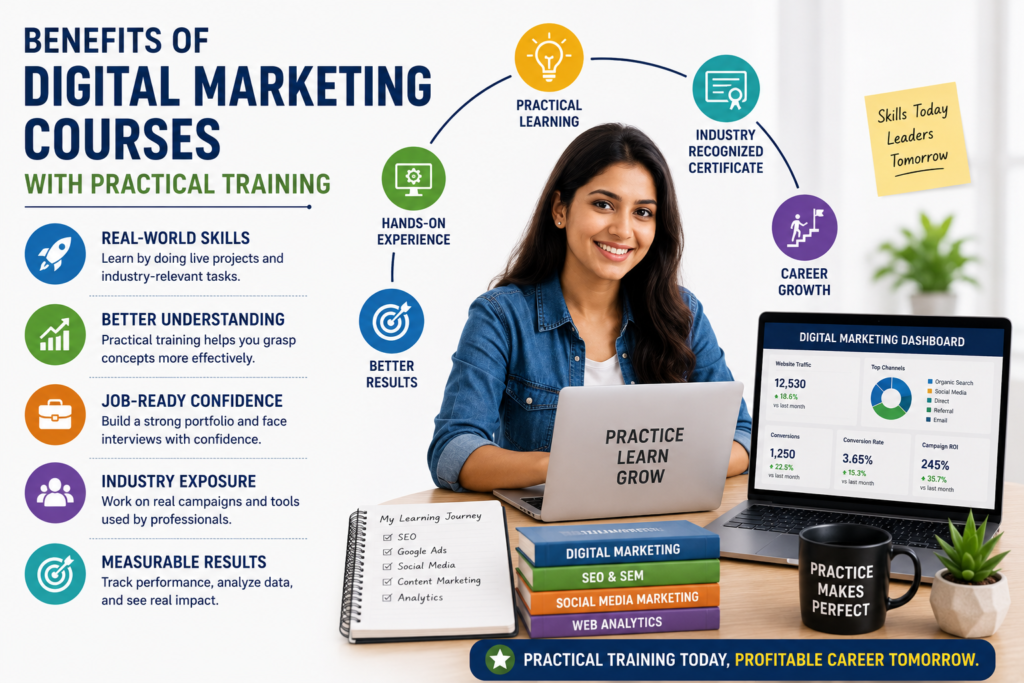
Choosing digital marketing courses with practical training offers several advantages.
Let’s explore them.
1. Real-Time Industry Experience
One of the biggest benefits of practical learning is:
Real-world exposure.
Instead of simply reading about campaigns, students actively participate in marketing tasks.
Examples include:
- SEO optimization
- Ad creation
- Audience targeting
- Content strategy
Some institutes even allow learners to work on live business projects.
This practical exposure helps students understand how digital marketing actually works.
2. Better Job Readiness
Many employers prefer hiring candidates who already understand execution.
This is why job oriented digital marketing course programs are becoming more popular.
Practical learning helps students:
- Build confidence
- Understand industry workflows
- Solve marketing challenges
When students practice before entering the workforce, they often perform better in interviews.
3. Hands-On Learning with Real Marketing Tools
Modern marketing depends heavily on technology.
Students in practical digital marketing courses often learn tools like:
Google Ads
Used for paid advertising campaigns.
Google Analytics
Helps marketers track website performance.
SEO Tools
Used for:
- Keyword research
- Website audits
- Competitor analysis
Social Media Platforms
Students learn campaign planning across:
Hands-on tool usage improves confidence dramatically.
4. Stronger Skill Development
Practical training improves:
SEO Skills
Students learn:
- Keyword research
- Content optimization
- Website ranking strategies
Paid Advertising Skills
Campaign execution matters more than theory.
Social Media Marketing
Students understand:
- Audience targeting
- Engagement strategies
Analytics
Learning performance tracking helps marketers improve results.
This explains why digital marketing skills training has become essential.
5. Better Placement Opportunities
One major reason learners prefer a digital marketing course with placement is career support.
Practical projects help students build:
- Portfolios
- Campaign experience
- Resume strength
Employers often prefer candidates who can demonstrate practical work instead of only certifications.
For this reason, many students compare institutes based on:
- Internship support
- Placement assistance
- Live projects
Practical vs Theoretical Digital Marketing Courses: What’s the Difference?
Before enrolling in a program, students should understand one important difference:
Theory-based learning vs practical training.
Both have value.
However, one prepares students for real jobs much faster.
Theoretical Digital Marketing Courses
Theory-focused programs usually cover:
- Marketing concepts
- Definitions
- Basic strategies
- Case studies
While this knowledge matters, it often lacks execution.
Students may understand:
What SEO is
but struggle to actually rank a website.
They may know:
How Google Ads work
but fail to launch campaigns independently.
Limitations of Theory-Based Learning
Students often face:
- Low confidence
- Limited hands-on experience
- Weak portfolios
- Difficulty in interviews
Practical Digital Marketing Courses
Practical learning focuses on:
Real implementation.
Instead of simply studying strategies, students practice them.
Examples include:
- Running live campaigns
- Website optimization
- Creating ad copies
- Keyword research
- Audience targeting
This is why best digital marketing courses with practical training often create stronger career outcomes.
Benefits of Practical Learning
Students develop:
- Real experience
- Problem-solving ability
- Confidence
- Job readiness
In today’s competitive market, employers increasingly prioritize practical skills over theory alone.
Read More : Digital Marketing Institute Near Me – What to Look For
Key Features of the Best Digital Marketing Courses with Practical Training
Not all programs offer quality training.
Before enrolling, students should evaluate certain features.
1. Live Projects
One major feature of strong digital marketing courses is:
Project-based learning.
Live projects allow students to apply strategies in realistic environments.
Students may work on:
- SEO campaigns
- Social media strategies
- Paid advertising
Why does this matter?
Because practical work creates confidence.
Instead of saying:
“I learned digital marketing.”
Students can say:
“I’ve managed real campaigns.”
That makes a major difference during interviews.
2. Internship Opportunities
Many students overlook internships.
But digital marketing internship training often improves employability.
Internships help students:
- Understand agency workflows
- Gain industry exposure
- Build portfolios
Even short-term internship experience can strengthen resumes significantly.
3. Industry Expert Mentorship
Learning from experienced professionals matters.
Good mentors help students understand:
- Industry expectations
- Marketing trends
- Campaign optimization
Experienced guidance often helps learners avoid beginner mistakes.
4. Updated Curriculum
Digital marketing evolves constantly.
A course teaching outdated techniques becomes less valuable.
The advanced digital marketing courses typically include:
- AI tools
- Marketing automation
- Advanced analytics
- Paid media optimization
Modern learners should prioritize updated curriculum.
Practical Skills Students Should Learn in Digital Marketing Courses
Practical skills directly affect career opportunities.
Here are the most important ones.
1. Search Engine Optimization (SEO)
SEO remains one of the strongest long-term digital marketing skills.
Students should learn:
- Keyword research
- On-page optimization
- Technical SEO
- Content optimization
A strong SEO and digital marketing course should include practical ranking exercises.
2. Google Ads & Paid Advertising
Paid advertising remains one of the fastest-growing marketing sectors.
Students should learn:
- Campaign creation
- Ad targeting
- Budget management
- Performance optimization
Employers value candidates who can generate measurable ROI.
3. Social Media Marketing
Modern businesses depend heavily on social media.
Students should practice:
- Content planning
- Engagement strategies
- Paid social campaigns
Hands-on implementation improves job readiness.
4. Analytics & Reporting
One major skill employers seek is:
Data interpretation.
Students should understand:
- Website traffic analysis
- Conversion tracking
- Campaign performance
Without analytics knowledge, marketers struggle to improve results.
5. AI Tools in Marketing
AI is transforming digital marketing.
Modern professionals increasingly use tools for:
- Content generation
- Research
- Workflow automation
Students who understand AI gain stronger competitive advantages.
Read More : Top 10 AI Tools Every Digital Marketing Student Should Learn
How to Choose the Best Digital Marketing Institute
Choosing the right training matters.
Not every institute provides equal value.
Here’s what students should prioritize.
Look for Practical Training
The most important factor is:
Hands-on learning.
Choose digital marketing courses with practical training, not theory-only classrooms.
Placement Assistance
Many learners prefer a digital marketing course with placement because career support improves confidence.
Look for institutes offering:
- Resume building
- Interview preparation
- Internship opportunities
Updated Curriculum
Avoid outdated programs.
The digital world changes rapidly.
A strong course should include:
- SEO
- Paid ads
- Social media
- Analytics
- AI marketing tools
Student Reviews & Results
Always research:
- Reviews
- Success stories
- Alumni feedback
Real student outcomes reveal course quality.
Best Digital Marketing Institute Near Me: What to Look For
Many learners search:
“Digital marketing institute near me”
But proximity alone should not determine quality.
Ask important questions like:
- Does the institute provide practical training?
- Are live projects included?
- Is placement support available?
The best digital marketing institute focuses on real-world learning—not just classroom lectures.
Online Digital Marketing Courses vs Offline Training
One of the most common questions students ask before enrolling is:
Should I choose online digital marketing courses or offline practical training?
The answer depends on your goals, schedule, and learning style.
Both options offer benefits.
However, practical implementation remains the key factor.
Online Digital Marketing Courses
Online learning has become increasingly popular because of flexibility.
Students can learn from anywhere while managing:
- College
- Jobs
- Business responsibilities
Benefits of Online Digital Marketing Courses
1. Flexible Learning
Students can learn at their own pace.
This works especially well for:
- Working professionals
- Business owners
- Busy students
2. Affordable Options
Many online programs cost less than classroom training.
3. Access to Global Trainers
Learners may access instructors from different countries.
Challenges of Online Learning
Despite flexibility, online learning can sometimes create challenges.
Students may experience:
- Less accountability
- Limited interaction
- Reduced practical guidance
Without proper mentorship, learners may struggle with implementation.
Offline Practical Training
Offline learning offers stronger interaction and accountability.
Students often benefit from:
Face-to-Face Mentorship
Direct guidance helps students solve problems quickly.
Better Practical Exposure
Many offline institutes focus heavily on:
- Live projects
- Group learning
- Campaign practice
Classroom Collaboration
Students can learn through:
- Team projects
- Discussions
- Real-time feedback
For beginners, classroom learning often improves confidence.
Which Option Is Better?
The best option depends on personal goals.
Choose Online Learning If:
You need:
- Flexibility
- Self-paced learning
- Budget-friendly options
Choose Offline Practical Training If:
You want:
- Hands-on learning
- Mentorship
- Placement support
Regardless of format, practical implementation should always remain the priority.
The best Digital Marketing Courses combine:
Theory + Practical Execution + Real Projects
Why Employers Prefer Practical Digital Marketing Professionals
Many learners assume certificates alone guarantee jobs.
Unfortunately:
That’s not how hiring works anymore.
Companies increasingly prefer candidates who can:
Actually perform marketing tasks.
Why Practical Skills Matter to Employers
Businesses want professionals who can:
- Generate leads
- Run campaigns
- Analyze performance
- Improve ROI
Employers care about:
Results.
Not just certificates.
Portfolio Matters More Than Theory
Candidates with portfolios often stand out during hiring.
Examples include:
- SEO case studies
- Social media campaigns
- Ad performance reports
Real project experience proves capability.
Practical Learners Adapt Faster
Marketing platforms constantly change.
Professionals with practical training often adapt faster because they already understand:
- Problem-solving
- Campaign testing
- Optimization
This makes them more valuable.
Common Mistakes Students Make While Choosing Digital Marketing Courses
Choosing the wrong course can delay career growth.
Here are common mistakes to avoid.
1. Choosing Based Only on Low Fees
Cheap courses may seem attractive.
But low price does not always mean better value.
Students should evaluate:
- Practical training
- Curriculum quality
- Placement support
instead of focusing only on cost.
2. Ignoring Practical Exposure
One of the biggest mistakes students make is enrolling in theory-only programs.
Without execution experience, learners often struggle during interviews.
Always prioritize:
hands on digital marketing training
3. Not Checking Placement Support
Many students overlook placement assistance.
However, digital marketing course with placement options often improve confidence and employability.
Look for institutes offering:
- Resume building
- Mock interviews
- Internship opportunities
4. Choosing an Outdated Curriculum
Digital marketing changes rapidly.
A strong program should include:
- SEO
- Paid ads
- Analytics
- Automation
- AI tools
Outdated learning may reduce career opportunities.
Why Practical-Focused Institutes Matter
Many learners compare training institutes based on:
- Live projects
- Internship opportunities
- Career guidance
Practical-focused institutes often help students:
- Build confidence
- Gain project experience
- Understand real campaigns
For beginners, hands-on learning frequently improves job readiness and career outcomes.
Future of Practical Digital Marketing Training in 2026
Digital marketing is evolving quickly.
The future belongs to professionals with practical skills.
Growing Demand for Digital Marketers
Businesses increasingly depend on:
- Online visibility
- Paid advertising
- SEO
- Automation
This demand continues creating strong career opportunities.
AI Is Changing Marketing
AI is reshaping how marketers work.
Professionals now use AI tools for:
- Content creation
- Customer analysis
- Marketing automation
This means future marketers must combine:
Creativity + Technical Skills + Practical Experience
Practical Skills Will Matter More Than Degrees
Employers increasingly prioritize:
Skills over qualifications
A learner with real project experience often outperforms someone with only certifications.
This makes professional digital marketing training increasingly valuable.
Read More : Why Digital Marketing is the Best Career Option in 2026
Conclusion
Digital marketing continues to be one of the fastest-growing career opportunities worldwide.
However, success depends on more than theory.
The reality is simple:
Practical training matters.
The best Digital Marketing Courses help students:
- Learn real-world skills
- Build confidence
- Gain practical exposure
- Become job-ready
Whether you choose:
- Online digital marketing courses
- Offline classroom training
- Certification programs
make sure practical implementation remains part of the learning process.
In today’s competitive market, employers increasingly value:
Skills + Execution + Results
not just certificates.
Before enrolling in any course, ask yourself:
Will this course prepare me for a real digital marketing job—or just teach theory?
That single question can help you choose the right learning path and build a stronger digital marketing career in 2026 and beyond.
Read More :10 Reasons to Join a Digital Marketing Course After 12th