


How to Create a Content Plan That Actually Works in 2026
In a digital world overflowing with content, posting without a strategy is one of the biggest mistakes creators and businesses make. Many people publish content randomly—based on trends, mood, or urgency—but this approach rarely delivers consistent results.
Without structure, content becomes scattered, engagement drops, and growth slows. That’s why learning how to create a content plan is essential for anyone who wants to build authority, save time, and scale their content effectively.
Random content fails because it lacks purpose. When there’s no clear goal, target audience, or defined messaging, content feels disconnected and forgettable.
You might post frequently, but if your content doesn’t align with your brand’s objectives or your audience’s interests, it won’t generate meaningful traffic, leads, or conversions.
Understanding how to create a content plan helps you shift from guessing what to post to executing a structured, goal-driven strategy.
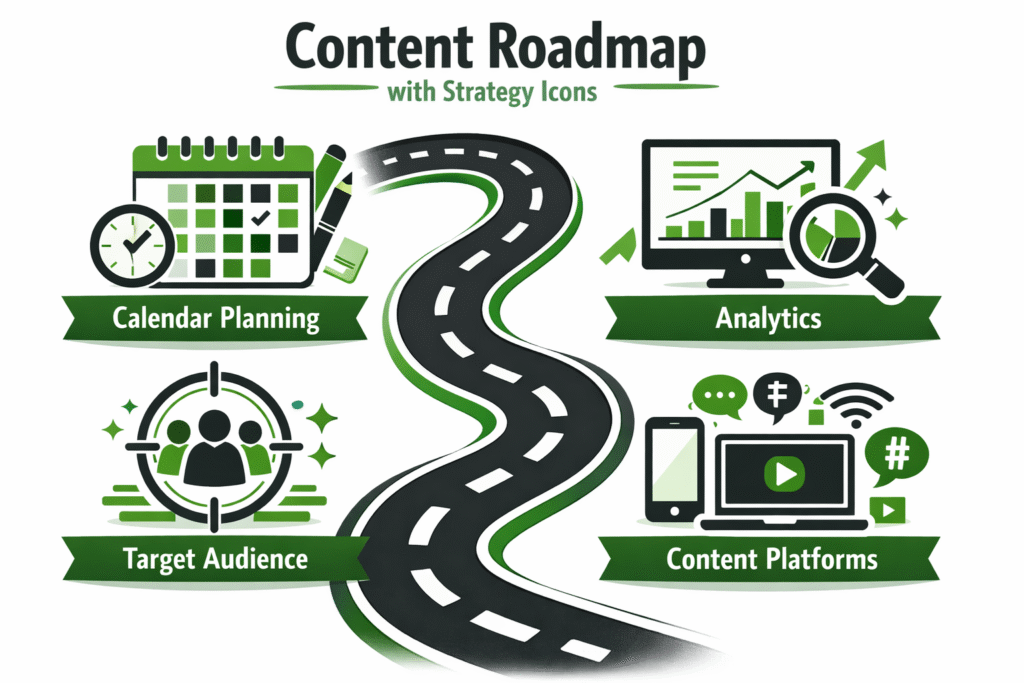
A strong content plan acts as a roadmap for your entire content ecosystem. Instead of constantly struggling for ideas, you can map out topics in advance, maintain consistency, and ensure every piece of content serves a strategic purpose.
When you know how to create a content plan, you can batch content, repurpose high-performing pieces across platforms, and maintain a steady posting schedule without burnout. This not only saves time but also improves productivity and creative focus.
Beyond efficiency, mastering how to create a content plan directly impacts long-term growth. A well-structured plan helps you build brand credibility, strengthen messaging consistency, and attract the right audience with relevant, high-value content.
Whether your goal is to grow website traffic, build a personal brand, generate leads, or increase sales, a content plan ensures your efforts contribute to measurable outcomes rather than short-term visibility.
This guide is designed for marketers, content creators, business owners, startups, and brands who want to stop posting randomly and start publishing with intention. If you’ve been wondering how to create a content plan that drives engagement, builds trust, and supports sustainable growth, this step-by-step resource will give you clarity, structure, and actionable direction.
By the end, you’ll understand how to create a content plan that is scalable, data-driven, and built to deliver real results over time.
What Does ‘How Do You Create a Content Plan’ Really Mean?
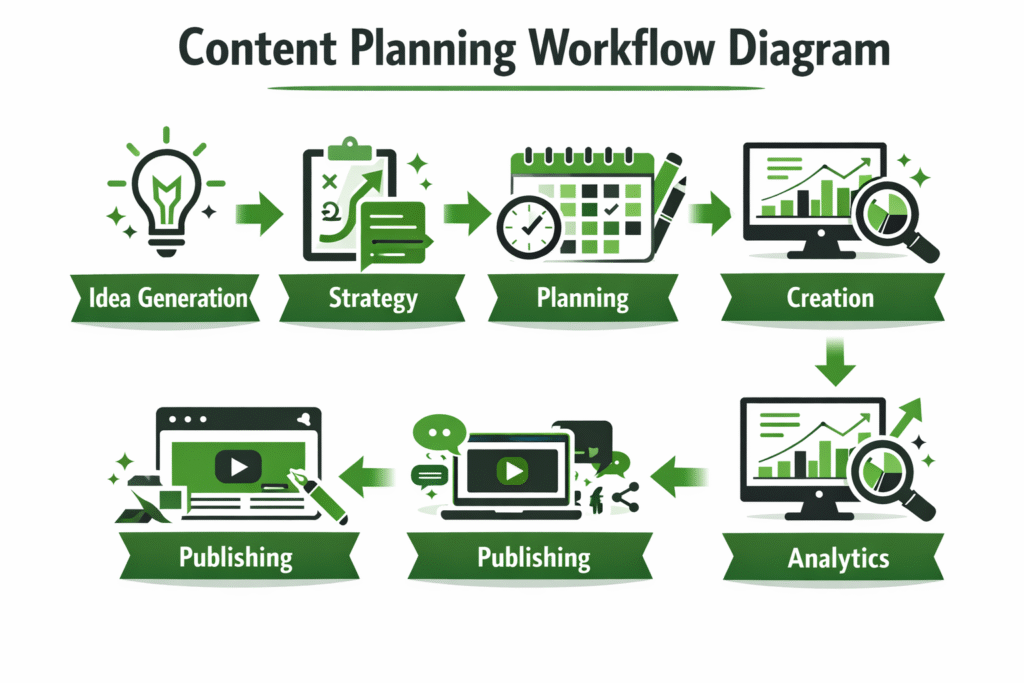
At its core, understanding how to create a content plan means knowing how to organize your content in a structured, goal-driven way instead of posting randomly. A content plan is a clear roadmap that outlines what content you will create, when you will publish it, where it will be shared, and why it matters to your audience and business goals.
In simple terms, a content plan helps you answer questions like:
What topics should we focus on? Who are we creating content for? How often should we post? And how does each piece of content support growth, engagement, or conversions? When you learn how to create a content plan, you move from reactive posting to intentional, strategic publishing.
A content plan is often confused with a content strategy, but they serve different purposes. A content strategy defines the big picture—your goals, audience, brand voice, and long-term vision. A content plan, on the other hand, focuses on execution—specific topics, formats, publishing schedules, and distribution channels.
Think of strategy as the why and what, and the plan as the how and when. Mastering how to create a content plan ensures your strategy actually turns into consistent, measurable action.
Structured planning is essential because it keeps brands consistent, organized, and scalable. Without a plan, brands often post inconsistently, repeat ideas, or miss opportunities to align content with campaigns and launches.
Knowing how to create a content plan helps businesses maintain a steady content flow, improve collaboration between teams, and make better use of time and resources. It also allows brands to track performance more effectively, identify what works, and optimize future content decisions.
A strong content plan also improves content quality. Instead of rushing to publish, creators can focus on research, storytelling, visuals, and value-driven messaging.
When you understand how to create a content plan, your content becomes more cohesive, purposeful, and aligned with audience needs—leading to higher engagement, stronger brand authority, and better long-term results.
Strategy vs Plan vs Calendar
| Aspect | Content Strategy | Content Plan | Content Calendar |
| Purpose | Big-picture direction | Execution roadmap | Scheduling & timelines |
| Focus | Goals, audience, positioning | Topics, formats, channels | Dates, deadlines, publishing times |
| Timeframe | Long-term | Short to mid-term | Daily to monthly |
| Example | Brand voice & growth goals | Blog topics & post ideas | Weekly posting schedule |
Secret #1: Set Clear Goals Before Planning Content
Before you start brainstorming topics or building a posting schedule, the first step in learning how to create a content plan is setting clear, measurable goals. Without defined objectives, your content can easily become inconsistent, unfocused, and ineffective. Goals give your content direction—they determine what you create, who you target, and how you measure success.
When you understand how to create a content plan, you realize that every piece of content should serve a purpose. Common content goals include increasing website traffic, building brand awareness, generating leads, driving sales, and establishing authority in a niche.
For example, a startup may focus on brand visibility, while an established business may prioritize lead generation or conversions. Defining your priority helps ensure your content supports the right outcome.
A powerful way to structure your objectives is by using SMART goals—Specific, Measurable, Achievable, Relevant, and Time-bound. Instead of saying, “We want more traffic,” a SMART goal would be: “Increase organic website traffic by 30% in the next six months through SEO-focused blog content.”
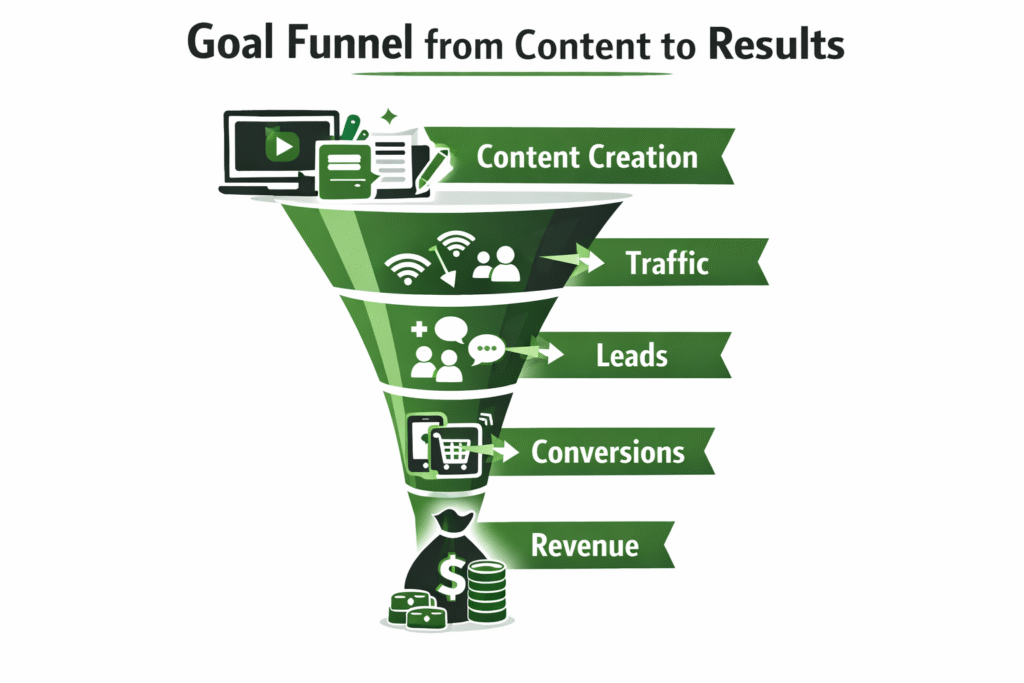
When you apply SMART principles while learning how to create a content plan, your strategy becomes more focused, trackable, and results-driven.
Once goals are defined, the next step is mapping them to the right content types. Different goals require different formats and distribution strategies. For example:
- If your goal is brand awareness, focus on social media posts, shareable visuals, short-form videos, and thought leadership content.
- If your goal is lead generation, prioritize gated content like eBooks, webinars, email newsletters, and case studies.
- If your goal is sales, create product-focused content, testimonials, landing pages, and conversion-optimized blogs.
Knowing how to create a content plan means aligning every content idea with a specific business goal. This prevents random posting and ensures your content pipeline is built for performance rather than guesswork.
Example: Brand Awareness vs Lead Generation Plan
A brand awareness plan might focus on high-reach content such as Instagram reels, viral blog posts, influencer collaborations, and storytelling campaigns. The goal is visibility, engagement, and audience growth.
A lead generation plan, on the other hand, would emphasize downloadable resources, email funnels, free trials, and targeted landing pages—content designed to capture user information and convert interest into prospects.
Both plans require different content types, posting frequencies, and success metrics. That’s why mastering how to create a content plan starts with understanding what result you want before deciding what content to create.
Ultimately, setting clear goals transforms content from a creative activity into a strategic growth engine. When you know how to create a content plan with defined objectives, your content becomes more focused, more effective, and more likely to drive meaningful business results.
Secret #2: Know Your Audience Deeply
One of the most overlooked steps in learning how to create a content plan is truly understanding your audience. You can have great ideas and consistent posting, but if your content doesn’t match your audience’s needs, intent, or pain points, it won’t perform.
Knowing who you’re creating content for is what transforms average content into high-impact, results-driven content.
When you master how to create a content plan, audience research becomes the foundation of every decision—topics, tone, formats, platforms, and even posting frequency. Instead of guessing what people want, you build content around real user behavior, preferences, and problems.
A powerful way to understand your audience is by creating audience personas. An audience persona is a semi-fictional profile that represents your ideal customer or reader. It typically includes demographic details (age, location, profession), goals, challenges, interests, and content preferences.
For example, a startup founder looking for growth strategies will consume different content than a college student learning digital marketing. Knowing how to create a content plan means tailoring content to each persona’s mindset and expectations.
Beyond demographics, focus on pain points, intent, and search behavior. Ask questions like:
- What problems is my audience trying to solve?
- What type of content do they search for on Google or social media?
- Are they looking to learn, compare, buy, or get inspired?
Understanding search intent—informational, navigational, or transactional—helps you align content with what users actually want. When you learn how to create a content plan, this insight allows you to create blogs, videos, social posts, or landing pages that meet users at the right stage of their journey.
To research your audience effectively, use tools that provide real data instead of assumptions. Popular tools include Google Analytics (to analyze user behavior), Google Search Console (to understand search queries), social media insights (to track engagement patterns), AnswerThePublic (to discover common questions), and keyword research tools like Ahrefs or SEMrush.
Surveys, customer interviews, and community forums can also reveal deep insights. Leveraging these tools makes creating a content plan more data-driven, targeted, and strategic.
When your content is built around audience insights, it becomes more relevant, engaging, and persuasive. You can match content formats to preferences—blogs for learners, short videos for social audiences, email newsletters for loyal subscribers, or case studies for decision-makers. Knowing how to create a content plan means delivering the right message, in the right format, to the right audience, at the right time.
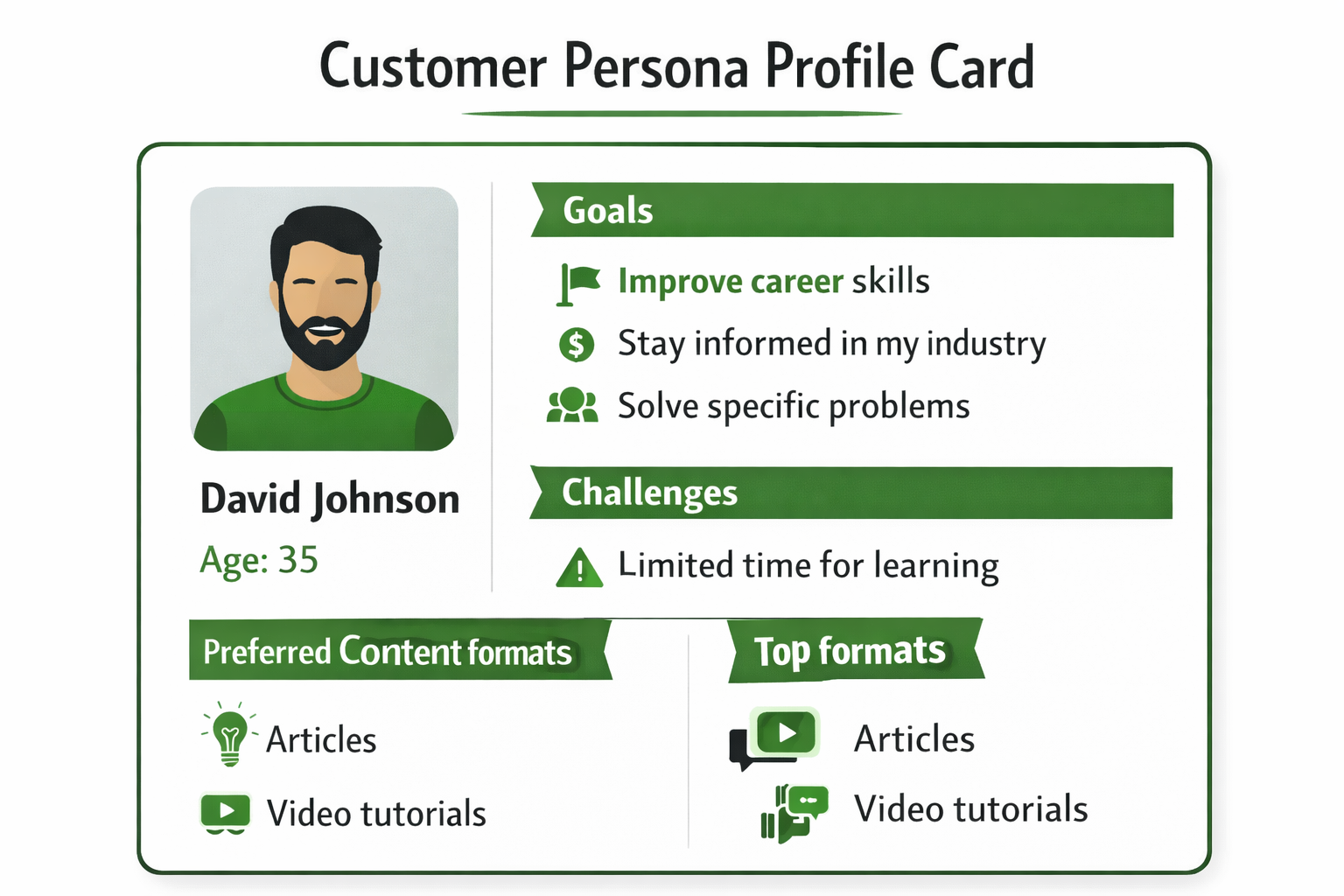
Ultimately, deep audience understanding ensures your content attracts the right people, builds stronger connections, and drives better results. If you want to truly master how to create a content plan, start by listening to your audience before creating content for them.
Persona Profile Table
| Persona Name | Age Range | Needs & Goals | Pain Points | Preferred Content Type |
| Startup Founder | 25–40 | Business growth, funding | Limited time, scaling challenges | Case studies, blogs, podcasts |
| Student Marketer | 18–25 | Learning skills, jobs | Lack of experience | Tutorials, reels, guides |
Secret #3: Research Topics That Actually Perform
If you want to master how to create a content plan that drives real results, topic research is non-negotiable. Even the best-written content will fail if it’s built around topics people aren’t searching for or engaging with. That’s why high-performing content starts with data-backed topic research, not guesses or trends alone.
At the foundation of how to create a content plan is keyword research—the process of finding what your audience is actively searching for. Keywords reveal demand, intent, competition, and opportunities. Start by identifying primary keywords (core topics) and supporting keywords (related subtopics).
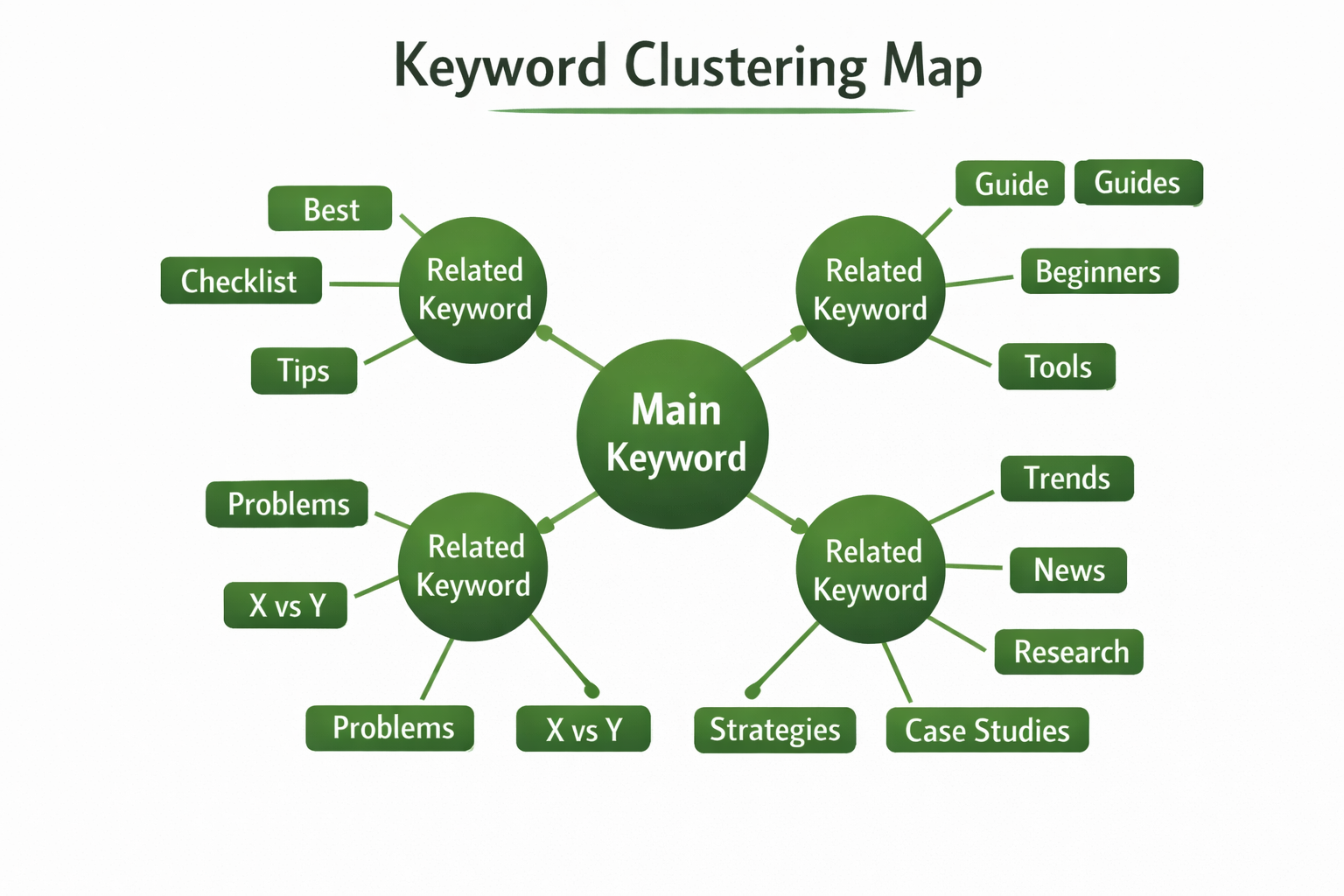
Use tools like Google Keyword Planner, Ahrefs, SEMrush, or Ubersuggest to analyze search volume, keyword difficulty, and related queries. This ensures your content is built around real audience interest, not assumptions.
But keyword research alone isn’t enough. A powerful step in learning how to create a content plan is content gap analysis—finding topics your competitors rank for that you haven’t covered yet.
By analyzing competitor websites, blogs, and social content, you can uncover missing content opportunities, underserved questions, and trending themes in your niche. This helps you prioritize topics with high potential and lower competition, giving you a strategic edge.
Another critical part of how to create a content plan is competitor topic analysis. Study what top-performing competitors are publishing:
- Which topics generate the most engagement?
- What content formats perform best (blogs, videos, case studies)?
- What angles or headlines attract attention?
Instead of copying competitors, use this insight to improve and differentiate your content—by adding deeper research, better visuals, updated insights, or more actionable value.
Equally important is search intent alignment. Not all keywords have the same purpose. Some users want information, others want comparisons, and some are ready to buy. When learning how to create a content plan, categorize topics based on intent:
- Informational: “What is content planning?” → Blog posts, guides
- Commercial: “Best content planning tools” → Comparison articles
- Transactional: “Buy content calendar template” → Landing pages
Aligning content with search intent ensures you attract the right audience at the right stage, increasing engagement, retention, and conversions.
Example: Turning One Keyword Into 5 Content Angles
Let’s say your main keyword is “content planning.” Here’s how to create a content plan that can help you expand it into multiple content ideas:
- Beginner Guide: What Is Content Planning? A Simple Guide
- How-To Article: How to Create a Content Plan Step by Step
- Tools Post: Best Tools for Content Planning in 2026
- Case Study: How a Brand Used Content Planning to Grow Traffic
- Comparison Post: Content Strategy vs Content Plan vs Calendar
This approach allows you to cluster content around one core topic, improving SEO authority and maximizing reach. When you understand how to create a content plan, you stop relying on one-off ideas and start building topic ecosystems that perform long-term.
Ultimately, researching topics that actually perform ensures your content attracts traffic, stays relevant, and drives measurable results. Mastering how to create a content plan means choosing topics backed by data, demand, competition insights, and user intent—so every piece of content has a higher chance of success.
Secret #4: Build a Scalable Content Pillar System
If you want to learn how to create a content plan that scales over time, building a content pillar system is one of the most effective strategies. Instead of publishing random, disconnected posts, a pillar system helps you organize content into structured topic ecosystems that improve SEO, authority, and long-term performance.
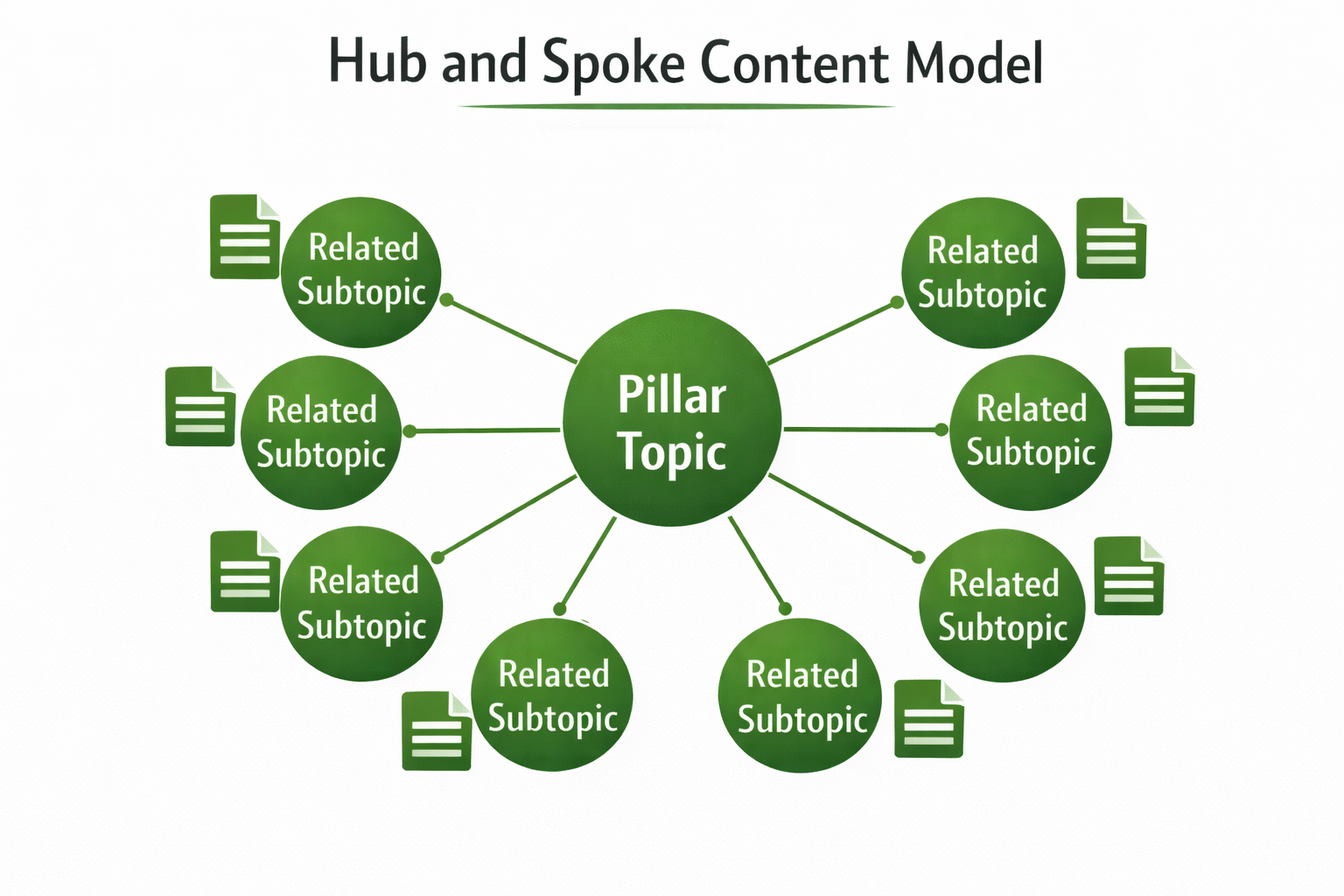
At the center of this system are pillar pages—long-form, in-depth pieces that cover a broad topic comprehensively. Around each pillar, you create cluster content—smaller, more specific articles that dive deeper into subtopics related to the main theme. When you understand how to create a content plan, this approach allows you to build content that is interconnected, organized, and optimized for search engines and readers alike.
For example, if your pillar topic is “How to Create a Content Plan,” your cluster content could include:
- How to Create a Content Plan for Social Media
- How to Create a Content Plan for SEO
- Content Planning Tools for Beginners
- Common Content Planning Mistakes to Avoid
This structure helps you cover a topic from multiple angles while reinforcing your authority on the subject. Learning how to create a content plan with a pillar strategy means you’re not just creating individual posts—you’re building a content library that grows in value over time.
A strong pillar system also makes it easier to structure topic ecosystems. Instead of thinking in isolated content ideas, you group related topics into logical clusters. This improves content discoverability, ensures consistent messaging, and helps your audience navigate information more easily.
When planning your content, map out core themes, assign a pillar page to each theme, and list supporting subtopics that expand on it. This is a powerful step in mastering how to create a content plan that feels intentional and scalable.
Another major benefit of pillar-based planning is internal linking. By linking cluster articles back to the main pillar page—and linking the pillar page back to supporting content—you create a strong internal network.
This improves SEO rankings, helps search engines understand your site structure, boosts page authority, and keeps users engaged longer by guiding them to related content. If you’re serious about how to create a content plan, internal linking should be a built-in strategy, not an afterthought.
Beyond SEO, a content pillar system improves efficiency and repurposing. One pillar topic can generate multiple blog posts, social media snippets, email campaigns, videos, and downloadable resources.
This means fewer ideas wasted, more content output, and better use of your creative efforts. Knowing how to create a content plan with pillars helps you scale content production without sacrificing quality.
Ultimately, building a scalable content pillar system transforms your content from isolated posts into a structured knowledge hub. When you master how to create a content plan using pillar pages and cluster content, you create a long-term strategy that drives traffic, strengthens authority, and supports sustainable growth.
Pillar Topic → Subtopic Content Map
| Pillar Topic | Subtopic / Cluster Content |
| How to Create a Content Plan | Social Media Content Plan, SEO Content Plan, Tools Guide |
| Content Marketing Strategy | Funnels, Case Studies, Campaign Examples |
| Audience Research | Personas, Intent Analysis, Survey Methods |
Secret #5: Choose the Right Content Formats
One of the smartest steps in learning how to create a content plan is choosing the right content formats for your goals, audience, and platforms. Even the best topic can underperform if it’s presented in the wrong format. Different people consume content in different ways—some prefer blogs, others prefer videos, social posts, or emails. That’s why format selection plays a critical role in performance and reach.
When you understand how to create a content plan, you stop treating all content the same and start aligning formats with purpose. Common content formats include blogs, videos, social media posts, email newsletters, podcasts, infographics, and case studies.
Each serves a different function. Blogs work well for SEO and in-depth education, videos boost engagement and reach, social posts drive awareness, emails nurture leads, and case studies build trust and credibility.
A key part of how to create a content plan is matching content formats to platforms. For example, long-form blogs perform best on websites and Medium, short-form videos thrive on Instagram Reels and YouTube Shorts, and carousel posts work well on LinkedIn and Instagram for storytelling and educational breakdowns.
Email content is ideal for nurturing loyal subscribers, while case studies are powerful on landing pages and B2B channels. Choosing the right format for the right platform ensures your content feels native, engaging, and optimized for performance.
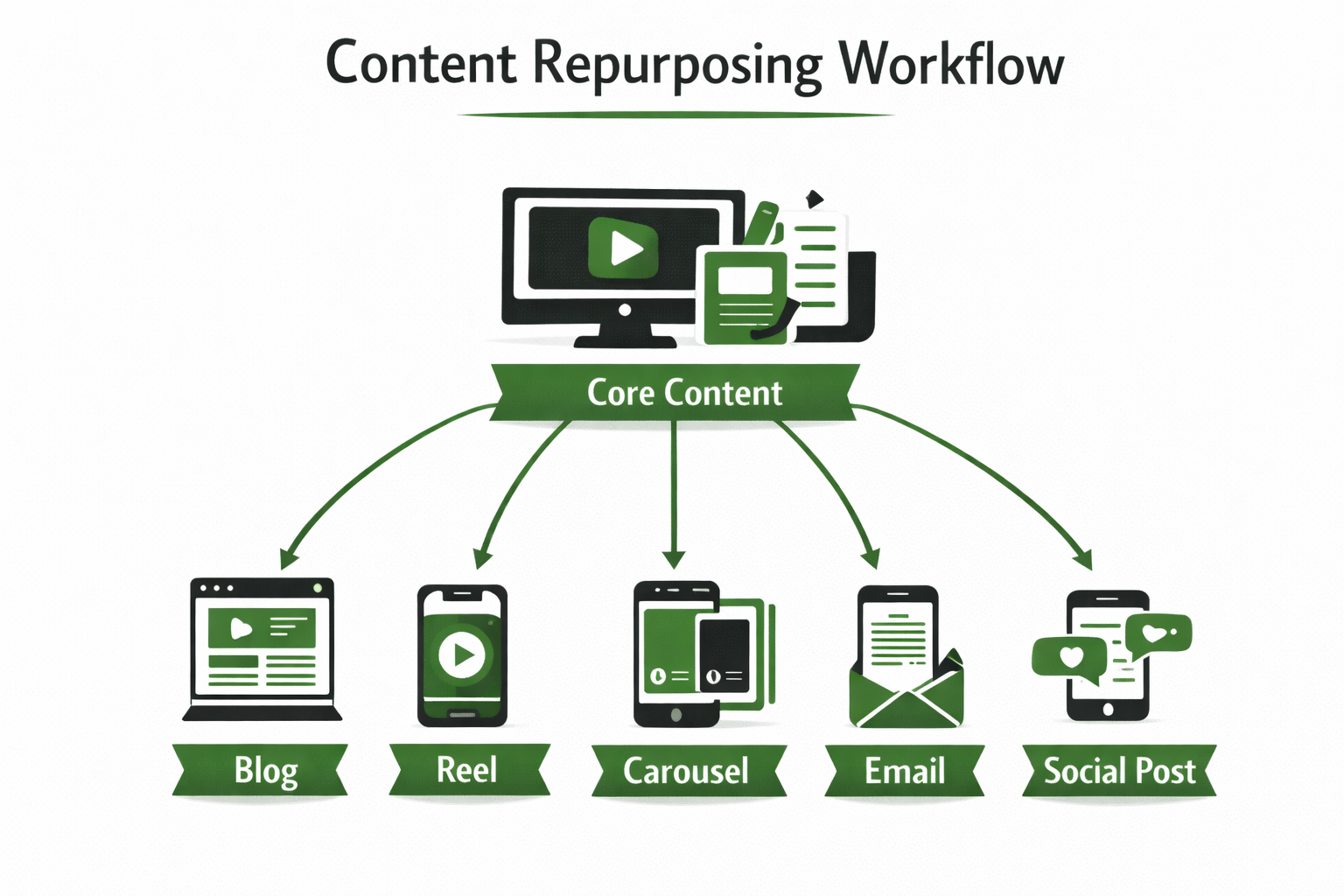
Another major advantage of mastering how to create a content plan is learning how to repurpose content efficiently. Instead of creating everything from scratch, you can turn one core piece of content into multiple formats.
This saves time, increases output, and helps you maintain consistency across platforms without burning out. Repurposing allows you to extend the lifespan of high-performing content while reaching different audience segments.
Example: One Blog → Multiple Content Formats
Imagine you write one in-depth blog post on “How to Create a Content Plan.” Here’s how you can repurpose it:
- Turn key points into an Instagram Reel or YouTube Short
- Convert insights into a carousel post for LinkedIn or Instagram
- Summarize tips into a weekly email newsletter
- Extract examples into a Twitter/X thread
- Use the core idea to create a short video or infographic
This strategy multiplies your content reach without multiplying your workload. When you learn how to create a content plan, repurposing becomes a built-in system rather than an afterthought.
Choosing the right formats also improves content performance and ROI. Some formats are better for driving traffic, while others are more effective for engagement, lead generation, or conversions.
For example, blogs and SEO content drive long-term traffic, videos and reels boost visibility, emails build loyalty, and case studies influence purchase decisions. Understanding how to create a content plan means selecting formats that support your specific goals at each stage of the marketing funnel.
Ultimately, the right content format helps you communicate your message more effectively, reach your audience where they are, and maximize the impact of every idea. When you master how to create a content plan, you create a flexible format strategy that improves efficiency, strengthens brand presence, and drives consistent results across platforms.
Secret #6: Create a Realistic Content Calendar
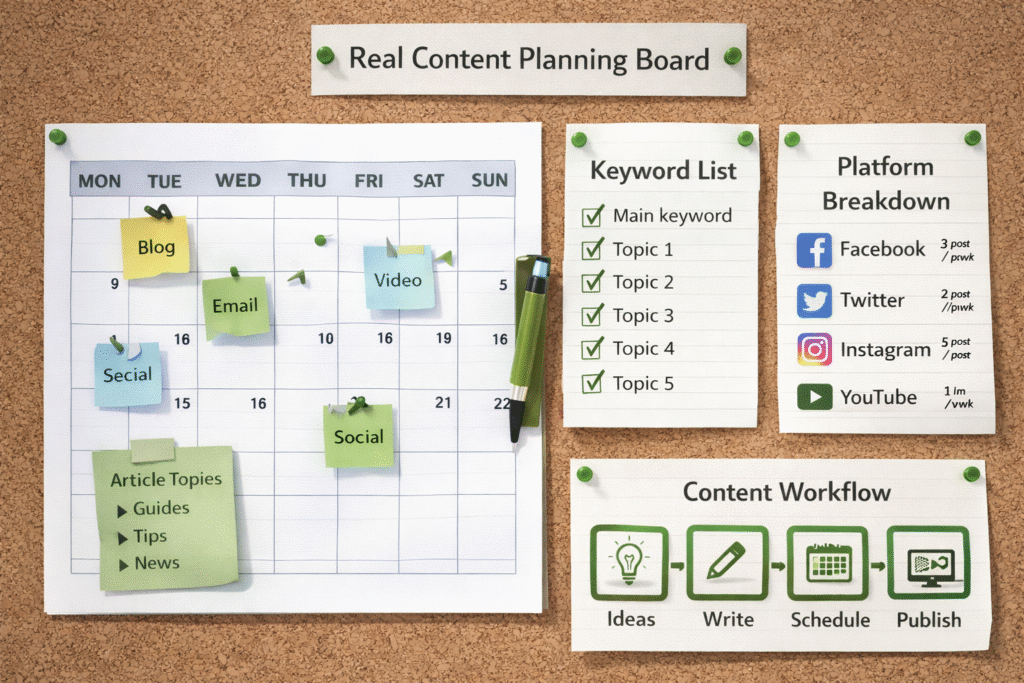
One of the most practical steps in mastering how to create a content plan is building a realistic content calendar that you can actually maintain. A content calendar turns ideas into action by organizing what you’ll post, when you’ll post it, and where it will go. Without a calendar, content creation often becomes rushed, inconsistent, or completely abandoned.
When learning how to create a content plan, it’s important to set a posting frequency strategy that balances consistency with sustainability. Posting more often isn’t always better—what matters is choosing a schedule you can maintain long-term.
For some brands, this might mean three blog posts per month and four social posts per week. For others, it could be one high-quality post weekly. The goal is to create a rhythm that keeps your audience engaged without overwhelming your team or resources.
Another key decision in how to create a content plan is choosing between monthly and quarterly planning. Monthly planning allows flexibility to react to trends, seasonal events, or performance insights.
Quarterly planning, on the other hand, helps you align content with long-term campaigns, product launches, and business goals. Many successful creators combine both—mapping out broad themes quarterly, then filling in specific posts monthly. This creates a balance between structure and adaptability.
A realistic calendar also helps you avoid burnout and inconsistency, two of the biggest challenges in content marketing. When content is planned, you reduce last-minute pressure, creative fatigue, and posting gaps.
Knowing how to create a content plan means planning content in batches, scheduling posts ahead of time, and leaving room for breaks, experimentation, and unexpected opportunities. Sustainable planning keeps your content pipeline steady without exhausting your creativity.
Your content calendar should also account for different content types and platforms. For example, you might schedule blog posts on Mondays, social media carousels midweek, short-form videos on weekends, and email newsletters biweekly.
When you understand how to create a content plan, you treat your calendar as a strategic tool—not just a list of dates, but a system that aligns content with goals, formats, and audience behavior.
Flexibility is just as important as structure. Performance data, trending topics, or campaign shifts may require adjustments. A strong calendar allows you to swap content, test new ideas, or double down on high-performing topics without disrupting your overall plan.
Mastering how to create a content plan means building a calendar that is structured yet adaptable, keeping your strategy both organized and dynamic.
Ultimately, a realistic content calendar ensures your content stays consistent, strategic, and stress-free. When you know how to create a content plan supported by a sustainable calendar, you create a reliable system that saves time, reduces burnout, and drives long-term growth.
Monthly Editorial Calendar Sample
| Date | Platform | Content Type | Topic / Theme | Status |
| Jan 5 | Blog | Long-form article | How to Create a Content Plan | Scheduled |
| Jan 8 | Carousel | Content Planning Tips | Draft | |
| Jan 12 | Email Newsletter | Newsletter | Monthly Marketing Insights | Planned |
| Jan 18 | YouTube / Reels | Short Video | Quick Content Hacks | In Progress |
Secret #7: Optimize Content for SEO & Reach
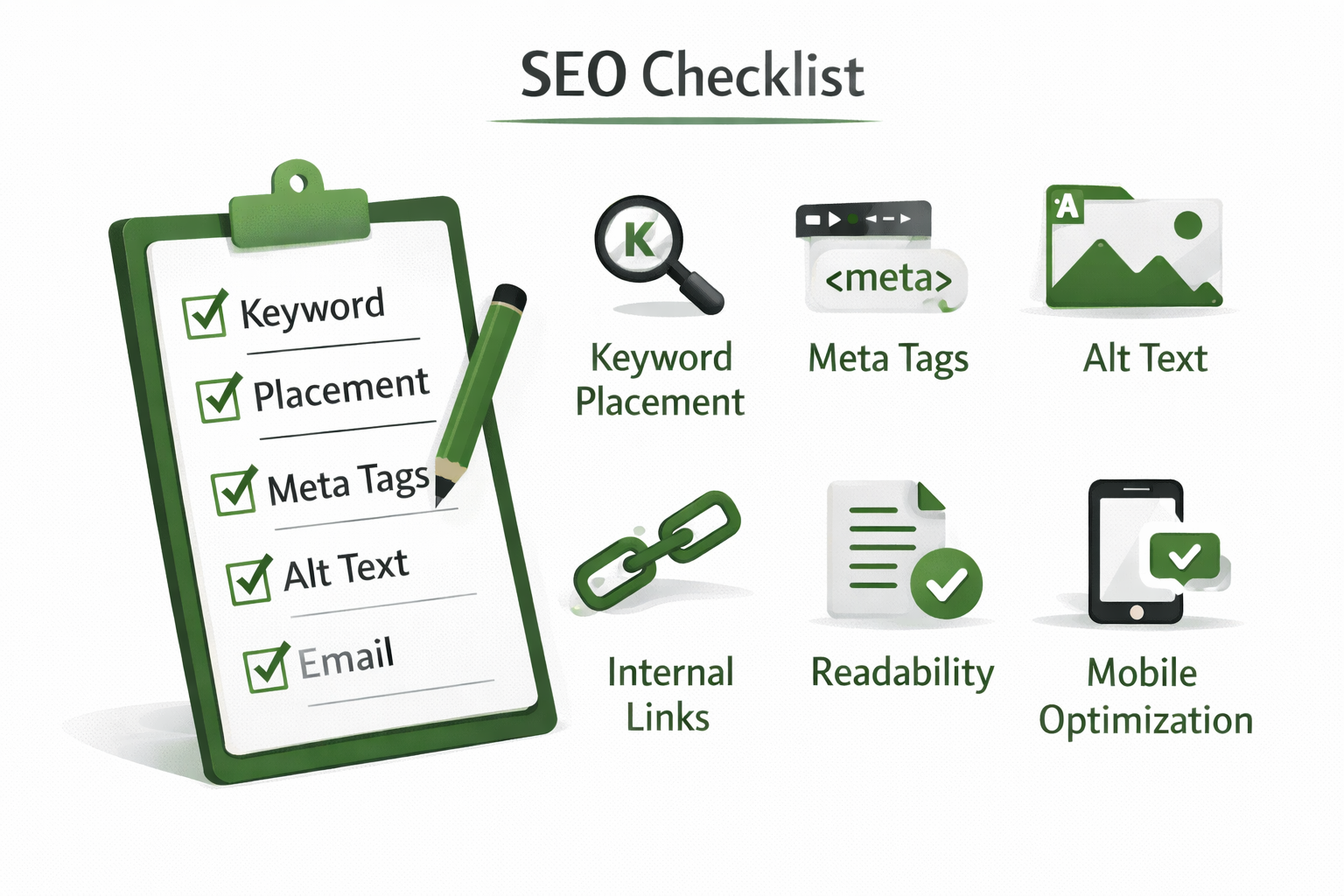
If you want to master how to create a content plan that drives long-term traffic and visibility, SEO optimization must be built into your content process.
Great content alone isn’t enough—your content needs to be discoverable, readable, and structured in a way that search engines and users both understand. Optimizing for SEO ensures your content reaches the right audience at the right time.
A core part of learning how to create a content plan is understanding on-page SEO basics. This includes optimizing page titles, headings, URLs, internal links, images, and overall content structure.
On-page SEO helps search engines understand what your content is about and improves your chances of ranking higher in search results. Without proper optimization, even high-quality content can remain invisible.
One of the most important elements in how to create a content plan is keyword placement. Your focus keyword should appear naturally in key areas such as the title, meta description, URL, introduction, subheadings, body content, and conclusion.
However, keyword usage should always feel natural—avoid keyword stuffing, as it can harm both readability and SEO. Instead, focus on adding related keywords, synonyms, and semantic terms to make your content more comprehensive and contextually relevant.
Another essential SEO component in creating a content plan is optimizing meta titles, alt text, and internal linking. Meta titles and meta descriptions influence click-through rates by making your content more appealing in search results. Image alt text improves accessibility and helps search engines understand visual content.
Internal linking—connecting related pages within your site—boosts SEO authority, improves navigation, and keeps users engaged longer. A strong internal link structure also reinforces topic relevance across your content ecosystem.
SEO isn’t just about search engines—it’s also about content readability and user experience (UX). When you understand how to create a content plan, you prioritize clear formatting, short paragraphs, bullet points, descriptive subheadings, and mobile-friendly layouts. Content that is easy to scan and visually appealing keeps users on the page longer, reduces bounce rates, and improves overall performance. Readable, well-structured content is more likely to rank higher and get shared across platforms.
Example: SEO-Optimized Blog Breakdown
Let’s say you’re writing a blog titled “How to Create a Content Plan.” Here’s how you would optimize it for SEO:
- SEO Title: How to Create a Content Plan That Drives Results
- Meta Description: Learn how to create a content plan step by step to boost traffic, engagement, and growth.
- URL: yoursite.com/how-to-create-a-content-plan
- Headings: Use H2 and H3 subheadings with related keywords
- Internal Links: Link to related articles like Content Calendar Guide or SEO Content Tips
- Images: Add alt text, such as content planning workflow diagram
- Readability: Use short paragraphs, lists, and clear formatting
By applying these techniques, you ensure your content is both search-engine-friendly and user-friendly. When you truly understand how to create a content plan, SEO optimization becomes a repeatable system rather than a one-time task.
Ultimately, optimizing content for SEO and reach allows your ideas to gain maximum visibility, consistent traffic, and sustainable growth. Mastering how to create a content plan means building SEO into every stage of content creation—from topic research to publishing and updating—so your content continues to perform long after it goes live.
Secret #8: Track Performance & Improve Strategy
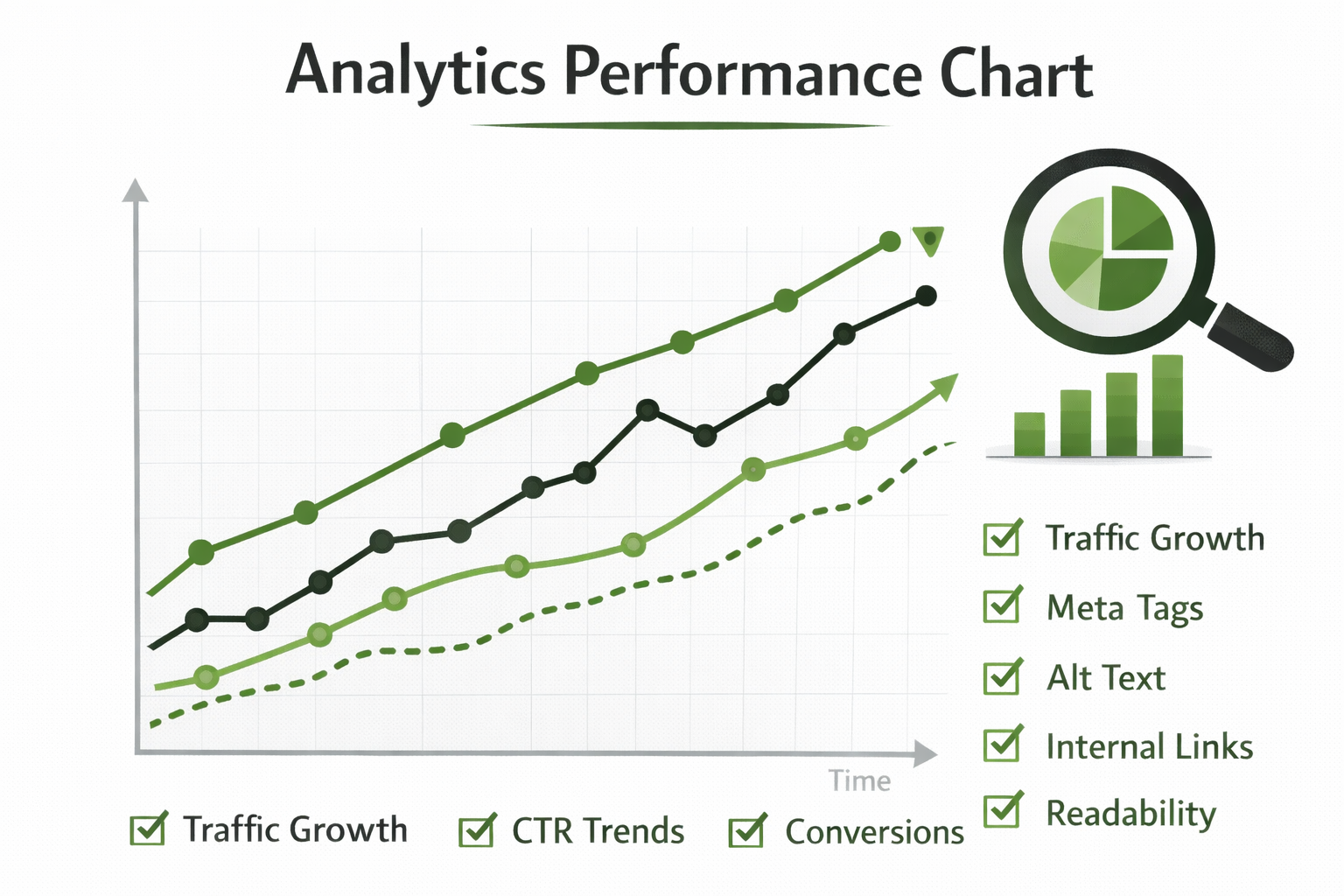
Learning how to create a content plan doesn’t end once content is published—the real growth happens when you track performance and continuously improve your strategy. Without measuring results, you’re guessing what works instead of making data-driven decisions. Tracking performance helps you refine your approach, double down on what performs best, and eliminate what doesn’t deliver value.
A key part of mastering how to create a content plan is monitoring the right metrics. Important performance indicators include website traffic, click-through rate (CTR), engagement, conversions, bounce rate, and time on page.
Traffic shows how many people are discovering your content, CTR measures how compelling your headlines and meta titles are, and conversions reveal whether your content is driving real business results like sign-ups, leads, or sales.
Beyond surface-level metrics, deeper insights come from understanding which content types, topics, and formats perform best. For example, you may discover that long-form SEO blogs bring the most organic traffic, while short-form videos drive higher engagement on social media.
When you understand how to create a content plan, you use this data to prioritize high-performing formats and refine underperforming ones.
Another powerful step in how to create a content plan is conducting regular content audits. A content audit involves reviewing your existing content to evaluate performance, relevance, accuracy, and SEO strength. During an audit, you can identify:
- High-performing content worth scaling or repurposing
- Outdated or underperforming content that needs improvement
- Duplicate or irrelevant content that should be merged or removed
Content audits help keep your content library fresh, relevant, and aligned with current goals. Instead of constantly creating new content, mastering how to create a content plan means improving and maximizing the value of what you’ve already published.
One of the most effective optimization tactics is updating old content for growth. Refreshing older blog posts with new data, better keywords, improved formatting, updated visuals, and stronger calls-to-action can significantly boost rankings and engagement.
When you know how to create a content plan, content updates become a core strategy—not just publishing new posts, but reviving existing content to extend its lifespan and impact.
Tracking performance also allows you to test and iterate. You can experiment with different headlines, content lengths, posting times, formats, or CTAs to see what resonates best with your audience.
Over time, this creates a feedback loop where your strategy evolves based on real results. Understanding how to create a content plan means treating content as an evolving system, not a fixed checklist.
Ultimately, tracking performance transforms content creation into a continuous improvement engine. When you master how to create a content plan backed by analytics, audits, and optimization, you build a strategy that grows smarter, more efficient, and more effective over time—driving consistent traffic, stronger engagement, and better conversions.
Content Performance Tracking Dashboard
| Content Title | Traffic | CTR | Engagement | Conversions | Action Needed | |
| How to Create a Content Plan | 12,500 | 4.2% | High | Medium | Update & Expand | |
| Social Media Tips Guide | 6,800 | 3.1% | Medium | Low | Improve CTA | |
| SEO Content Checklist | 9,200 | 5.0% | High | High | Repurpose & Promote |
Secret #9: Automate & Scale Your Content Plan
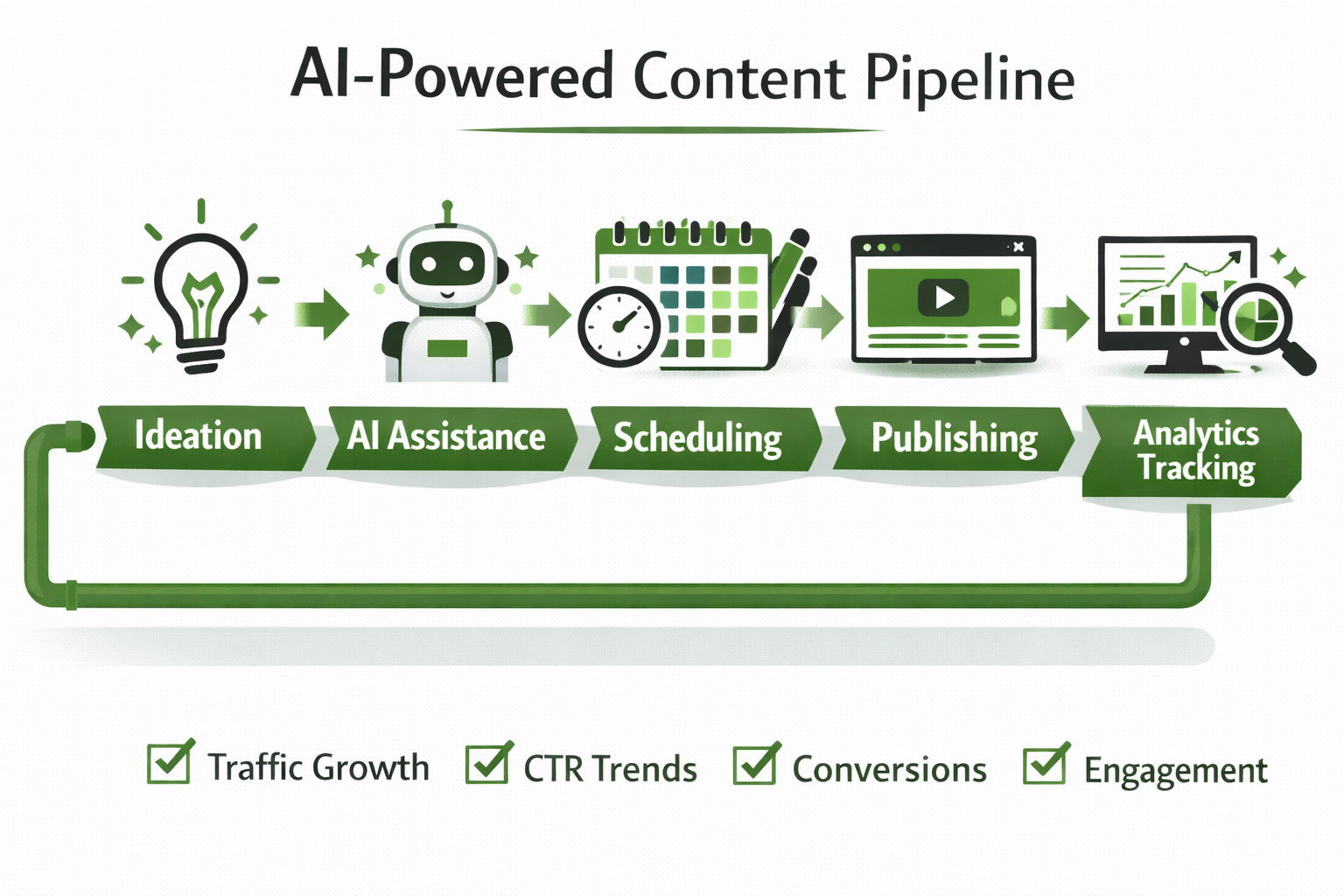
Once you’ve mastered the basics of how to create a content plan, the next level is learning how to automate and scale it without sacrificing quality. Manual content creation can quickly become overwhelming, especially as your brand grows. That’s why automation, AI tools, and workflow optimization are essential for maintaining consistency while increasing output.
A key step in how to create a content plan at scale is using AI and automation tools to speed up repetitive tasks. Tools like ChatGPT (for ideation and drafting), Canva (for design), Notion or Trello (for planning), and scheduling platforms like Buffer or Hootsuite (for publishing) can significantly reduce workload. Automation helps with topic research, content outlines, caption generation, scheduling, analytics tracking, and repurposing, allowing you to focus more on strategy and creativity instead of execution.
Scaling content production doesn’t mean posting more—it means building a system that produces consistent, high-quality content efficiently. When you understand how to create a content plan, scaling involves batching content, creating templates, building repeatable workflows, and delegating tasks across team members or freelancers. For example, one person can handle research, another writing, another editing, and another distribution—turning content creation into a smooth production pipeline.
Workflow optimization is another major component of how to create a content plan at scale. A streamlined workflow ensures that every piece of content moves smoothly from idea → draft → edit → design → publish → promote → analyze. Documenting processes, setting deadlines, using content calendars, and automating approvals can drastically reduce delays and confusion. A clear workflow also makes it easier to onboard new team members and maintain consistency across all content.
Example: Small Team vs Scaled Content System
A small team system might involve one or two people managing everything—from ideation to publishing. While this can work at a smaller scale, it often leads to burnout, inconsistent posting, and slower growth.
A scaled content system, on the other hand, uses structured workflows, automation tools, role-based responsibilities, and repurposing strategies. For example:
- One long-form blog can be transformed into social posts, short videos, email newsletters, and carousels
- AI tools assist with drafting, editing, and summarizing
- Scheduling tools automate posting across multiple platforms
- Analytics dashboards track performance automatically
When you truly understand how to create a content plan, scaling becomes a strategic expansion—not chaos.
Automation also allows you to maintain consistency without overworking your team. Scheduled posts ensure regular publishing, AI speeds up content ideation, and performance tracking tools help optimize future content. Instead of constantly reacting to deadlines, your content machine runs proactively and predictably.
Ultimately, learning how to create a content plan that scales means building a repeatable, efficient, and flexible system. By combining automation, AI, optimized workflows, and smart delegation, you can grow your content output, reach larger audiences, and maintain quality—all while saving time and reducing burnout.
Step-by-Step Example: How to Create a Content Plan for a Real Brand
To truly understand how to create a content plan, it helps to see a real-world example in action. In this section, we’ll walk through a step-by-step content plan for a digital marketing agency that wants to grow brand awareness, generate leads, and build authority in the SEO and content marketing space.
This case study breaks down how to create a content plan from goal-setting to topic planning, posting schedules, and keyword strategy.
Business Type: Digital Marketing Agency
Primary Goals:
- Increase website traffic
- Generate qualified leads
- Position the agency as an industry authority
Step 1: Define Content Goals
The agency sets clear goals before building the plan:
- Grow organic traffic by 40% in 6 months
- Generate 20 inbound leads per month
- Build thought leadership in SEO and content strategy
This is the foundation of how to create a content plan that delivers measurable results.
Step 2: Identify Target Audience
The agency targets:
- Small business owners
- Startup founders
- Marketing managers
Pain points include limited marketing budgets, low website traffic, and poor lead generation. Knowing the audience is essential when learning how to create a content plan that resonates.
Step 3: Build a Keyword Plan
Sample keyword strategy focused on SEO and marketing intent:
| Primary Keyword | Search Intent | Content Type |
| How to Create a Content Plan | Informational | Blog Guide |
| SEO Tips for Small Businesses | Informational | Blog Post |
| Best Digital Marketing Agency | Commercial | Landing Page |
| Content Calendar Template | Transactional | Download Page |
| Social Media Strategy for Brands | Informational | Carousel / Blog |
This keyword research step ensures how to create a content plan based on demand, not guesswork.
Step 4: Monthly Content Plan Breakdown
The agency plans 12–16 pieces of content per month across multiple platforms:
Blog Content (4 posts/month)
- How to Create a Content Plan (pillar post)
- SEO Checklist for Business Growth
- Content Strategy vs Content Plan
- Case Study: How We Increased Client Traffic
Social Media (8–10 posts/month)
- Carousels with tips
- Reels with quick marketing hacks
- Client success highlights
- Educational threads
Email Marketing (2 newsletters/month)
- SEO tips roundup
- Content marketing insights
Video Content (2–3/month)
- YouTube tutorials
- Short-form reels
This shows how to create a content plan with multiple formats and channels.
Step 5: Sample Posting Schedule
| Week | Platform | Content Type | Topic |
| Week 1 | Blog | Long-form | How to Create a Content Plan |
| Week 1 | Carousel | 5 Content Planning Mistakes | |
| Week 2 | Newsletter | SEO Tips for Small Businesses | |
| Week 2 | YouTube | Video | How to Build a Content Calendar |
| Week 3 | Blog | Case Study | Client SEO Growth Story |
| Week 4 | Post | Thought Leadership on Content Strategy |
This posting system keeps content consistent, scalable, and goal-driven—a key part of how to create a content plan.
Step 6: Content Repurposing Strategy
One blog post becomes multiple assets:
- Blog → Instagram carousel
- Blog → Reel / Short video
- Blog → Email summary
- Blog → Twitter/X thread
This repurposing workflow maximizes reach and efficiency when mastering how to create a content plan.
Step 7: Tracking Performance & Optimization
The agency tracks:
- Website traffic
- Engagement rate
- Lead conversions
- Keyword rankings
Based on performance, they update old content, double down on high-performing topics, and refine low-performing posts—a core part of how to create a content plan that improves over time.
30-Day Sample Content Plan
| Day | Platform | Content Type | Topic / Theme |
| 1 | Blog | Pillar Post | How to Create a Content Plan |
| 5 | Carousel | Content Strategy Tips | |
| 10 | Newsletter | Monthly SEO Insights | |
| 15 | YouTube | Video | Content Planning Workflow |
| 20 | Blog | Case Study | Agency Client Success Story |
| 25 | Post | Marketing Trends & Insights |
Common Mistakes to Avoid in Content Planning
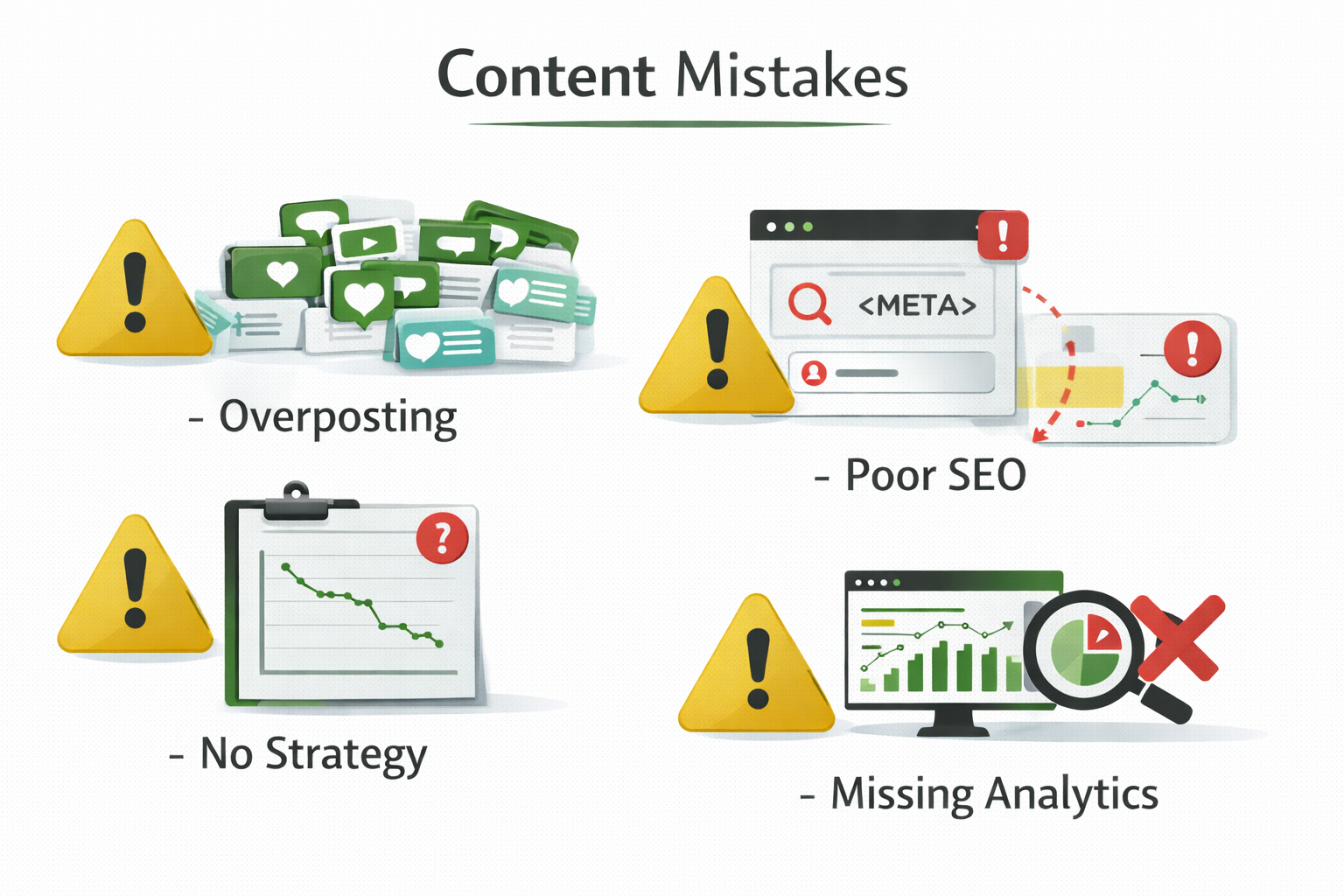
Even if you understand how to create a content plan, certain mistakes can still hold your strategy back. Many brands invest time in content but fail to see results because of poor planning, lack of alignment, or inconsistent execution. Avoiding these common errors can significantly improve your content performance and long-term growth.
One of the biggest mistakes in how to create a content plan is overposting without a clear purpose. Posting too frequently without a strategy often leads to low-quality content, audience fatigue, and creative burnout.
More content doesn’t always mean better results—what matters is consistent, high-value content that aligns with your goals. A realistic posting schedule will always outperform random daily uploads.
Another critical mistake is ignoring SEO. You might create great content, but if it’s not optimized for search engines, it can remain invisible.
When learning how to create a content plan, SEO should be built into every stage—from keyword research and topic selection to on-page optimization and internal linking. Skipping SEO means missing out on organic traffic, discoverability, and long-term reach.
A common strategic error is lack of alignment with business goals. Content should never exist just for the sake of posting. Whether your objective is brand awareness, lead generation, sales, or authority building, your content must support that purpose.
Understanding how to create a content plan means ensuring every topic, format, and campaign connects to a larger strategy rather than operating in isolation.
Another major pitfall is having no tracking or performance system. Without analytics, it’s impossible to know what’s working and what isn’t. Brands often repeat ineffective content simply because they don’t review performance data.
Mastering how to create a content plan requires tracking key metrics like traffic, engagement, CTR, and conversions—and using those insights to improve future content.
Some creators also make the mistake of not repurposing or updating content. Instead of constantly creating new content, smart planning involves refreshing old posts, improving SEO, and repurposing high-performing content into new formats. When you know how to create a content plan, you treat content as a long-term asset, not a one-time effort.
Finally, many brands fail by being inconsistent—posting heavily one month and disappearing the next. Consistency builds audience trust, algorithm favor, and sustainable growth. A strong understanding of how to create a content plan helps you maintain steady output without burnout or chaos.
Avoiding these mistakes ensures your content remains strategic, visible, and effective. When you master how to create a content plan, you build a system that delivers consistent results instead of wasted effort.
Conclusion: Mastering How to Create a Content Plan
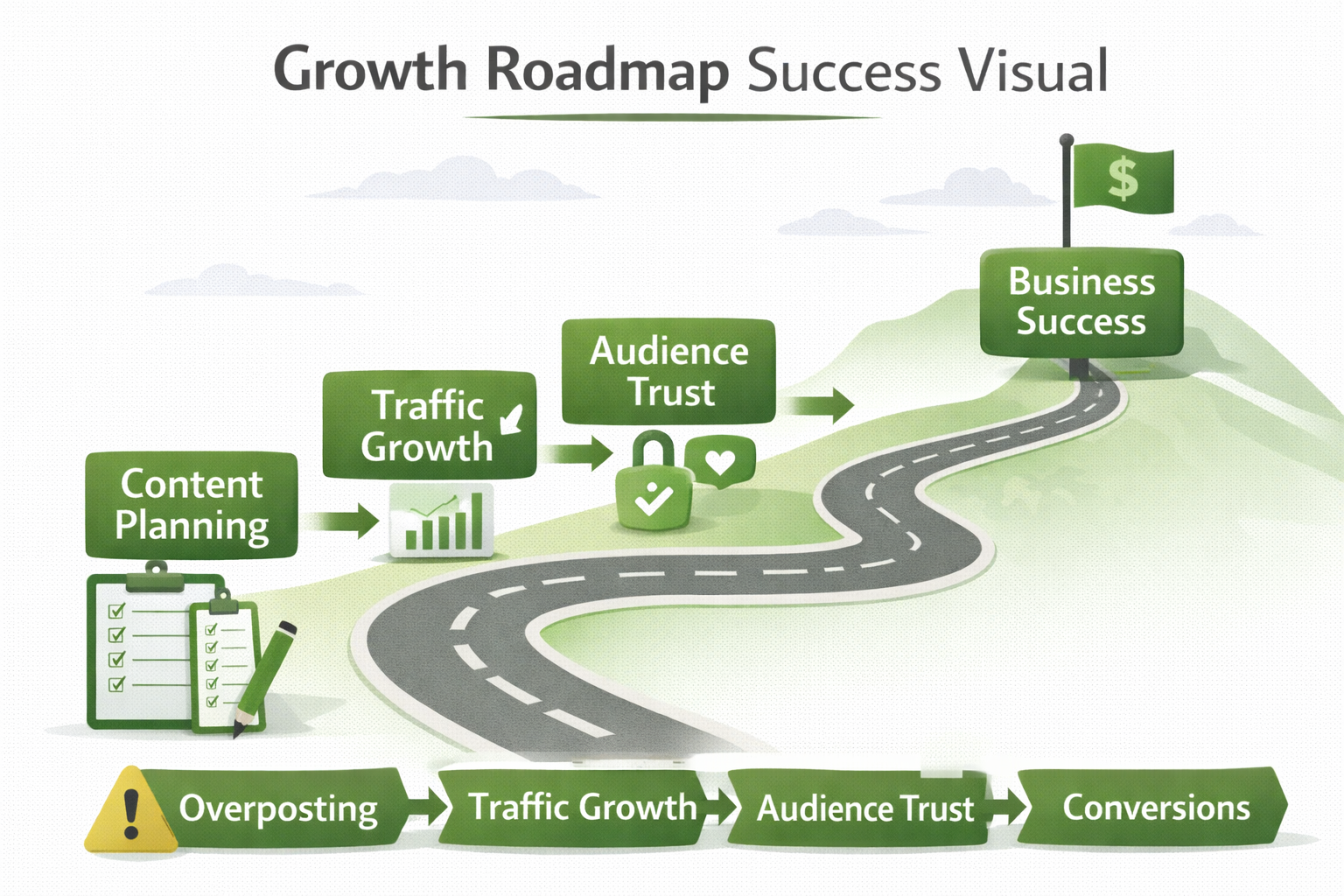
Mastering how to create a content plan is one of the most powerful skills for building consistent growth, stronger brand authority, and long-term success. Throughout this guide, we’ve covered the 9 essential secrets that transform content from random posting into a strategic, results-driven system.
You learned how to create a content plan by setting clear goals, understanding your audience deeply, researching topics that actually perform, and building scalable content pillars. We explored how to choose the right formats, create a realistic content calendar, optimize content for SEO and reach, track performance, automate workflows, and scale your strategy without burning out. Together, these steps form a complete roadmap for sustainable content success.
The real value of learning how to create a content plan lies in taking action. Start small if needed—define your goals, map out your first month of content, and commit to consistency. You don’t need perfection; you need momentum. Every piece of content you publish becomes more powerful when it’s part of a structured plan rather than a one-off effort.
When you truly understand how to create a content plan, your content becomes more efficient, more impactful, and more profitable. You save time by planning, reducing creative stress, improving visibility through SEO, building trust with your audience, and creating a system that grows with your brand. Over time, a strong content plan compounds into higher traffic, stronger engagement, better conversions, and long-term authority.
Whether you’re a marketer, creator, business owner, or brand, mastering how to create a content plan gives you a competitive edge in an increasingly crowded digital space. The sooner you start planning strategically, the faster you’ll see consistent results.
Now is the time to apply what you’ve learned. Use this guide as your blueprint—and start building a content plan that drives real, scalable, and lasting growth.
Interested in Learning more? Contact RKDMT – Raju Kumar Digital Marketer (Best Digital Marketing Training Institute)
🔗 www.rajukumardigitalmarketer.com
📞 +91-7303933302, +91-9217057127
📧 rkdmt@rajukumardigitalmarketer.com

Founder at Digital Marketing Marvel | Founder at RKDMT – Raju Kumar Digital Marketing Trainer | Best Digital Marketing Trainer in Delhi/NCR – Digiperform | Project Manager | 5+ years | Genius Study Abroad & Inlingua’s Digital Marketing Head | Learn Digital Marketing