


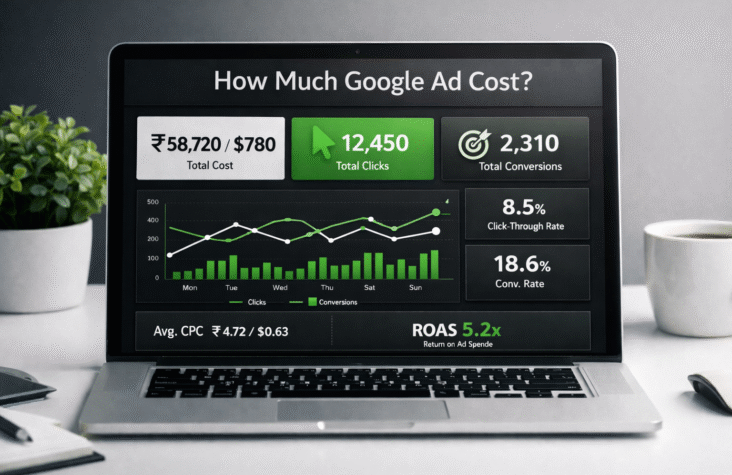
How Much Google Ads Cost (and What You’re Actually Paying For)
If you’ve ever boosted a post, launched your first search ad, or opened your Google Ads dashboard after a few days, chances are you’ve had the same reaction most business owners do: “Wait… where did my money go?” One day you set a modest daily budget, the next day you’re staring at numbers that don’t quite make sense.
No surprise then that one of the most searched (and most confusing) questions online is how much does Google Ads costs.
The frustration usually doesn’t come from spending money—it comes from not understanding what you’re paying for. You search online for answers, but what you find feels vague: “It depends,” “There’s no fixed price,” or “Google Ads can cost anywhere from ₹10 to ₹10,000 per day.”
Technically true, yes—but practically useless. As a business owner or marketer, you don’t want theory. You want clarity.
The real problem is that most content talks around the question instead of answering it properly. Articles either throw out random averages without context or oversimplify a system that’s actually influenced by competition, intent, quality, and strategy.
That’s why so many people walk away feeling like Google Ads is unpredictable, expensive, or even designed to drain budgets.
This blog is different.
Instead of hiding behind buzzwords, we’re going to break down how much does Google Ads costs using real-world logic and realistic expectations. You’ll see actual cost ranges, not just “it depends.”
You’ll understand the key factors that push costs up or pull them down. Most importantly, you’ll learn the difference between what people think they’re paying for—clicks, impressions, traffic—and what they’re actually paying for: competition, intent, speed, and visibility.
By the end of this guide, you won’t just have an answer to how much does Google Ads cost. You’ll have the context to judge whether the cost makes sense for your business, your goals, and your budget.
No fluff, no fear tactics—just a clear, honest explanation so you can make smarter decisions with your ad spend.
What Is Google Ads and How Does Pricing Actually Work?
Before we break down how much Google Ads costs, it’s important to understand what Google Ads actually is and how its pricing system works. Many people assume Google Ads has a fixed rate card—like newspaper ads or billboards—but that’s not how it works at all.
Google Ads is a massive advertising ecosystem where prices are decided in real time, based on demand, competition, and relevance.
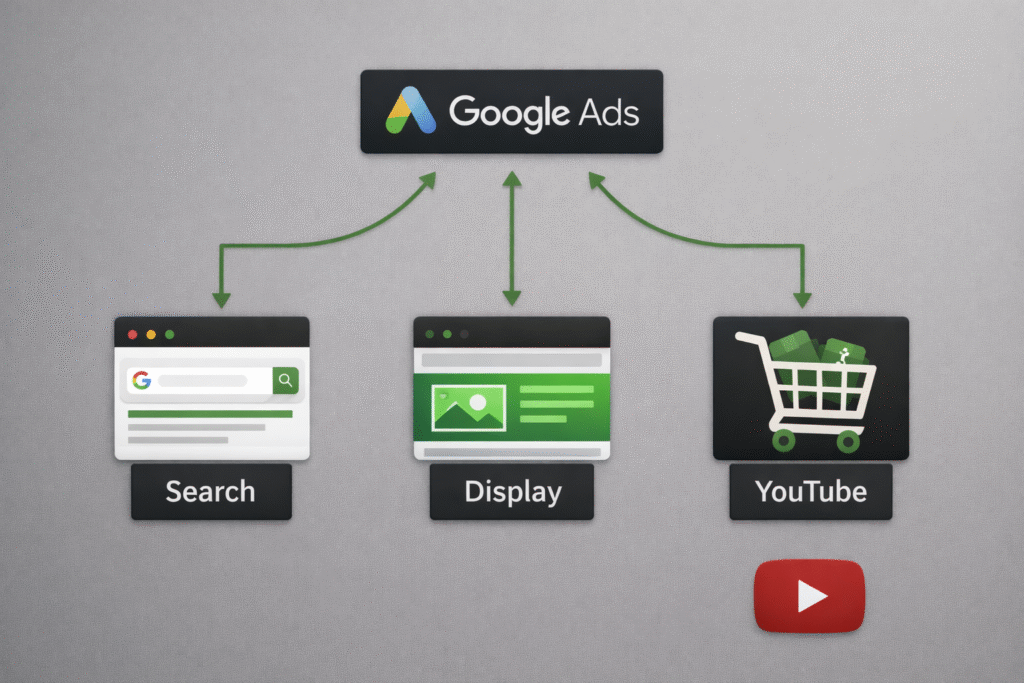
At its core, Google Ads is Google’s online advertising platform that allows businesses to show ads across different Google-owned properties and partner websites. The ecosystem mainly includes four major ad types.
Search Ads appear on Google search results when someone types a keyword related to your business. These are the ads most people think of when discussing how much does Google Ads costs, because they target high-intent users who are actively searching.
Display Ads are visual banner ads shown across websites, apps, and blogs in Google’s Display Network.
YouTube Ads appear before, during, or after videos on YouTube, helping brands reach users through video content.
Shopping Ads showcase products directly in search results with images, prices, and store details, making them popular for e-commerce brands.
Now, let’s talk about pricing. Google Ads works on an auction-based system, but not in a way most people imagine. Every time someone searches a keyword or loads a page where ads can appear, Google runs a quick auction behind the scenes.
Advertisers competing for that space place bids, but the highest bid doesn’t automatically win. Google also considers relevance and quality. This is why two businesses can bid on the same keyword and still pay very different amounts.
This auction system is the main reason how much Google Ads cost doesn’t have a fixed answer. You’re not buying ad space at a set price—you’re competing for attention.
The cost changes based on how many advertisers want the same audience, how strong their ads are, and how useful Google thinks their landing pages are for users.
To make sense of costs, Google uses a few common pricing models. CPC (Cost Per Click) means you pay only when someone clicks your ad. CPM (Cost Per Thousand Impressions) charges you for ad visibility, mostly used in display and video campaigns. CPA (Cost Per Acquisition) focuses on paying for actual results, like leads or sales.
These models don’t define how much does Google Ads cost on their own, but they explain how your spend is calculated.
Once you understand this foundation, the numbers around Google Ads pricing start to feel far less confusing—and much more controllable.
How Much Does Google Ads Cost on Average? (Real Numbers)
Now let’s answer the question everyone really cares about—how much does Google Ads cost in actual numbers. While there’s no single price tag, there are realistic ranges you can expect once you understand the benchmarks.
Knowing these averages helps set proper expectations and prevents that “ad spend shock” many businesses experience in their first month.
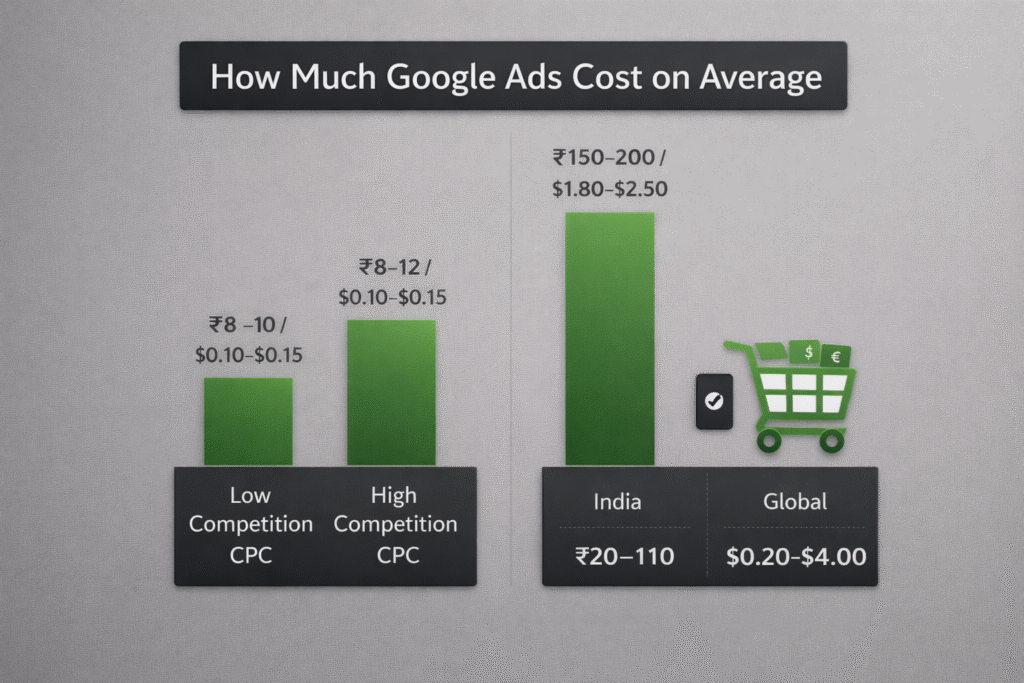
On average, cost per click (CPC) in low-competition industries can range from ₹5 to ₹30 (or $0.10–$0.40 globally). These are usually industries where competition is lower and buying intent is informational rather than transactional—think blogs, education content, local events, or niche services.
In these cases, how much Google Ads cost stays relatively manageable, making it easier for small businesses or beginners to test campaigns without heavy risk.
In high-competition industries, the story changes quickly. Sectors like insurance, legal services, real estate, finance, and healthcare often see CPCs ranging from ₹100 to ₹500+ (or $5–$50+ globally). Why the jump? Because the value of a single lead is much higher.
When multiple advertisers are fighting for the same high-intent keyword, how much Google Ads cost naturally increases due to bidding pressure.
Looking at budgets, most small businesses spend anywhere between ₹500 to ₹2,000 per day, which translates to ₹15,000–₹60,000 per month. This range allows enough data for optimization while keeping spending controlled.
Larger brands and enterprises, however, often allocate ₹3–10 lakh per month or more, especially when running multiple campaigns across search, display, and YouTube. This again highlights how much does Google Ads costs depends heavily on scale and goals.
From a global perspective, businesses in countries like the US, UK, and Australia usually pay significantly higher CPCs due to stronger competition. India-focused campaigns, on the other hand, generally enjoy lower costs, especially for local targeting and regional keywords.
This is why how much Google Ads cost in India is often lower than global averages, making it an attractive market for performance advertising.
So what’s the final answer? How much Google Ads costs depends on your industry, target location, competition level, campaign type, and business objective.
A local service business can run effective campaigns on a modest budget, while a national brand competing for premium keywords will naturally spend more.
The key takeaway is this: Google Ads doesn’t become expensive by default—it becomes expensive when expectations, strategy, and competition aren’t aligned. Understanding these averages gives you clarity, control, and confidence before you invest a single rupee.
Google Ads Cost Breakdown by Ad Type
To truly understand how much Google Ads actually cost, you need to look beyond averages and break costs down by ad type. Each format serves a different purpose, targets users at different stages of intent, and therefore comes with its own pricing behaviour.
This is where many advertisers get confused—because they compare costs across formats that aren’t meant to perform the same way.
Search Ads Cost
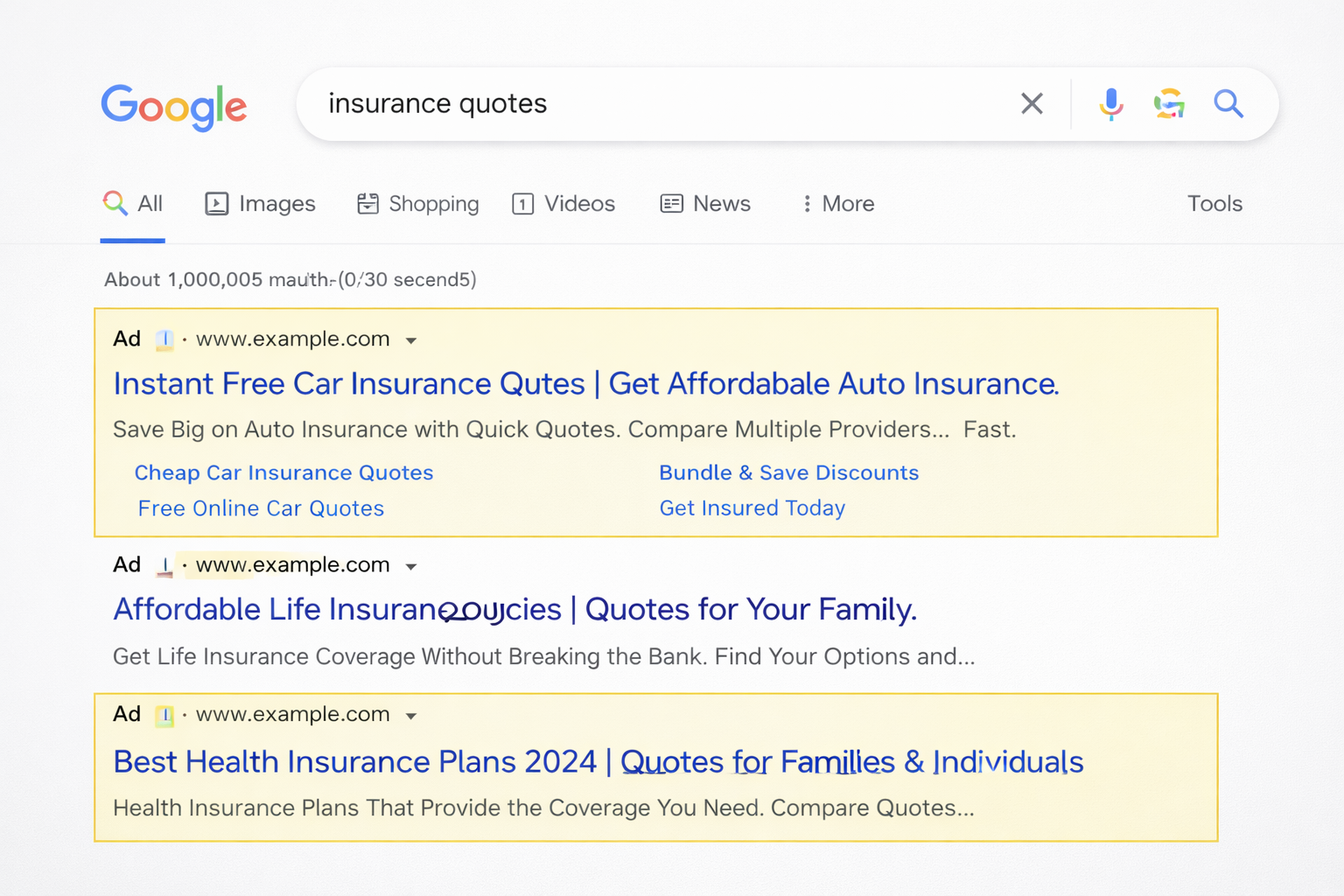
Search ads usually answer the question how much Google Ads cost in the most direct way. These ads appear when users actively search for something on Google, which means intent is already high.
On average, Search Ads CPCs range from ₹10 to ₹50 in low-competition niches and can easily rise to ₹100–₹500 or more in competitive industries.
The biggest factor here is keyword intent. Buyer-intent keywords like “hire digital marketing agency” or “buy running shoes online” cost more because users are closer to taking action. In contrast, research keywords such as “what is digital marketing” or “best running shoes” tend to be cheaper but convert less.
This is why Google Ads cost for search campaigns depends not just on keywords, but on why users are searching.
Display Ads Cost
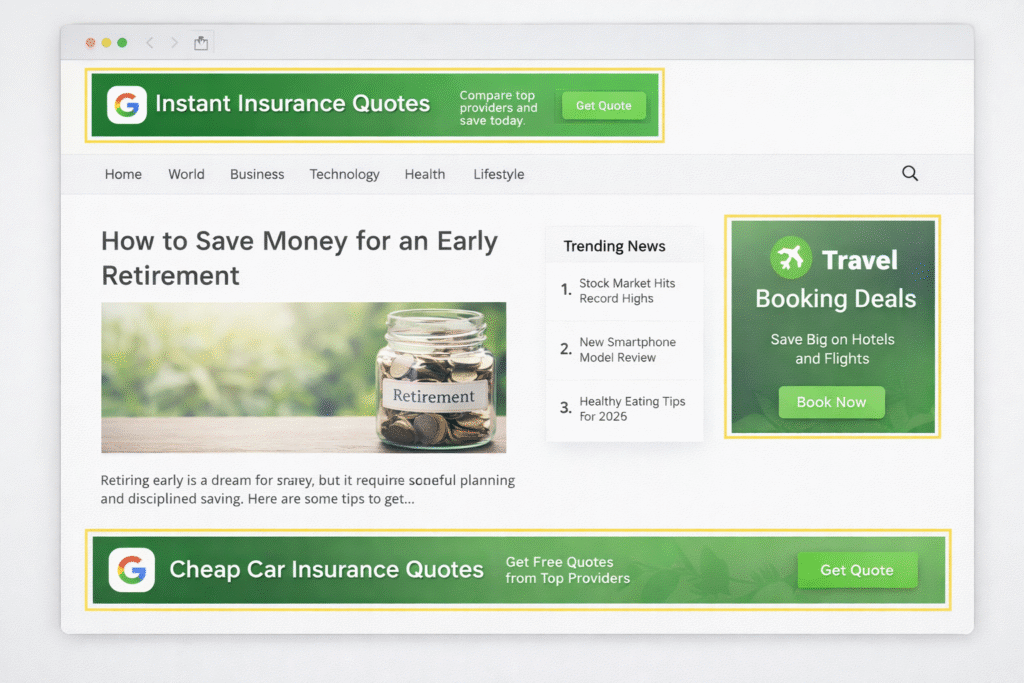
Display ads operate very differently, which directly impacts how much Google Ads cost in this format. Instead of paying per click, most display campaigns use CPM (Cost Per Thousand Impressions). In India, display CPMs typically range from ₹20 to ₹150, while global campaigns may cost more depending on audience targeting.
Display ads are cheaper because they focus on visibility rather than immediate intent. Users aren’t actively searching—they’re browsing websites or apps. That’s why display ads often have lower conversion rates.
While how much Google Ads cost for display is lower, the return depends heavily on brand awareness goals, remarketing strategies, and creative quality. Display works best when supporting search or retargeting warm audiences.
YouTube Ads Cost
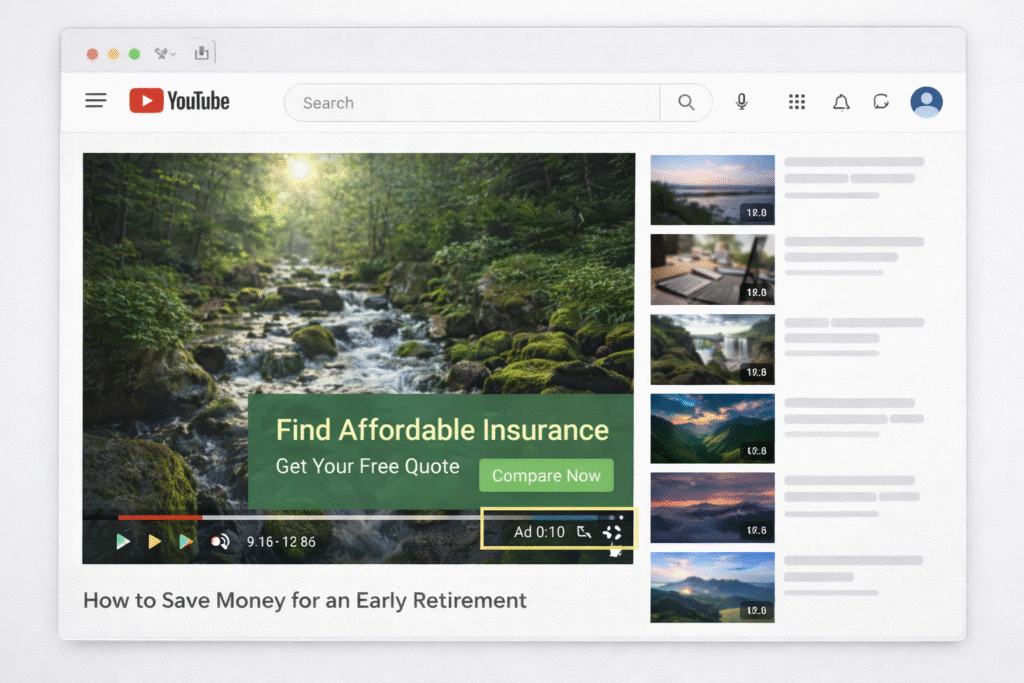
YouTube ads add another layer to understanding how much Google Ads cost. Most video campaigns run on CPV (Cost Per View), meaning you pay when someone watches your ad for a minimum duration (usually 30 seconds or the full ad if shorter).
Average CPVs in India range from ₹0.30 to ₹3 per view, making video surprisingly affordable.
There’s a major cost difference between skippable and non-skippable ads. Skippable ads tend to cost less and give viewers control, while non-skippable ads guarantee exposure but come at a higher price. This means how much Google Ads cost for YouTube depends on how aggressively you want attention versus engagement.
Shopping Ads Cost
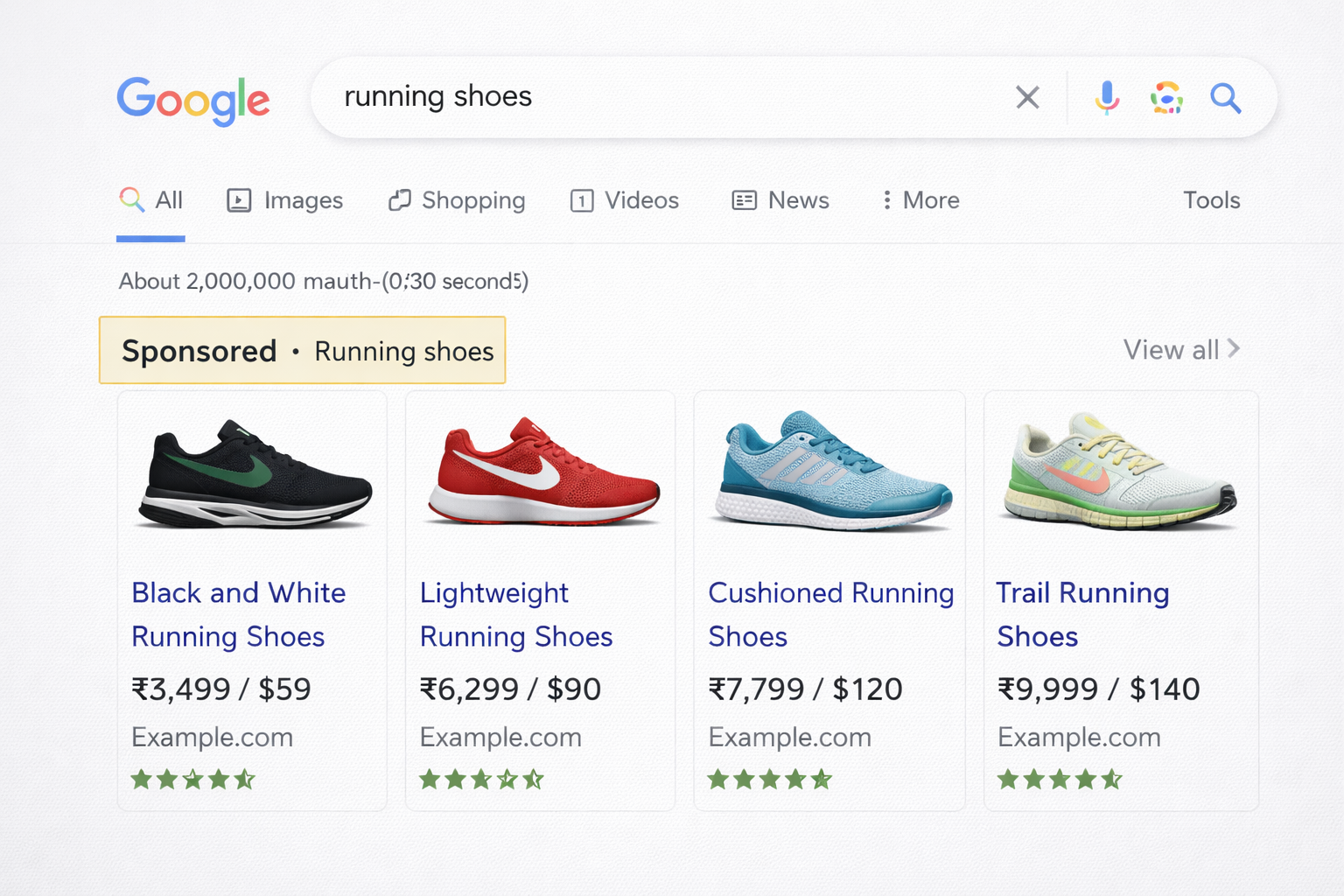
Shopping ads answer the question of how much Google Ads cost for e-commerce businesses specifically. These ads use product-based bidding, where costs are influenced by product category, competition, and price range.
Average CPCs usually fall between ₹10 and ₹40, but competitive product categories can go higher.
Unlike search ads, shopping campaigns rely heavily on product feeds, images, and pricing accuracy. E-commerce brands often see better ROI even when how much Google Ads cost seems higher, because users already see the product before clicking. This pre-qualification often leads to stronger purchase intent.
Each ad type answers how much Google Ads cost differently. Search drives intent, display builds awareness, YouTube captures attention, and shopping converts demand.
Understanding these differences ensures you’re not overpaying for the wrong objective—and helps you invest where it actually makes sense.
Factors That Decide How Much Google Ads Cost You
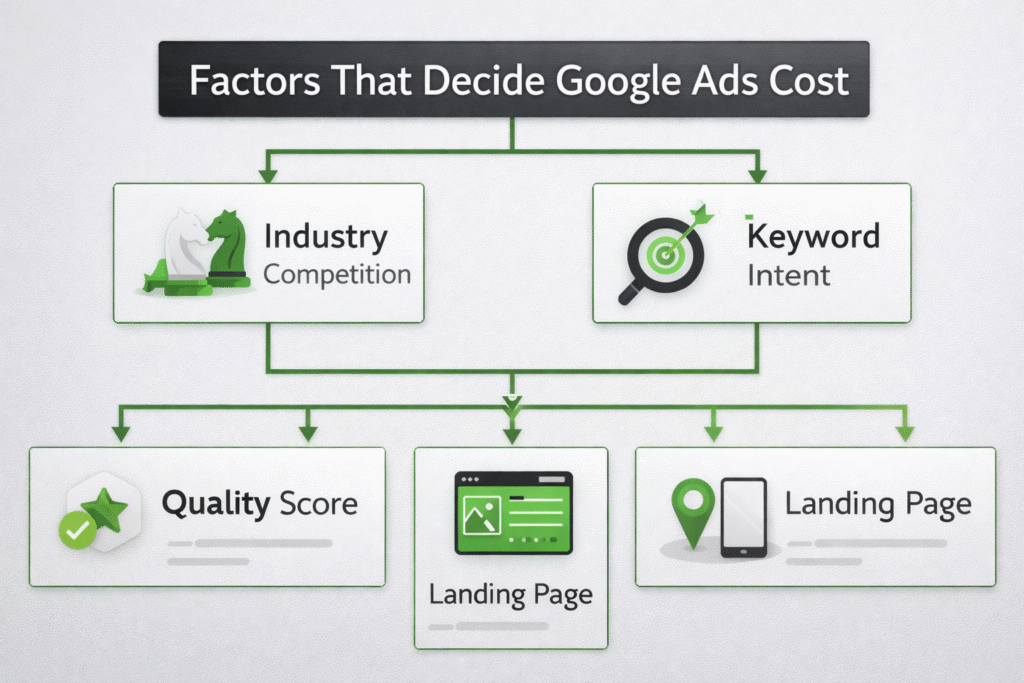
If you’ve ever wondered why two businesses can run Google Ads and end up with completely different bills, this section holds the answer. How much Google Ads cost isn’t random, and it’s definitely not fixed.
It’s shaped by a combination of competitive pressure, user behavior, and how well your ads are built. Understanding these factors is the difference between controlled spending and watching your budget disappear.
Industry Competition
The first and most obvious factor deciding how much Google Ads truly costs is your industry. Some industries are naturally more competitive because a single customer is extremely valuable. A dentist, for example, might earn thousands from one long-term patient, while a blogger earns only a few rupees per visitor. That’s why a dentist may pay ₹150 per click, while a blogger pays ₹10. The more money businesses make per customer, the more they’re willing to bid, pushing costs higher.
Keyword Intent
Not all keywords are priced the same, even within the same industry. Keywords with high buying intent—like “emergency dentist near me” or “hire SEO agency”—cost significantly more than research-based keywords such as “how to prevent cavities.” When people are ready to take action, competition increases.
This is a major reason how much Google Ads cost changes so drastically between keywords that look similar on the surface.
Quality Score (Explained Simply)
Quality Score is Google’s way of rewarding relevance. It’s based on three simple things: how relevant your ad is, how likely people are to click it, and how useful your landing page is. A higher Quality Score means Google trusts your ad, which can reduce how much Google Ads cost per click. Think of it like a credit score—better behavior earns you better rates.
Landing Page Experience
This is where many advertisers unknowingly inflate how much Google Ads cost. A slow, confusing, or poorly designed landing page leads to lower Quality Scores. For example, if your ad promises “Free Consultation” but your page is cluttered, slow, or unclear, users leave quickly. Google notices this behavior and charges you more. In short, poor landing pages drain budgets, even when keywords and ads are well-chosen.
Location Targeting
Where you show your ads has a big impact on how much Google Ads cost. Targeting metro cities usually costs more than targeting smaller towns due to higher competition. A plumber advertising in Mumbai will pay more per click than one advertising in a tier-2 city. Local demand, purchasing power, and advertiser density all influence pricing here.
Device Targeting
Mobile, desktop, and tablet users behave differently, and Google prices traffic accordingly. In many industries, mobile clicks are cheaper but convert differently. Desktop clicks may cost more but lead to higher-value actions. If device targeting isn’t optimized, how much Google Ads cost can rise without a matching return.
Time of Day & Seasonality
Ad costs fluctuate throughout the day and year. During peak business hours or festive seasons, competition increases, pushing costs up. For example, e-commerce ads during Diwali or Black Friday cost more due to high demand. Understanding these patterns helps control how much Google Ads cost by focusing spending when performance is strongest.
Bid Strategy Choices
Your bidding strategy also directly affects how much Google Ads cost. Manual bidding gives control but requires experience. Automated strategies like Maximize Conversions or Target CPA rely on data.
Choosing the wrong strategy too early can waste budget, while the right one can stabilize costs over time.
The Big Picture
So, how much Google Ads cost isn’t decided by Google alone—it’s decided by your industry, your choices, and your execution. When these factors work together, costs stay efficient. When they don’t, even a small budget can feel expensive.
What You’re Actually Paying For in Google Ads (Truth Bomb Section)
Here’s the uncomfortable truth most people don’t talk about when discussing how much Google Ads cost: you’re not really paying Google. You’re paying for what Google controls. And once you understand this, the idea that “Google Ads is expensive” starts to fall apart.
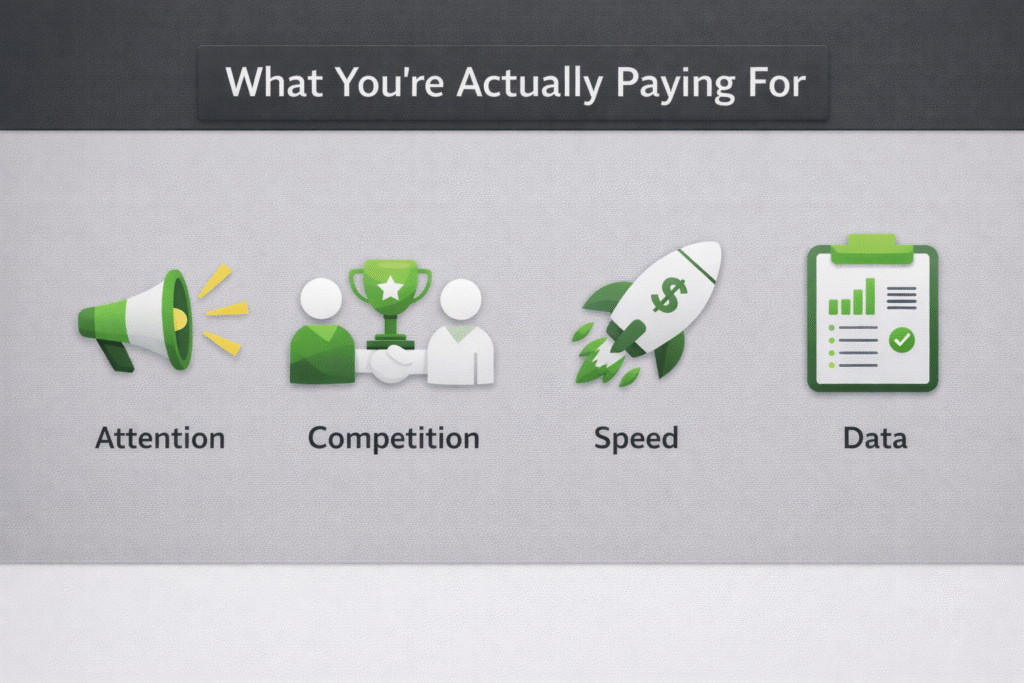
First, you’re paying for attention. Google Ads puts your business in front of people at the exact moment they’re searching, watching, or browsing. That moment of attention—especially when intent is high—is valuable.
When someone types a keyword that signals urgency or purchase intent, that attention costs more. This is a major reason why Google Ads cost feels higher in some industries than others.
Second, you’re paying for competition. If only one business wanted a keyword, clicks would be cheap. But when 10, 20, or 50 advertisers want the same audience, prices rise. Google isn’t inflating costs—advertisers are outbidding each other.
So when people complain about how much Google Ads cost, what they’re often reacting to is aggressive competition, not Google’s pricing model.
Third, you’re paying for speed. Unlike SEO, which takes months, Google Ads gives instant visibility. You can launch today and start getting traffic today. That speed comes at a price.
Businesses willing to pay for faster results naturally push costs up, influencing how much Google Ads cost across the board.
Fourth—and most overlooked—you’re paying for data. Every click, impression, and conversion teaches you something about your audience. Google Ads is one of the fastest ways to learn what works and what doesn’t.
That learning has value, even when the first campaigns aren’t profitable. Yet many advertisers forget this when evaluating how much Google Ads cost.
Now, let’s talk about hidden costs people ignore. The biggest one is the testing budget. Your first ads are rarely perfect. Testing headlines, keywords, and audiences costs money, and that’s normal.
Then there’s the learning phase, where Google’s algorithm needs data to optimise performance. During this phase, costs may seem higher, leading people to assume that the cost of Google Adsis unreasonable.
Finally, poor targeting silently drains budgets—showing ads to the wrong people makes even cheap clicks feel expensive.
This leads to the most common misconception: “Google Ads is expensive.” In reality, Google Ads isn’t expensive—inefficiency is. Poor structure, weak landing pages, wrong keywords, and unrealistic expectations inflate costs far more than the platform itself.
When you understand what you’re actually paying for, how much Google Ads cost stops being scary and starts becoming strategic. The real goal isn’t cheap clicks—it’s efficient results.
Google Ads Cost Per Click vs Cost Per Conversion
When people talk about how much Google Ads cost, the conversation almost always starts—and ends—with cost per click (CPC). “My CPC is too high” is one of the most common complaints. But focusing only on CPC is like judging a business by foot traffic alone. Clicks don’t pay bills—conversions do. That’s why CPC, by itself, is often misleading.
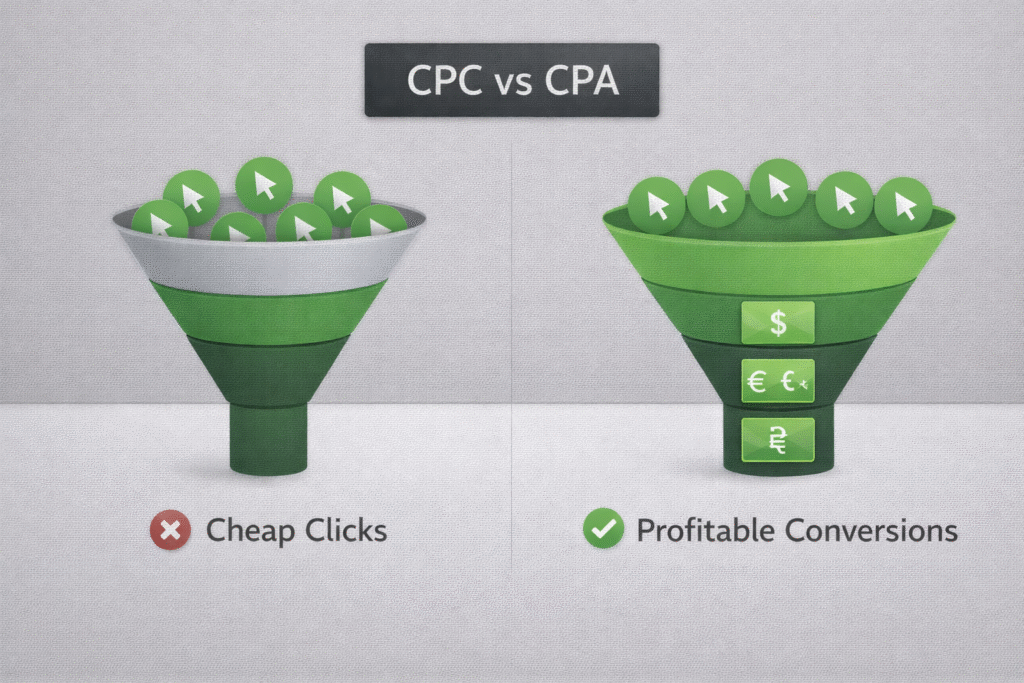
CPC tells you how much you paid to get someone to click your ad. It does not tell you whether that click was useful, interested, or ready to buy. You could pay ₹15 per click and still waste your budget if those users bounce immediately.
In that case, even though the clicks are cheap, how much Google Ads cost becomes high in terms of results. Low CPC feels good emotionally, but it doesn’t guarantee performance.
This is where cost per acquisition (CPA) matters more. CPA shows how much you spend to get a real outcome—such as a lead, enquiry, signup, or sale. A simple way to understand this is with a real-life analogy. Imagine handing out flyers outside a mall.
CPC is the cost of printing and giving out flyers. CPA is the cost of actually getting someone into your store and making a purchase. You don’t win by giving out the most flyers—you win by making sales. The same logic applies when evaluating how much Google Ads cost.
Here’s a simple example without complicated math. Campaign A has a CPC of ₹20 and spends ₹2,000 to get 100 clicks, but produces zero leads. Campaign B has a CPC of ₹120 and spends ₹2,400 to get 20 clicks, but produces 4 high-quality leads.
Campaign A looks cheaper on the surface, but Campaign B delivers value. This is a clear case where how much Google Ads cost looks higher per click but lower per result.
There are many situations where high CPC equals better ROI. High-intent keywords cost more because users are closer to taking action. A keyword like “emergency dentist near me” may have a high CPC, but even one conversion can justify the spend.
Trying to force CPC down by targeting low-intent traffic often increases how much Google Ads cost in the long run because conversions drop.
The simplest formula to remember is:
Cost per Conversion = Total Ad Spend ÷ Total Conversions
Once you stop obsessing over clicks and start measuring outcomes, how much Google Ads cost becomes a business decision—not an emotional one.
How Much Google Ads Cost for Small Businesses vs Large Brands
One of the biggest misconceptions around how much Google Ads cost is that the platform is only meant for large brands with massive budgets. In reality, Google Ads can work for both small businesses and big enterprises—but the way they spend, and what they should expect in return, is very different.
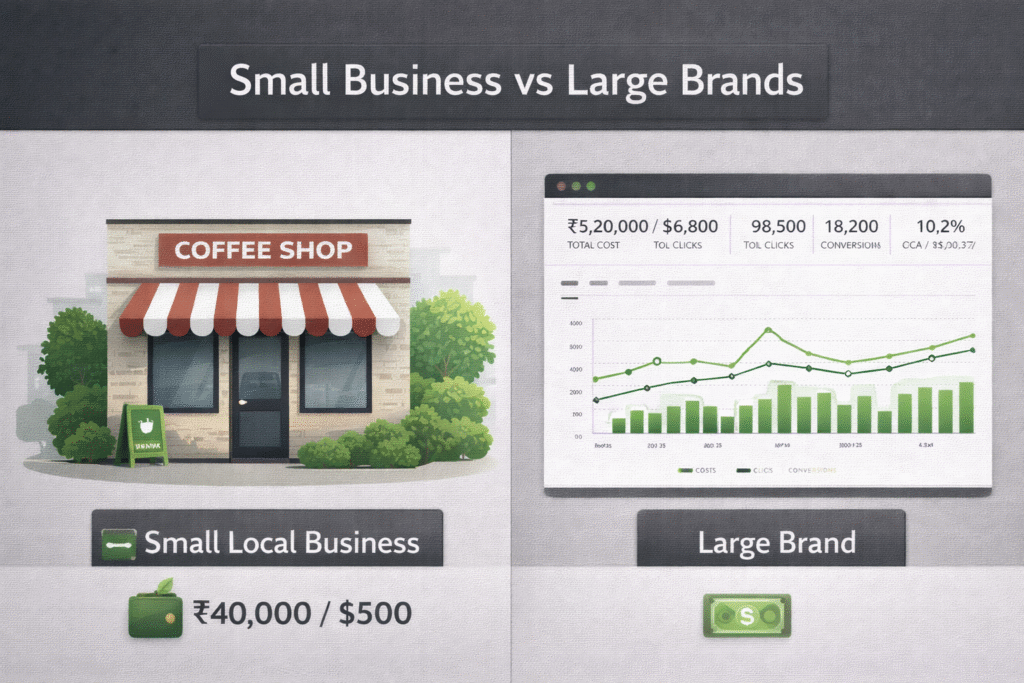
For local businesses such as salons, clinics, gyms, or repair services, budget expectations are usually modest. Most local campaigns can start effectively with ₹500–₹1,000 per day, focusing on limited geographic targeting and high-intent keywords like “near me” searches.
At this level, how much Google Ads cost stays controlled because competition is localised, not national. The goal here isn’t volume—it’s consistent leads.
Service providers like consultants, agencies, or B2B companies typically face higher competition and longer decision cycles. Their budgets often range between ₹1,000 and ₹3,000 per day, depending on industry and target audience.
Clicks may be more expensive, but lead value is also higher. For these businesses, how much Google Ads costs must be evaluated against lead quality, not just quantity.
For e-commerce brands, costs vary widely. Smaller ecommerce stores might spend ₹1,500–₹5,000 per day, while large brands spend significantly more across search, shopping, and remarketing campaigns.
Because e-commerce relies on volume, how much Google Ads cost can add up quickly—but strong product pricing and conversion rates often balance it out.
A crucial concept many overlook is the minimum viable budget. Running Google Ads with too little spend rarely works. In most industries, a monthly budget below ₹10,000–₹15,000 doesn’t generate enough data for optimisation.
When budgets are too low, people assume how much Google Ads cost is unreasonable, when the real issue is insufficient testing.
It’s also important to know when Google Ads is not recommended. If your product has extremely low margins, no clear online demand, or an unoptimized website, Google Ads may not be the right starting point. In such cases, spending on ads only inflates how much Google Ads cost without meaningful returns.
The honest limitation is this: Google Ads doesn’t fix weak offers or poor user experience. It only amplifies what’s already there. Whether you’re a small business or a large brand, how much Google Ads cost makes sense only when expectations, strategy, and execution are aligned.
Common Myths About How Much Google Ads Cost
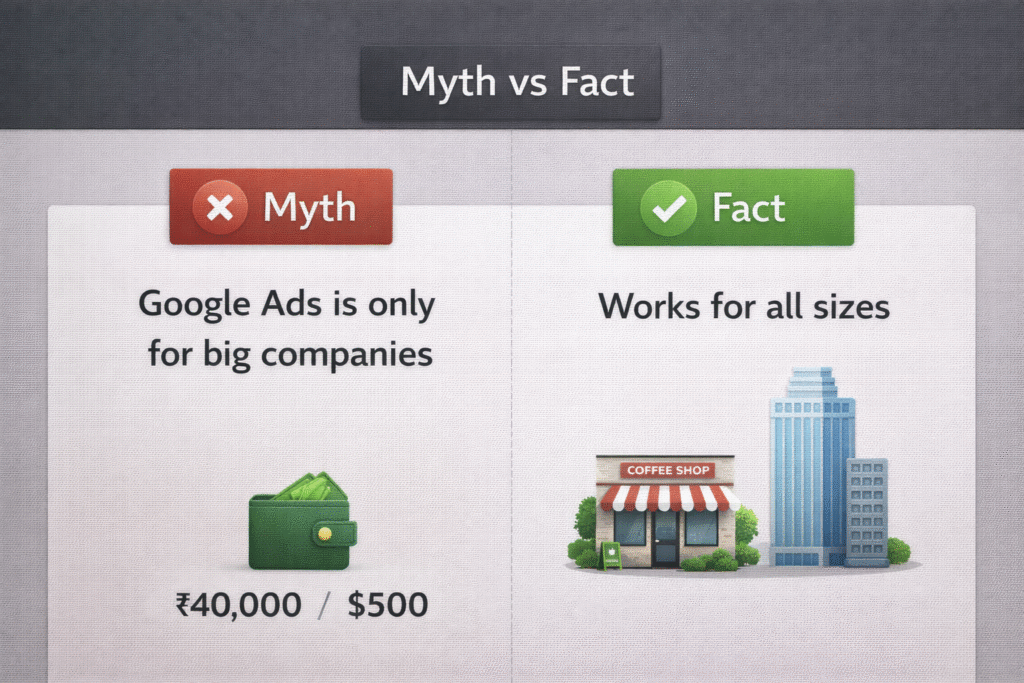
When people talk about how much Google Ads cost, myths often spread faster than facts. These misconceptions discourage businesses from advertising or push them to make poor decisions early on. Let’s clear the air—without judgment—by addressing the most common myths with clarity and empathy.
Google Ads is only for big companies
This is one of the biggest misunderstandings around how much Google Ads cost. While large brands do spend heavily, Google Ads doesn’t require a massive budget to start. Small businesses can run tightly focused campaigns with limited geographic targeting and specific keywords. The platform scales up or down based on your goals, not your company size. What matters more than budget is relevance and strategy.
Higher budget automatically means better results
Spending more doesn’t guarantee success. A poorly structured campaign with a high budget can perform worse than a well-optimized campaign with a modest one. Many advertisers increase spend hoping for better results, only to feel frustrated by how much Google Ads cost without seeing improvement. Results come from targeting, messaging, and landing pages—not just budget size.
Google decides how much you pay
This myth makes Google Ads feel unfair or unpredictable. In reality, Google doesn’t set fixed prices. Advertisers compete in auctions, and your relevance plays a huge role. If your ads and landing pages are useful, you can often pay less than competitors. So when people complain about how much Google Ads cost, it’s often a reflection of competition or setup issues, not Google “charging more.”
Google Ads is a one-time setup
Many believe you can set up ads once and let them run forever. Unfortunately, this leads to wasted spend and rising costs. Google Ads requires regular optimization—keywords change, competitors adapt, and user behavior evolves. Ignoring this makes how much Google Ads cost feel higher over time, even though the platform itself hasn’t changed.
The truth is, Google Ads isn’t expensive, exclusive, or unfair. It’s dynamic. When these myths are removed, how much Google Ads cost becomes easier to manage—and far less intimidating.
Is Google Ads Worth the Cost in 2026?
After understanding the numbers, factors, and myths, the final question is obvious: Is Google Ads actually worth it in 2026? The short answer is yes—but only when expectations are realistic, and strategy is clear.
Whether or not it’s worth the investment depends on how you measure return and how well your campaigns are executed.
From an ROI perspective, Google Ads still offers strong potential in 2026 because it targets users with intent. Unlike many channels where you interrupt people, Google Ads shows your message when users are actively searching, watching, or comparing options.
When campaigns are structured properly, the return often outweighs how much Google Ads cost, especially for businesses with clear conversion goals and decent margins.
It’s also important to separate short-term gains from long-term value. In the short term, Google Ads delivers speed—traffic, leads, and sales almost immediately. This makes it ideal for new businesses, product launches, or seasonal promotions.
In the long term, ads provide valuable data on keywords, audiences, and messaging. That data can be reused across marketing channels, helping justify how much Google Ads cost beyond immediate revenue.
The real power appears when SEO and Google Ads work together. SEO builds sustainable, long-term traffic, while ads fill the gaps and capture high-intent searches instantly.
Many businesses reduce risk by using ads to test keywords before investing heavily in SEO. When both channels align, how much Google Ads cost feels less like an expense and more like a strategic investment.
So, who should invest seriously in Google Ads? Businesses with clear online demand, competitive offers, and the ability to track conversions benefit the most. Service providers, ecommerce brands, and local businesses with strong landing pages often see consistent returns.
On the other hand, if margins are thin or the website experience is weak, ads may struggle—making how much Google Ads cost harder to justify.
In 2026, Google Ads isn’t about spending more—it’s about spending smarter. When strategy, data, and goals align, the cost makes sense, and the value becomes clear.
So, How Much Google Ads Cost — Final Answer
So, after breaking down numbers, ad types, factors, and myths, what’s the real final answer to how much Google Ads cost? The truth is this: there is no fixed price. And that’s not a weakness—it’s actually the platform’s biggest strength.
Google Ads doesn’t work on a flat-rate model because businesses, industries, and goals are never the same. How much Google Ads cost depends on several moving parts working together.
Your industry competition, keyword intent, Quality Score, targeting choices, ad format, and even the time of year all influence what you pay. That’s why two businesses can spend completely different amounts and still succeed.
What matters most is control and strategy. You control your budget, bids, locations, devices, and objectives. When campaigns are structured well, costs stay predictable and performance improves. When they aren’t, even a small budget can feel expensive.
In other words, how much Google Ads cost is often less about the platform and more about how intentionally it’s used.
It’s also important to stop viewing Google Ads as “money spent” and start seeing it as data-driven decision-making. Ads tell you which keywords convert, which messages resonate, and which audiences respond.
That insight alone can be worth the investment—especially when used alongside SEO, content, and other marketing channels.
The smartest approach is not asking, “Is Google Ads cheap or expensive?” but rather, “Does this cost make sense for my business goals?” When expectations are realistic, tracking is in place, and optimization is ongoing, how much Google Ads cost becomes manageable, measurable, and justifiable.
The final takeaway is simple: Google Ads isn’t about finding the lowest cost—it’s about finding the right balance between cost, intent, and return. With the right strategy, the numbers stop being scary and start making sense.
Interested in learning more? Contact RKDMT – Raju Kumar Digital Marketer – Best Digital Marketing Training Institute
🔗www.rajukumardigitalmarketer.com
📞 +91-7303933302, +91-9217057127
📧 rkdmt@rajukumardigitalmarketer.com
How much should beginners spend on Google Ads?
Beginners usually start with a daily budget of ₹500–₹1,000, which is enough to test keywords, ads, and targeting without overspending in the early stage.
What is the minimum budget needed to run Google Ads?
A practical monthly budget is ₹10,000–₹15,000. This allows campaigns to collect enough data for optimization and meaningful performance analysis.
Is Google Ads suitable for small businesses?
Yes. Small businesses can run highly targeted campaigns focused on local searches or specific services. Success depends more on strategy than company size.
Why do ad costs vary so much between industries?
Industries with high customer value—such as legal, finance, or healthcare—have more advertisers competing for the same keywords, which increases bidding pressure and costs.
Do I pay for Google Ads even if no one clicks?
No. In most campaign types, you’re charged only when someone clicks your ad. Impressions alone do not increase ad spend.
How can ad spend be reduced without hurting performance?
Costs can be controlled by improving ad relevance, using negative keywords, targeting high-intent searches, and optimizing landing page experience.
Is Google Ads more expensive than social media ads?
Search ads often have higher click costs than social platforms, but they usually attract users with stronger intent, which can result in better conversion rates.
How long does it take to see results from Google Ads?
Most campaigns need 2–4 weeks to exit the learning phase. During this time, performance stabilizes as Google’s algorithm gathers data.
Can I control my Google Ads budget?
Yes. Advertisers set daily limits, bidding strategies, locations, and schedules, giving full control over total spending at all times.
Is Google Ads worth the investment in 2026?
For businesses with clear goals, proper tracking, and optimized websites, paid search remains a strong channel. When managed well, how much Google Ads cost is justified by the returns it can generate.

Founder at Digital Marketing Marvel | Founder at RKDMT – Raju Kumar Digital Marketing Trainer | Best Digital Marketing Trainer in Delhi/NCR – Digiperform | Project Manager | 5+ years | Genius Study Abroad & Inlingua’s Digital Marketing Head | Learn Digital Marketing