


How Does Google Ads Work in 2026? Easy Explanation with Examples
Online advertising in 2026 is more competitive, more automated, and more data-driven than ever before. With billions of searches happening every day, businesses no longer rely only on social media or organic traffic to reach potential customers.
People still turn to Google first when they want to buy a product, compare services, or solve a problem. This is where paid search plays a critical role. Instead of waiting months for SEO results, brands can appear instantly in front of users who are already searching for exactly what they offer.
Despite the rise of new platforms and AI-powered marketing tools, Google Ads remains the backbone of online advertising strategies. The reason is simple: Google captures user intent better than any other platform. When someone searches for “best laptop under 60000” or “plumber near me,” they are not browsing casually—they are ready to take action.
Businesses that understand this behavior can turn search queries into real customers within hours. That is why companies of all sizes, from local stores to global enterprises, continue to invest in Google Ads year after year.
However, many beginners still feel confused about the system. They know Google Ads is powerful, but they do not fully understand how does google ads work behind the scenes.
Questions about bidding, keywords, budgets, and ad ranking often stop people from getting started or lead to wasted money on poorly structured campaigns.
This guide is designed to remove that confusion. By the end of this article, you will clearly understand how the Google Ads ecosystem functions in 2026, from the moment a user types a query to the second your ad appears on their screen.
You will learn the step-by-step process of setting up campaigns, choosing the right keywords, writing effective ads, controlling costs, and tracking performance.
Whether you are a student, freelancer, small business owner, or marketing professional, this guide will give you the practical knowledge you need to run confident, profitable Google Ads campaigns.
What Is Google Ads and Why It Matters
Google Ads is Google’s online advertising platform that allows businesses to display their ads across Google Search, YouTube, Gmail, websites in the Google Display Network, and mobile apps.
Advertisers do not pay to simply show ads; instead, they usually pay when someone clicks on the ad or completes a specific action such as filling out a form or making a purchase. This performance-based model makes Google Ads one of the most efficient digital marketing tools because every rupee spent can be tracked and measured.
When Google first introduced the platform in 2000 as Google AdWords, it was a simple keyword-based system where advertisers bid on search terms and appeared in text-only results.
Over the years, it has evolved into a sophisticated AI-powered advertising ecosystem. Today, in 2026, Google Ads uses advanced automation, smart bidding, predictive targeting, and real-time data signals to decide when and where your ads should appear.
Campaign types now go far beyond search, including Performance Max, YouTube Shorts ads, shopping ads with product feeds, and app promotion campaigns that optimize automatically across multiple channels.
The importance of Google Ads is not limited to one business size. For small businesses, it provides immediate visibility in local searches without needing a large marketing budget. A local salon or repair service can target customers within a few kilometers and start receiving leads the same day.
Medium-sized businesses use Google Ads to scale, test new markets, and compete with bigger brands using smart targeting instead of massive budgets. Large enterprises rely on Google Ads for global reach, brand awareness, and precise control over messaging across multiple countries and languages.
Understanding how does google ads work is what separates profitable advertisers from those who waste money. When you know how bidding, Quality Score, ad relevance, and user intent interact, you can reduce costs while increasing conversions.
You also gain the ability to read performance data correctly, optimize campaigns regularly, and align your ads with business goals instead of just chasing clicks.
In simple terms, Google Ads is not just about running ads—it is about running the right ads, in front of the right people, at the right time. And that only becomes possible when you truly understand the system behind it.
How Does Google Ads Work – Complete Overview
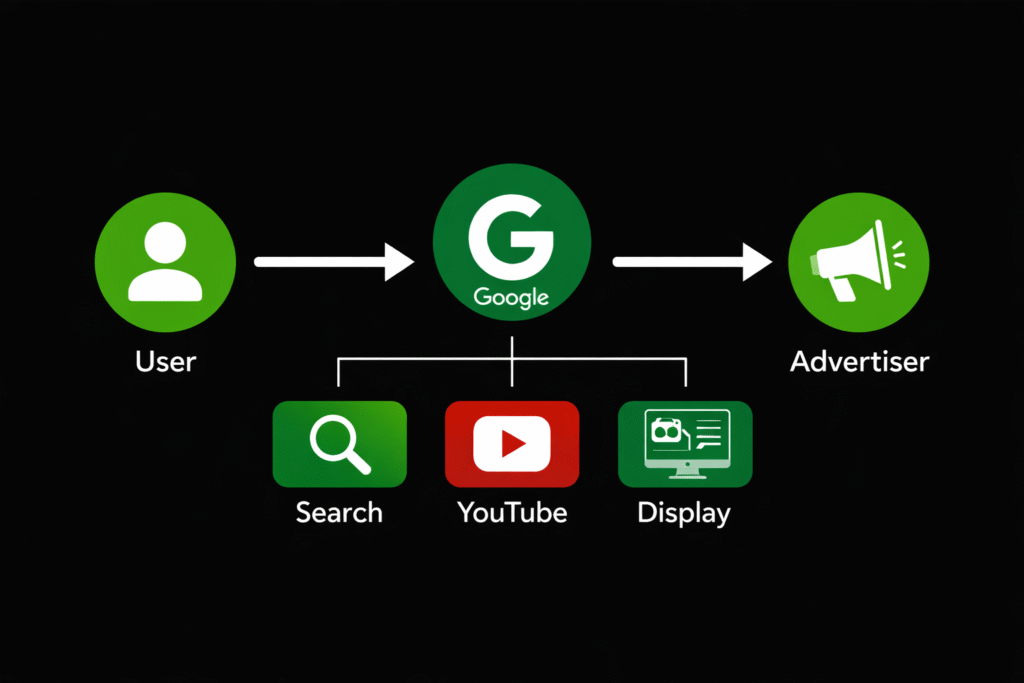
To understand the true power of online advertising, it is essential to first learn the basic working model of Google Ads. At its core, Google Ads connects three parties: the advertiser who wants to promote a product or service, the user who is actively searching for information or solutions, and Google itself, which acts as the platform that matches the two.
This system runs in real time, processing millions of searches every minute and deciding which ads should appear for each query.
So, how does google ads work in a practical sense? An advertiser creates a campaign, chooses keywords related to their business, sets a budget, and writes ad copies.
When a user types a search query into Google, the system instantly scans all relevant ads and runs an automated auction. This entire process takes place in a fraction of a second, even before the search results page loads.
Each party plays a clear role in this ecosystem. Advertisers compete for visibility by selecting keywords, bidding on them, and optimizing their campaigns. Users express their intent through search terms, videos they watch, or websites they visit.
Google uses this intent, combined with advertiser data, to deliver the most relevant and useful ads possible. The goal is not just to show ads, but to ensure users see results that genuinely match what they are looking for.
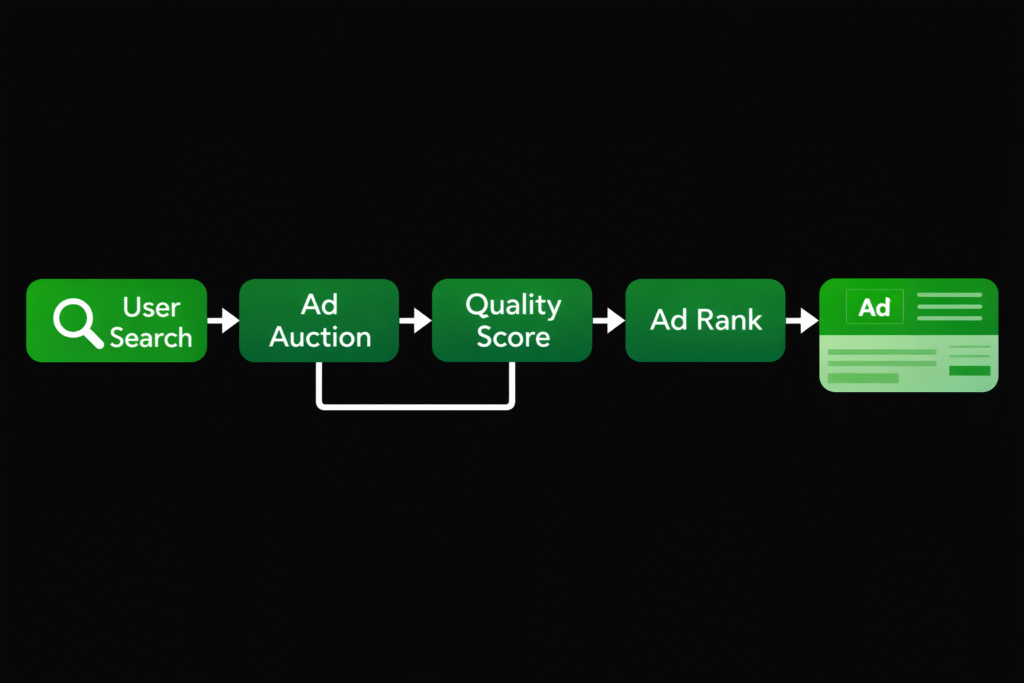
The ad auction is the engine behind everything. Contrary to popular belief, the highest bidder does not automatically win. Instead, Google calculates something called Ad Rank, which is based on your bid amount, the quality of your ads, expected click-through rate, landing page experience, and the relevance of your keywords.
This means a smaller business with highly relevant ads can outrank a larger competitor with a bigger budget but poor quality. This is a critical part of how does google ads work efficiently for all business sizes.
Ads do not appear only on the Google search results page. They are displayed across the entire Google Network, which is divided into two main parts. The Search Network includes Google search results, Google Maps, Shopping listings, and partner search websites.
The Display Network consists of millions of websites, blogs, news portals, mobile apps, and YouTube, where visual or video ads appear while users browse content. Performance Max campaigns now allow advertisers to reach users across all these channels with a single campaign, making the system even more powerful.
Understanding where your ads appear is as important as knowing how does google ads work technically. A local business may focus on search ads to capture high-intent users, while an e-commerce brand may use shopping and YouTube ads to build awareness and retarget visitors. Each placement serves a different purpose in the customer journey.
In summary, the system works by matching user intent with advertiser offers through a real-time auction that prioritizes relevance, not just money.
Once you understand how does google ads work at this foundational level, every advanced feature—bidding strategies, targeting options, and performance tracking—starts to make logical sense.
Step 1: Setting Up Your Google Ads Account
The first step to running successful campaigns is creating your Google Ads account correctly. This foundation decides how smoothly everything else will work later. To begin, you sign in using your Google account and go to the Google Ads platform, where you are guided through the initial setup.
At this stage, Google often encourages users to use “Smart Mode,” but for long-term control and better results, it is recommended to switch to Expert Mode. This gives you full access to all campaign types, bidding options, and targeting features.
After entering your business name and website, you are asked to choose your primary advertising goal. These goals include generating website visits, phone calls, form submissions, app installs, or in-store visits.
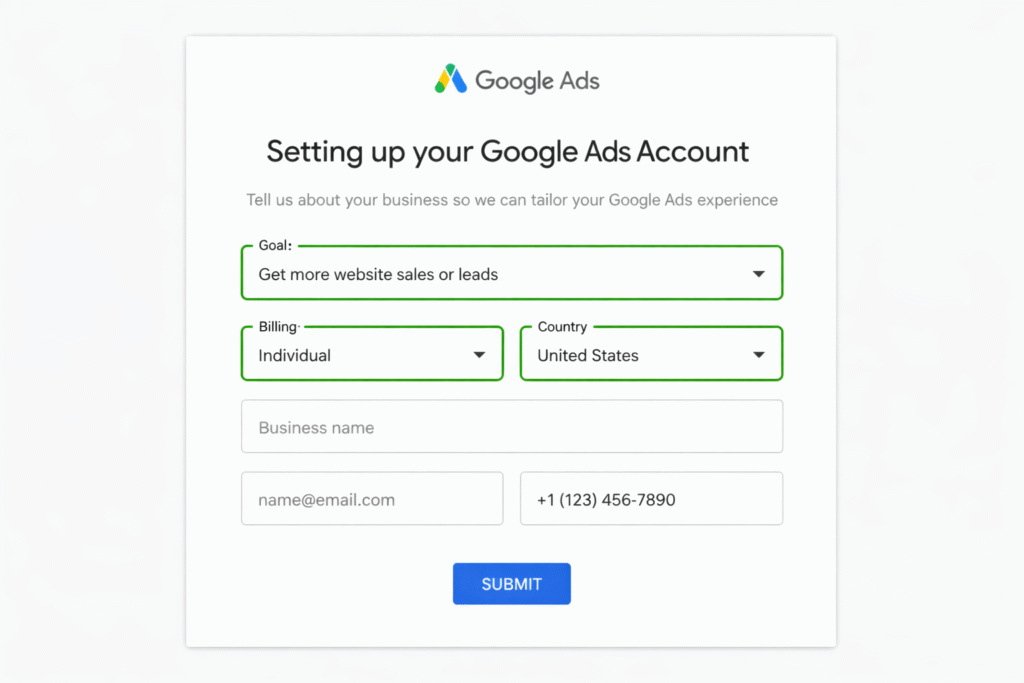
Selecting the correct objective is crucial because Google tailors campaign settings and optimization signals based on this choice. For example, a business that wants phone calls will see very different ad formats compared to an online store focused on purchases. This is an early point where understanding how does google ads work begins to influence your results.
Next comes billing and account preferences. You must choose your country, time zone, and currency carefully because these settings cannot be changed later. Your billing profile includes payment method, automatic or manual payments, and spending limits.
If your time zone is incorrect, your ads may run at the wrong hours, affecting both budget control and performance reporting. Currency errors can create confusion when analyzing costs and returns. These details may seem minor, but they directly impact how your campaigns function daily.
Setup accuracy is often underestimated by beginners, yet it plays a major role in how does google ads work over time. When your account is configured properly from the start, Google’s system collects clean data, understands your business objectives clearly, and applies automation more effectively.
On the other hand, rushed setups with wrong goals, generic targeting, or incorrect billing information can lead to wasted spend and misleading performance insights.
Think of your account setup as building the foundation of a house. If the foundation is weak, every campaign you create later will struggle to deliver stable results.
By taking the time to choose the right goals, review billing settings carefully, and avoid shortcuts, you give yourself a strong starting point that supports growth, optimization, and profitability in the long run.
Step 2: Understanding Google Ads Campaign Structure
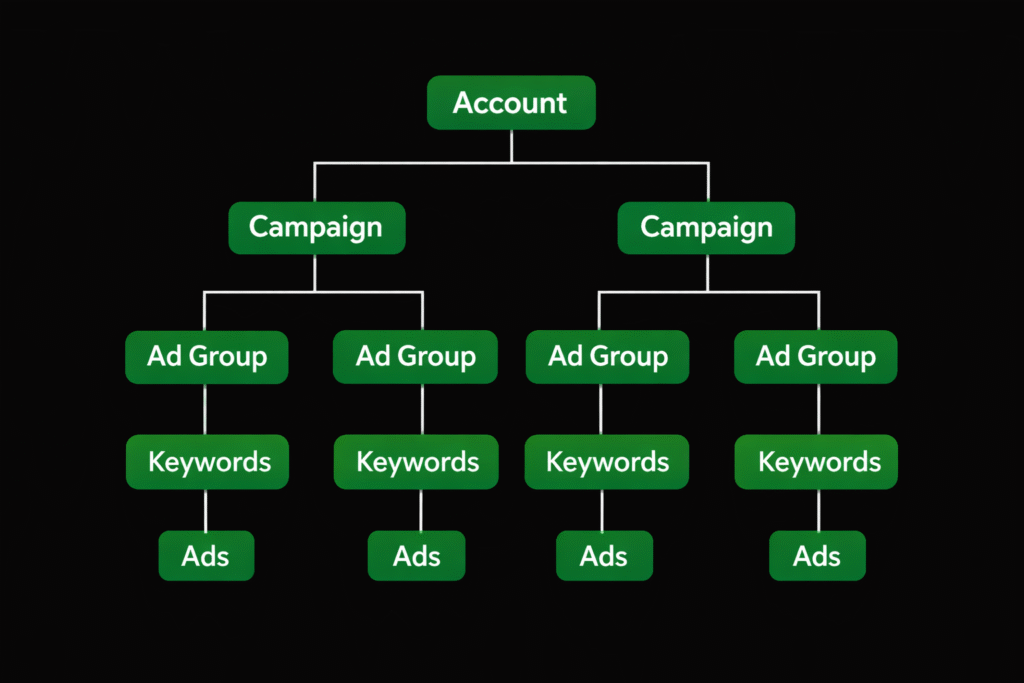
To run profitable campaigns, you must clearly understand the hierarchy of Google Ads. The platform follows a simple but powerful structure: Account → Campaign → Ad Group → Keywords → Ads.
Each level has a specific purpose, and when all levels are aligned properly, your ads become more relevant, your costs reduce, and conversions increase.
At the top is the account, which holds your billing details, access permissions, and overall settings. Inside the account, you create campaigns, each designed for a specific objective such as lead generation, product sales, or brand awareness.
Campaigns control your budget, location targeting, bidding strategy, and network selection. For example, you may have one campaign for “Search – Website Leads” and another for “YouTube – Brand Awareness.”
Within every campaign are ad groups. These are smaller thematic clusters that organize your keywords and ads. Instead of putting all keywords into one large group, you should divide them by intent or product category.
For instance, a digital marketing institute might create one ad group for “Google Ads course,” another for “SEO training,” and a third for “social media marketing classes.” This segmentation ensures your ad copy directly matches the user’s search.
Inside each ad group, you select keywords—the exact terms people type into Google. Keywords tell the system when your ad is eligible to appear. Choosing focused keywords with clear intent is critical, because they shape how does google ads work at the most fundamental level.
Finally, you write ads that respond to those keywords with compelling headlines, benefits, and calls to action.
In 2026, Google Ads offers multiple campaign types to match different business needs. Search campaigns show text ads on Google search results. Display campaigns place visual ads across websites and apps. Video campaigns run on YouTube. Shopping campaigns promote product listings for e-commerce brands. Performance Max campaigns automatically distribute ads across all networks using AI.
Each type still follows the same core structure, but the creative format and targeting methods differ.
Here is a simple example of a properly structured account for a local training institute:
- Account: RKDMT Digital Marketing
- Campaign: Search – Google Ads Course
- Ad Group: Google Ads Training
- Keywords: google ads course, google ads training institute
- Ads: Focus on course benefits and certifications
- Ad Group: PPC Course
- Keywords: ppc course, pay per click training
- Ads: Highlight career opportunities
- Ad Group: Google Ads Training
- Campaign: Search – SEO Course
- Ad Group: SEO Training
- Keywords: seo course, seo training in delhi
- Ads: Emphasize practical learning
- Ad Group: SEO Training
- Campaign: Search – Google Ads Course
This clean structure allows each ad to directly answer the user’s intent, which is a core principle of how does google ads work effectively.
A poor structure, on the other hand, mixes unrelated keywords in one ad group, forcing you to write generic ads that appeal to no one. This leads to low Quality Score, higher cost per click, and weak conversion rates.
When your structure is tight and logical, Google understands your relevance better, users click more often, and your ad spend produces real business results.
Step 3: Keyword Research – The Backbone of Google Ads
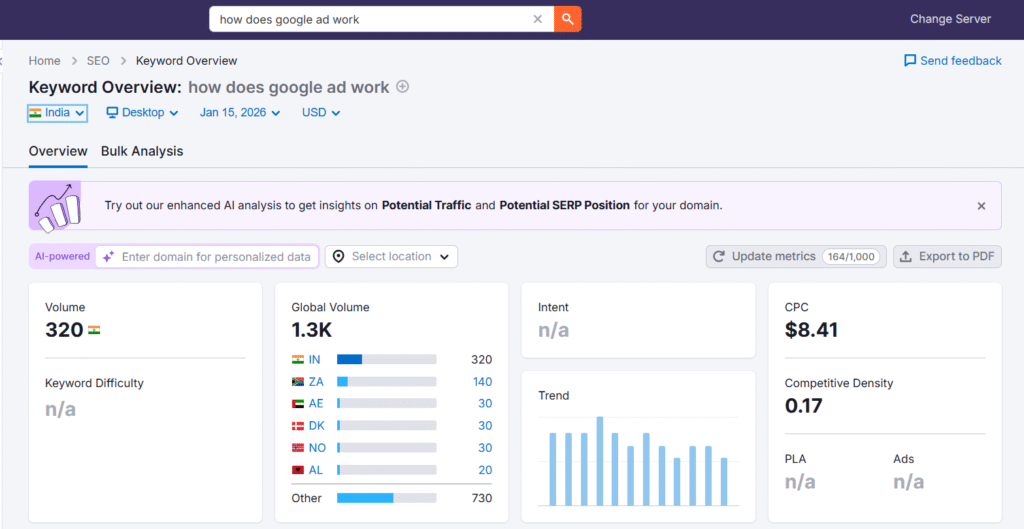
Keywords are the foundation of every successful Google Ads campaign. They are the words and phrases that people type into Google when they are looking for products, services, or information.
In Google Ads, you choose keywords that closely match what your potential customers are searching for, so your ads appear at the exact moment they are ready to take action. Without strong keyword research, even the best ad copy and landing pages cannot perform well.
To truly understand how does google ads work, you must also understand match types. Match types control how closely a user’s search must resemble your keyword in order to trigger your ad. There are three main match types used in 2026:
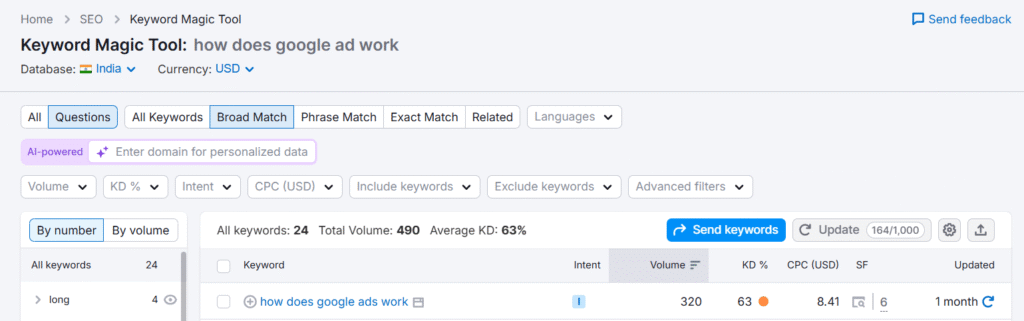
- Broad match allows your ad to appear for related searches, synonyms, and variations. It offers the widest reach but can bring irrelevant traffic if not managed carefully.
- Phrase match shows your ad when the search includes the meaning of your keyword in the same order. It balances reach and control.
- Exact match displays your ad only when the search closely matches your keyword, giving you the highest relevance and best control over spend.
Keyword intent is what transforms clicks into customers. Not all keywords are equal. Some users are researching, some are comparing, and others are ready to buy.
For example, a person searching “what is digital marketing” is still learning, while someone searching “digital marketing course in delhi with fees” is close to making a decision. When your keywords match this buying intent, you attract users who are more likely to convert.
This alignment between intent and targeting is a critical part of how does google ads work profitably.
Let us look at a practical example for a service-based business, such as a plumbing company. Instead of using a generic keyword like “plumber,” which may be too broad, a better approach would be to use intent-based keywords such as “emergency plumber near me,” “water leakage repair service,” or “24-hour plumber in South Delhi.”
These searches indicate urgency and readiness to hire, which means every click has a higher chance of becoming a customer.
At the same time, adding negative keywords like “jobs,” “salary,” or “free” ensures your ads do not show to people who are not looking to hire a plumber. This saves budget and improves conversion rates.
In simple terms, keywords decide when your ads appear, match types decide how wide your reach is, and intent decides whether the click is valuable or not. Once you master this step, the logic behind how does google ads work becomes much clearer, and your campaigns start delivering consistent, meaningful results.
Step 4: Creating High-Converting Ads
Even with perfect keywords and targeting, your campaign will fail if your ads do not convince users to click. Creating high-converting ads is about writing short, clear, and benefit-focused messages that instantly connect with the user’s search intent.
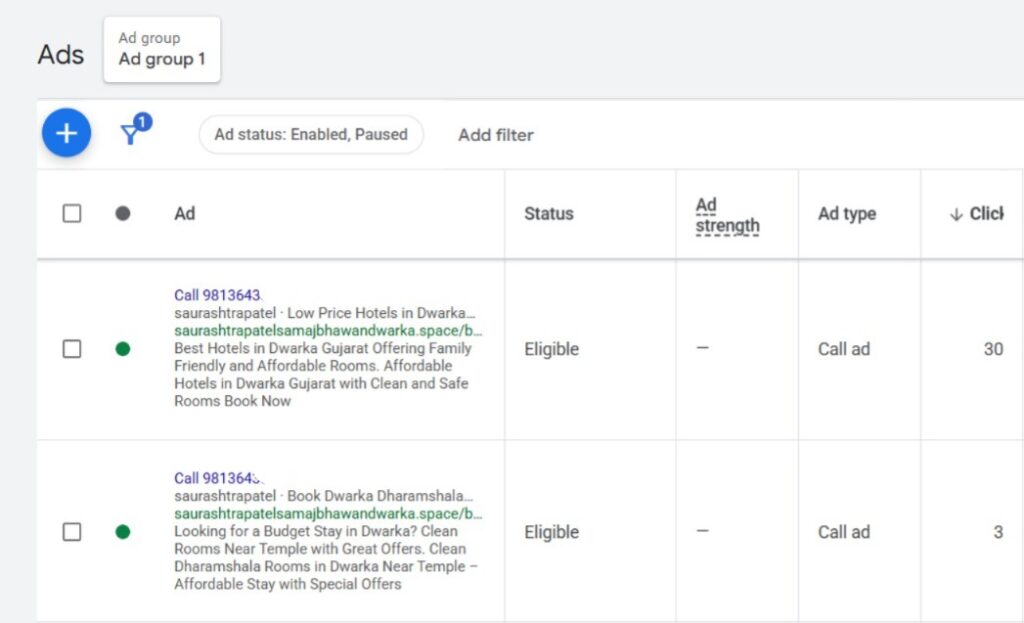
When writing ad headlines, your first goal is to match what the user is searching for. If someone types “Google Ads course in Delhi,” your headline should include a close variation of that phrase instead of something generic like “Best Marketing Services.”
Headlines should highlight value, such as certification, results, experience, or limited-time offers. Use action-oriented language like Learn, Enroll, Get Started, or Boost Your Sales to encourage clicks.
Your descriptions support the headlines by explaining why your service or product is the best choice. Instead of listing features, focus on outcomes.
For example, “Hands-on training with live projects and job assistance” is far more persuasive than “We provide digital marketing classes.” The clearer your benefit, the higher your click-through rate.
Ad extensions play a major role in improving performance. In 2026, extensions such as call extensions, sitelinks, callouts, structured snippets, and lead form extensions allow you to display extra information without extra cost.
A local business can use call extensions to let users call directly from the ad, while an institute can use sitelinks to show links like Course Curriculum, Fees, or Student Reviews. These extensions increase visibility and trust, making your ad occupy more space on the results page.
Consider this example of a poor ad:
“Digital Marketing Services Available. Contact Us Today.”
Now compare it with a strong ad:
“Google Ads Course in Delhi – Get Certified in 8 Weeks. Live Projects, Expert Trainers. Enroll Now.”
The second ad is specific, relevant, and benefit-driven. This is the type of message that attracts high-intent clicks.
Ad relevance is at the heart of how does google ads work efficiently. Google measures how closely your ad matches the keyword and the user’s intent. When relevance is high, your Quality Score improves, your cost per click decreases, and your ad position rises even if your bid is lower than that of competitors. This means better results at a lower cost.
Every time you write an ad, ask yourself: Does this directly answer what the user is searching for? If the answer is yes, you are aligning with how does google ads work at a fundamental level and setting your campaign up for consistent success.
Step 5: How Google Ads Auction Works

Many beginners believe that Google Ads is simply a bidding war where the advertiser with the highest budget always appears at the top. In reality, the system is far more intelligent.
To understand how does google ads work, you must understand what happens in the background every time a user types a search query.
The moment a user searches for something like “best digital marketing course in Delhi,” Google instantly scans its database to find all advertisers who are targeting that keyword.
From this list, it removes ads that do not meet quality or policy requirements. Then, an auction is triggered. This entire process happens in milliseconds, even before the search results load on the screen.
At this stage, Google evaluates every eligible ad using something called Quality Score. Quality Score is a measure of how relevant and useful your ad is to the user.
It is not a fixed number; it changes based on performance and user behavior. The main factors that influence Quality Score are:
- Expected click-through rate: How likely users are to click your ad based on past performance.
- Ad relevance: How closely your ad matches the user’s search query.
- Landing page experience: How useful, fast, and relevant your landing page is once users click your ad.
These three elements together decide whether your ad deserves to be shown above others, even if your bid is lower.
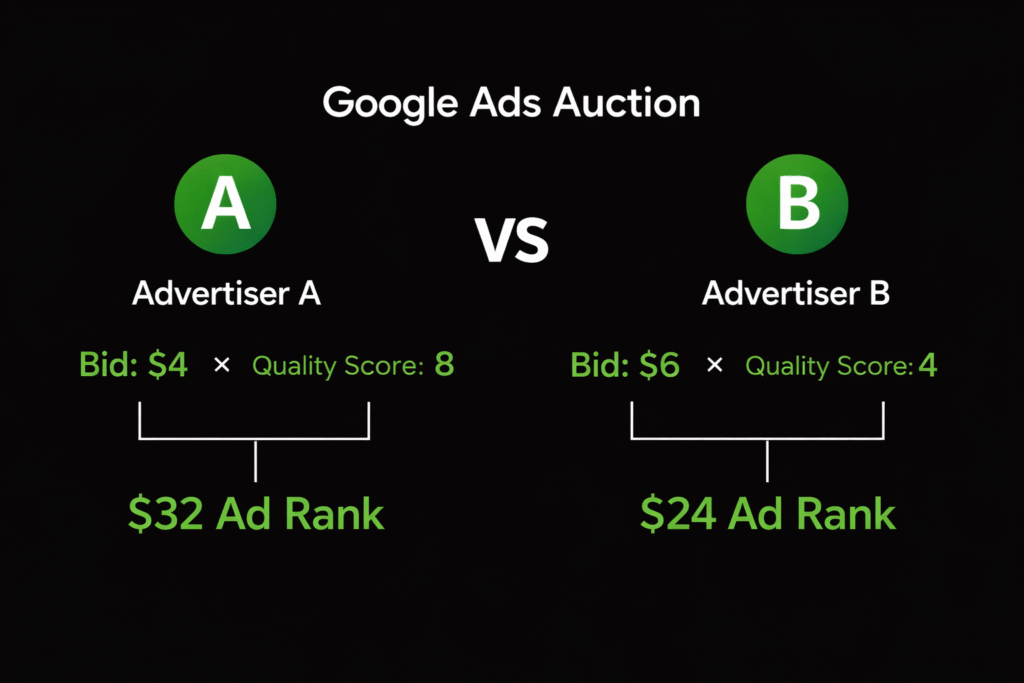
Once the Quality Score is calculated, Google determines the Ad Rank. Ad Rank is the value that decides your ad position. It is calculated using your maximum bid multiplied by your Quality Score, along with other context signals such as device, location, and search intent. This is the core mechanism behind how does google ads work fairly for all advertisers.
Now, let us look at a simple example. Two institutes are bidding on the keyword “Google Ads course.”
- Advertiser A bids ₹50 per click but has a low Quality Score of 4 because their ad is generic and their landing page is slow.
- Advertiser B bids ₹35 per click but has a Quality Score of 8 because their ad is highly relevant and their landing page is well optimized.
Even though Advertiser A is willing to pay more, Advertiser B wins the higher position because their Ad Rank is stronger. This example shows that relevance and user experience matter more than just money.
Understanding this auction system is essential if you want to control costs and improve performance. When you optimize your ads, keywords, and landing pages, you improve Quality Score, which lowers your cost per click and boosts your visibility.
This is a practical demonstration of how does google ads work beyond simple bidding.
In summary, every search triggers a fast, intelligent auction where Google selects ads based on both bid value and quality. Once you grasp this process, you stop guessing and start making informed decisions that lead to consistent, profitable campaigns.
Step 6: Bidding, Budgets, and Cost Control
Once your campaigns are live, the next major factor that decides performance is how you manage bidding and budgets. Google Ads offers different bidding models depending on your goals. The most common is CPC (Cost Per Click), where you pay only when someone clicks your ad.
This is ideal for driving website traffic or generating leads. CPM (Cost Per Thousand Impressions) is mainly used for display and video campaigns when the goal is brand awareness rather than immediate action.
CPA (Cost Per Acquisition) allows you to tell Google how much you are willing to pay for a conversion such as a form fill or purchase, making it suitable for businesses that track clear outcomes.
Setting your daily and monthly budgets is equally important. Your daily budget controls how much Google can spend per day on a campaign, while your monthly budget is simply your daily budget multiplied by the number of days in the month.
It is recommended to start with a moderate amount that you can comfortably afford to test. As performance improves, budgets can be scaled. This gradual approach protects your finances while helping you understand how does google ads work with your specific audience.
In 2026, Smart Bidding plays a larger role than ever. These are automated strategies powered by machine learning that adjust bids in real time based on signals such as device type, location, time of day, and user behavior.
Options like Maximize Conversions, Target CPA, and Target ROAS remove much of the manual work, but they rely heavily on accurate conversion tracking. When implemented correctly, Smart Bidding can outperform manual bidding by finding hidden opportunities that humans often miss.
Your bidding strategy directly affects your visibility. If your bids are too low, your ads may rarely show, especially for competitive keywords.
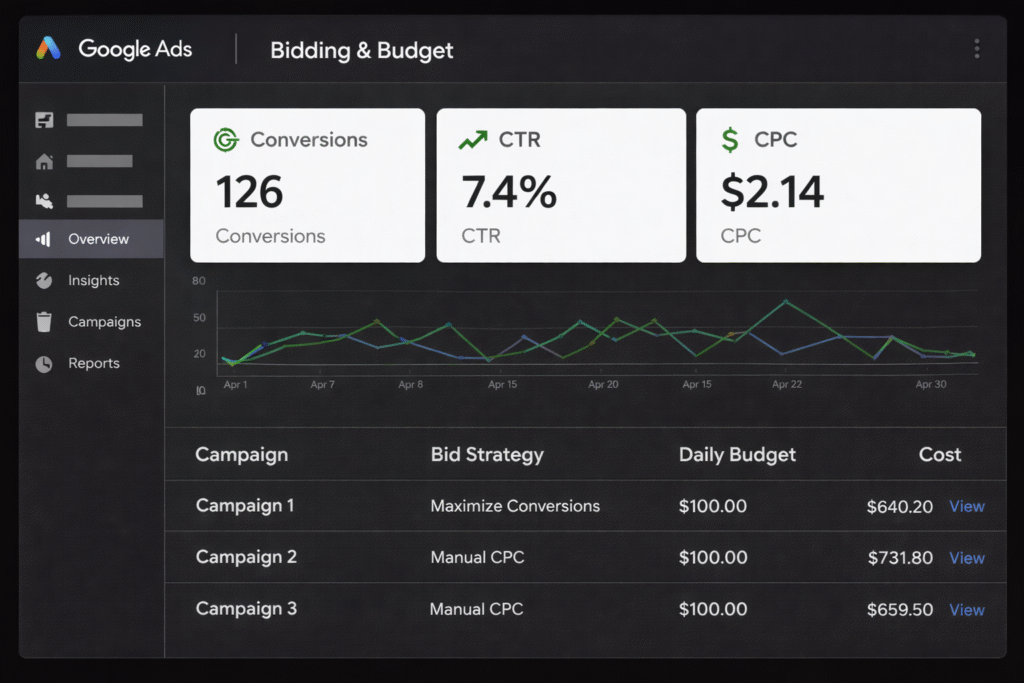
If they are too high without proper optimization, you may receive clicks that do not convert, draining your budget. The goal is to balance bid amounts with Quality Score so that you win valuable auctions at the lowest possible cost.
This balance is a practical example of how does google ads work efficiently: Google rewards advertisers who combine smart bidding with high relevance. When your bids, budgets, and optimization strategy are aligned, you gain consistent exposure without overspending.
Options like Maximize Conversions, Target CPA, and Target ROAS remove much of the manual work, but they rely heavily on accurate conversion tracking. When implemented correctly, Smart Bidding can outperform manual bidding by finding hidden opportunities that humans often miss.
Your bidding strategy directly affects your visibility. If your bids are too low, your ads may rarely show, especially for competitive keywords. If they are too high without proper optimization, you may receive clicks that do not convert, draining your budget.
The goal is to balance bid amounts with Quality Score so that you win valuable auctions at the lowest possible cost.
This balance is a practical example of how does google ads work efficiently: Google rewards advertisers who combine smart bidding with high relevance. When your bids, budgets, and optimization strategy are aligned, you gain consistent exposure without overspending.
Step 7: Tracking Results and Measuring Success
Running ads without tracking results is like driving with your eyes closed. To truly understand how does google ads work, you must measure what users do after clicking your ads. This is where conversions come in.
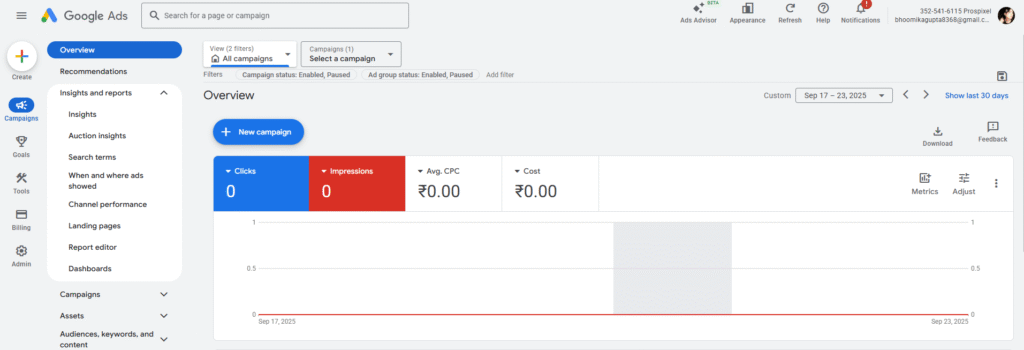
A conversion is any valuable action taken by a user, such as submitting a contact form, making a purchase, calling your business, or downloading a brochure. You define these actions based on your business goals, and Google Ads tracks how often they occur.
Google Ads provides several important metrics that help you evaluate performance. Impressions show how many times your ad was displayed. Clicks indicate how many users engaged with your ad. CTR (Click-Through Rate) measures how attractive your ad is to users.
CPC (Cost Per Click) shows how much you pay for each click, while Conversion Rate tells you how many clicks turn into real actions. Cost Per Conversion reveals how much you are paying for each lead or sale. Together, these numbers tell the full story of your campaign.
To get deeper insights, it is essential to connect Google Analytics with your Google Ads account. This integration allows you to see what users do after they land on your website. You can track how long they stay, which pages they visit, where they drop off, and which traffic sources perform best.
For example, you may discover that users coming from mobile ads leave quickly, while desktop users convert at a higher rate. These insights are key to refining your strategy.
The final step is learning how to interpret the data so you understand what works and what does not. If a keyword gets many clicks but no conversions, it may be attracting the wrong intent. If an ad has high impressions but low CTR, your message may not be relevant enough.
When certain landing pages convert better, you can replicate their structure across other campaigns.
This analytical mindset is central to mastering how does google ads work in real life. Success does not come from launching campaigns and hoping for the best. It comes from continuously reviewing performance, identifying patterns, and making data-driven improvements that move your campaigns closer to your business goals.
Step 8: Optimizing Your Campaigns for Better ROI
Launching your campaigns is only the beginning. Real success in Google Ads comes from continuous optimization. This process focuses on improving performance while reducing costs, so every rupee spent delivers a higher return on investment.
Keyword optimization is the first area to review regularly. Over time, you will notice that some keywords drive quality leads while others attract clicks that never convert. Pause or remove keywords that waste budget and expand those that generate consistent results. Adding negative keywords is equally important.
For example, if you offer paid courses, excluding words like “free” or “jobs” prevents your ads from showing to the wrong audience. This filtering is a core part of how does google ads work efficiently behind the scenes.
Next comes ad copy testing. Never rely on a single ad. Create multiple versions with different headlines, descriptions, and calls to action. Google automatically rotates these ads and favors the ones that perform better.
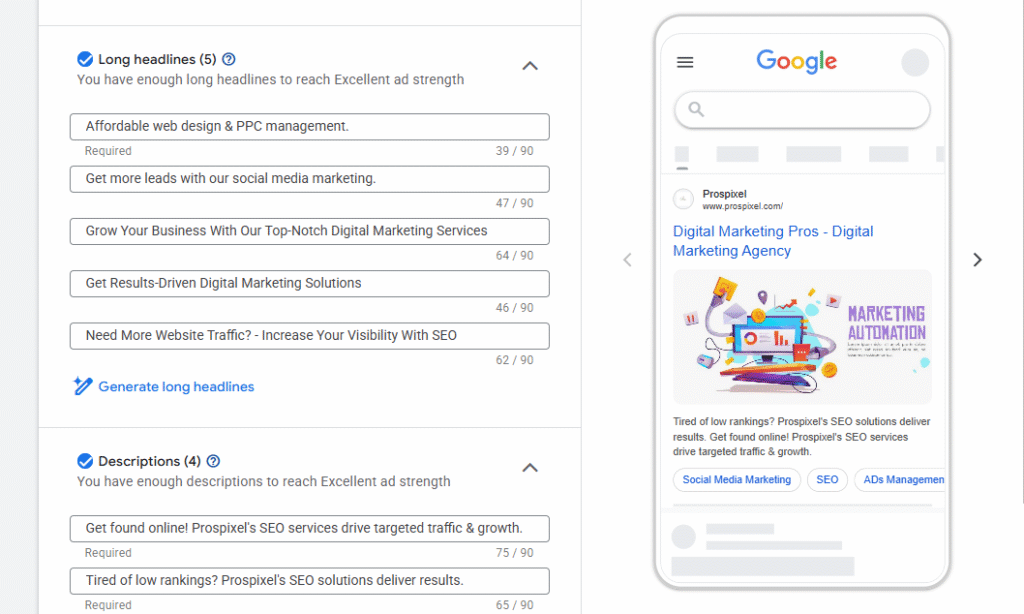
Over time, small changes such as adding numbers, mentioning location, or highlighting guarantees can significantly improve click-through rates and conversions. Testing ensures that your messaging stays fresh and aligned with user expectations.
Another critical factor is improving Quality Score. As discussed earlier, Quality Score is influenced by expected click-through rate, ad relevance, and landing page experience. You can raise this score by aligning keywords closely with your ad text, ensuring your landing pages load quickly, and delivering exactly what the user was promised in the ad.
When Quality Score improves, your cost per click decreases and your ad position rises without increasing your bid.
Your landing page plays a powerful role in how does google ads work profitably. A well-designed landing page answers the user’s question immediately, uses clear headlines, loads fast on mobile, and has a strong call to action.
If your ad promises “Google Ads Course with Certification,” the landing page must clearly mention certification, course details, and an easy way to enroll. Any mismatch between ad and landing page confuses users and reduces conversions.
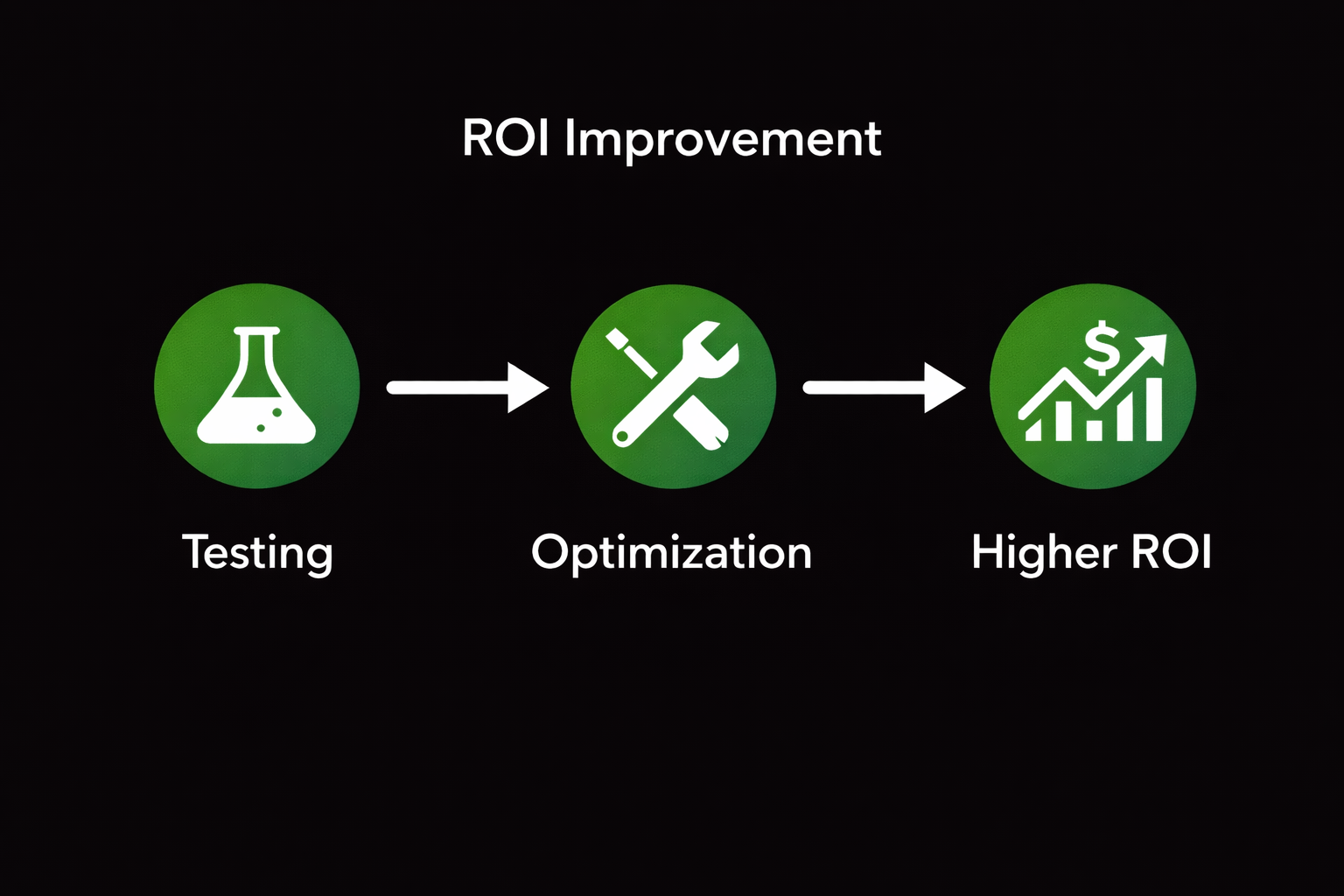
Optimization is not a one-time task. It is a cycle of testing, measuring, refining, and repeating. When you treat your campaigns as living systems rather than static setups, you unlock the true potential of Google Ads and steadily improve ROI month after month.
Common Google Ads Mistakes to Avoid in 2026
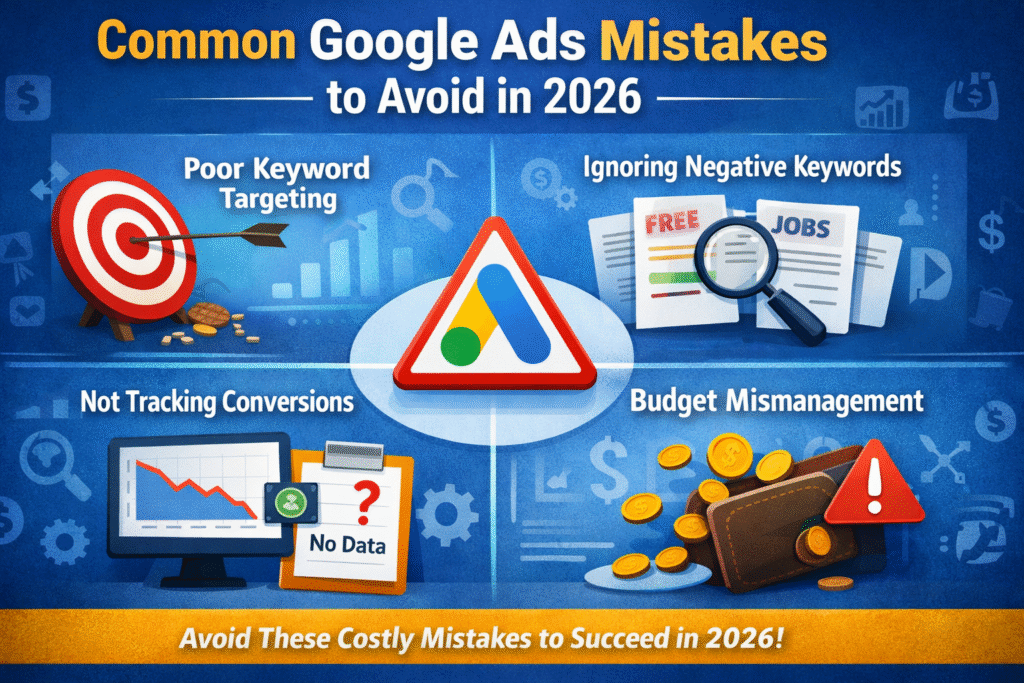
Many advertisers fail with Google Ads not because the platform does not work, but because they repeat the same avoidable mistakes. Understanding these errors will save you time, money, and frustration.
One of the most damaging mistakes is poor keyword targeting. Beginners often select very broad keywords such as “marketing” or “plumber,” hoping to attract a large audience. While these keywords may generate impressions, they usually bring irrelevant traffic with low intent.
As a result, you pay for clicks that never convert. Targeting specific, intent-driven keywords such as “emergency plumber near me” or “Google Ads training institute in Delhi” ensures your ads reach users who are closer to taking action.
Another common error is ignoring negative keywords. Without negative keywords, your ads can appear for searches that are completely unrelated to your offer.
For example, an institute running paid courses may accidentally show ads for searches like “free Google Ads course” or “Google Ads jobs.” This drains your budget quickly. Adding negative keywords blocks unwanted traffic and is a fundamental part of how does google ads work effectively.
The third major mistake is not tracking conversions. Many advertisers only look at clicks and impressions, assuming traffic equals success. In reality, clicks mean nothing if they do not lead to leads, sales, or inquiries.
Without conversion tracking, you cannot identify which keywords, ads, or campaigns are actually generating revenue. This lack of data leads to guesswork instead of strategy.
Finally, budget mismanagement can ruin even well-structured campaigns. Setting budgets too high too early can result in rapid spend without optimization, while setting them too low may prevent your ads from showing at all.
Some advertisers also forget to monitor spending trends, leading to unexpected costs. Budget control is not about spending more; it is about spending smartly.
Avoiding these mistakes aligns your campaigns with how does google ads work in reality—rewarding relevance, clarity, and consistent optimization rather than random experimentation.
Real-World Example – How Google Ads Works for a Local Business
To see how does google ads work in real life, consider a local coaching institute offering a Google Ads course in Delhi. The business wants more student inquiries through its website and phone calls.
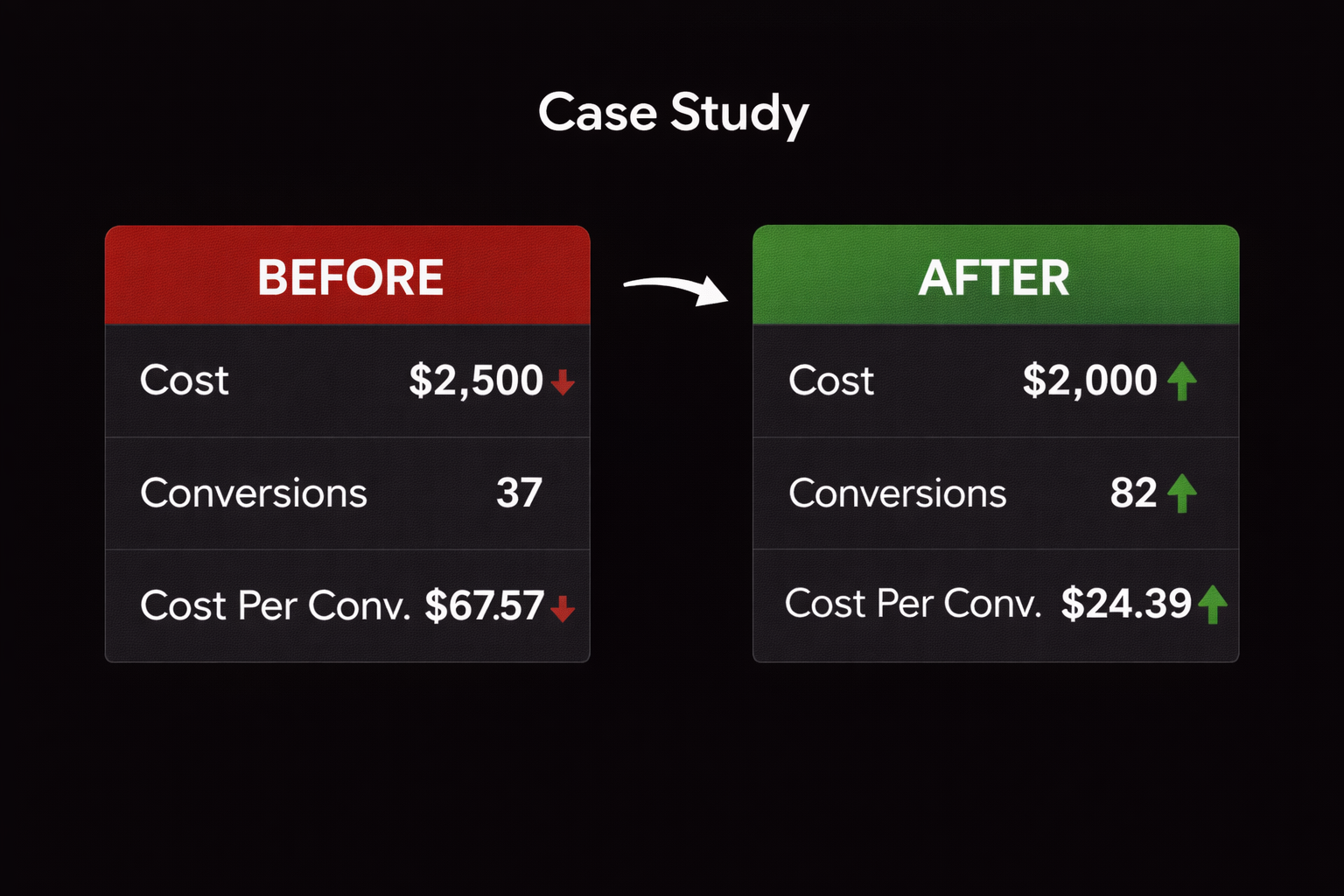
The first step is setting up a Search campaign focused on lead generation. The institute selects Delhi as the target location and chooses to show ads only during business hours. A daily budget of ₹800 is set, which equals approximately ₹24,000 per month. The bidding strategy is Maximize Conversions with conversion tracking for form submissions and phone calls.
Next comes keyword selection. Instead of broad terms, the institute chooses intent-based keywords such as “Google Ads course in Delhi,” “ppc training institute,” and “learn Google Ads near me.” Negative keywords like “free,” “jobs,” and “salary” are added to avoid irrelevant traffic.
The ads are written with direct benefits:
- Headline: “Google Ads Course in Delhi – Get Certified in 8 Weeks”
- Description: “Live Projects, Expert Trainers, Job Assistance. Enroll Today.”
Call extensions and sitelinks such as Course Curriculum and Student Reviews are added to increase trust and visibility.
After the campaign runs for two weeks, the results look like this:
- Impressions: 4,200
- Clicks: 260
- CTR: 6.1%
- Conversions: 28 inquiries
- Cost per Conversion: ₹570
These numbers clearly show how does google ads work when structure, relevance, and tracking are aligned. Instead of paying for random traffic, the institute now receives qualified leads from people actively searching for training.
What can other businesses learn from this example? First, success is not about spending more money but about targeting the right audience with the right message. Second, every part of the system—from keywords to landing pages—must support the same goal. Finally, regular monitoring allows the business to pause underperforming keywords, improve ad copy, and scale what is already working.
This real-world approach demonstrates that when done correctly, Google Ads is not a gamble. It is a predictable, measurable system that can deliver consistent growth for any local business.
Future of Google Ads – What to Expect Beyond 2026
As digital marketing continues to evolve, Google Ads is becoming increasingly driven by artificial intelligence and automation. Beyond 2026, manual controls will play a smaller role while machine learning systems take over tasks such as bidding, targeting, and creative optimization.
Campaign types like Performance Max already use AI to decide where, when, and to whom your ads are shown. This trend will expand, making the platform more accessible to beginners while also demanding a deeper understanding of data and strategy from professionals.
User behavior is also changing rapidly. People no longer rely only on traditional text searches. Voice search, image search, and video-based discovery are becoming common, especially among younger users.
Short-form video consumption on YouTube Shorts and app-based browsing habits are influencing how ads are delivered. As privacy regulations increase, cookie-based tracking will decline, forcing Google Ads to rely more on first-party data and predictive modeling.
These shifts directly influence how does google ads work in the future, as intent signals become more complex and multi-channel.
Advertisers must prepare for this transformation. Instead of focusing only on keywords and manual bidding, businesses will need to build strong data foundations. This includes accurate conversion tracking, clean CRM integration, and high-quality landing pages that provide a meaningful user experience.
Creative quality will matter more than ever because automation can distribute ads widely, but only compelling messages convert.
The future will reward those who understand the system conceptually rather than mechanically. Learning how does google ads work today gives you the mindset needed to adapt tomorrow.
Those who embrace automation, test continuously, and invest in user-centric content will not only survive the changes ahead but also gain a competitive advantage in an increasingly intelligent advertising ecosystem.
Conclusion – Mastering How Does Google Ads Work
Throughout this guide, we have explored every important stage of running successful campaigns, from setting up your account and structuring campaigns to selecting the right keywords, writing high-converting ads, understanding the auction system, managing budgets, tracking conversions, and optimizing performance.
Each step is connected, and when one part is weak, the entire system suffers. When all parts work together, Google Ads becomes a powerful growth engine rather than a confusing expense.
The true value of this knowledge lies in understanding how does google ads work as a complete ecosystem. It is not about chasing clicks or copying competitors. It is about aligning your business goals with user intent, delivering relevant messages at the right time, and letting data guide your decisions.
This mindset allows you to control costs, improve Quality Score, and build campaigns that deliver consistent, measurable results.
If you are new to Google Ads, do not wait for the “perfect moment.” Start small, test your first campaign, track conversions, and learn from real data.
Every successful advertiser today once started with the same doubts you may have now. The difference is that they took action and refined their strategy over time.
💡 Interested in learning more? Contact RKDMT – Raju Kumar Digital Marketer – Best Digital Marketing Training Institute
🔗www.rajukumardigitalmarketer.com
📞 +91-7303933302, +91-9217057127
📧 rkdmt@rajukumardigitalmarketer.com
With the right guidance and practical training, you can move from beginner to confident advertiser faster than you think.

Founder at Digital Marketing Marvel | Founder at RKDMT – Raju Kumar Digital Marketing Trainer | Best Digital Marketing Trainer in Delhi/NCR – Digiperform | Project Manager | 5+ years | Genius Study Abroad & Inlingua’s Digital Marketing Head | Learn Digital Marketing