



10 Powerful AI Tools for SEO You Should Try in 2026
Search engine optimization has always evolved alongside technology. In the early days of SEO, ranking strategies focused heavily on basic keyword placement and manual backlink building. Over time, search engines became more sophisticated, incorporating complex algorithms, machine learning models, and natural language processing to better understand user intent.
Today, as search ecosystems continue to grow in scale and complexity, marketers are increasingly turning to AI tools for SEO to manage optimization tasks more efficiently and effectively.
Traditional SEO workflows relied heavily on manual research and analysis. Marketers spent hours collecting keyword data, reviewing search engine results pages, analyzing competitor content, and manually optimizing webpages.
While these approaches helped build foundational SEO strategies, they often required significant time and effort. As the amount of online content expanded and search algorithms became more advanced, relying entirely on manual methods started to limit the speed and scalability of SEO campaigns.
Artificial intelligence has dramatically changed this landscape. Modern AI-powered platforms are capable of analyzing vast amounts of search data within seconds. Instead of manually evaluating hundreds of keywords, marketers can now use AI tools for SEO to identify keyword clusters, analyze search intent patterns, evaluate ranking opportunities, and generate content optimization recommendations almost instantly. This shift has allowed businesses to move from reactive SEO practices toward more proactive and data-driven strategies.
The rapid adoption of artificial intelligence across the marketing industry further highlights this transformation. According to the HubSpot State of Marketing Report, approximately 78% of marketers now use AI tools in some form of content creation or optimization.
These tools assist with tasks such as keyword discovery, content generation, SERP analysis, and performance forecasting. At the same time, studies conducted by Semrush indicate that AI-assisted SEO workflows can reduce research and analysis time by as much as 60%, allowing marketing teams to focus more on strategy, creativity, and long-term growth initiatives.
Another reason AI has become essential in SEO is the enormous scale of modern search behavior. Google alone processes more than 8.5 billion searches every single day, according to publicly available data from Google. Each of these searches represents a potential opportunity for businesses to appear in front of users actively looking for information, products, or services.
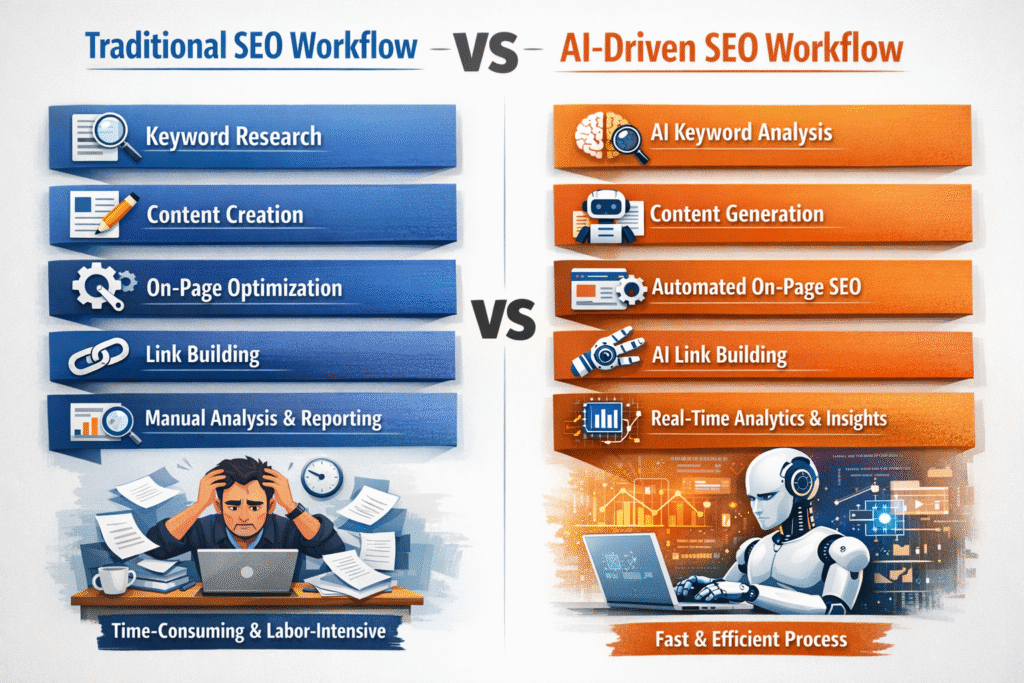
However, competing in such a massive search environment requires deep data analysis, rapid optimization cycles, and the ability to identify patterns that would be nearly impossible to detect manually.
AI-powered platforms excel in exactly these areas. By combining machine learning models with natural language processing technologies, AI tools for SEO can analyze SERP structures, evaluate content relevance, detect keyword relationships, and provide actionable optimization insights.
Many of these tools continuously monitor ranking trends and competitor strategies, enabling marketers to adapt their SEO campaigns quickly as search engine algorithms evolve.
Despite these advantages, AI does not replace human expertise in SEO. Instead, it acts as a powerful assistant that enhances decision-making and productivity. Successful SEO strategies still depend on creativity, strategic thinking, and an understanding of audience needs. AI tools simply provide marketers with faster insights and deeper analytical capabilities, making it easier to implement effective optimization strategies at scale.
As the digital landscape moves further into the era of artificial intelligence, adopting AI tools for SEO is quickly becoming a competitive necessity rather than an optional advantage. Businesses that integrate AI-driven insights into their SEO workflows are better positioned to discover new keyword opportunities, produce high-quality optimized content, and maintain visibility in an increasingly competitive search environment.
In the sections that follow, we will explore how AI-powered SEO tools work, why they are gaining rapid adoption among marketers, and which platforms offer the most powerful capabilities for improving search rankings in 2026.
What Are AI Tools for SEO?
Search engine optimization has traditionally relied on manual research, detailed data analysis, and continuous content optimization. However, as search algorithms grow more sophisticated and the amount of online content continues to expand, many marketers are turning to AI tools for SEO to simplify and accelerate these processes. These tools use artificial intelligence technologies to analyze search data, identify ranking opportunities, and provide actionable recommendations that help websites improve their visibility in search engine results.
In simple terms, AI tools for SEO are software platforms that use machine learning and natural language processing to automate many of the tasks involved in search engine optimization. Instead of manually analyzing keywords, evaluating competitors, or optimizing content line by line, AI-powered platforms can process massive datasets and deliver insights within seconds. This allows marketers, content creators, and SEO professionals to make faster and more informed decisions when developing their search strategies.
At the core of most AI SEO tools are technologies such as machine learning, natural language processing (NLP), and predictive analytics. Machine learning algorithms analyze patterns across search results to understand which types of content perform well for specific queries. Natural language processing helps these tools interpret search intent by analyzing how people phrase their queries and how search engines interpret language. Predictive analytics can even estimate which keywords or topics are likely to gain traction in the future, helping marketers stay ahead of search trends.
One of the most important benefits of AI tools for SEO is their ability to automate complex tasks that would otherwise take hours or even days to complete. For example, keyword research traditionally involved exporting data from multiple platforms, analyzing search volume trends, and manually grouping related keywords. AI-powered tools can now automatically cluster thousands of keywords into related topic groups, making it easier to build comprehensive content strategies that align with search intent.
Similarly, AI platforms can analyze the top-ranking pages on search engines to determine which factors contribute to their visibility. These tools examine elements such as keyword usage, content length, heading structure, semantic relevance, and internal linking patterns. Based on this analysis, they provide optimization recommendations that help content creators improve their chances of ranking higher in search results.
Another major advantage of AI tools for SEO is their ability to uncover deeper insights from large datasets. Modern SEO strategies require understanding how search engines evaluate content relevance, authority, and user engagement signals. Before optimising content with AI, marketers usually begin with AI tools for keyword research, which help uncover search intent, keyword clusters, and ranking opportunities at scale.
AI systems can quickly analyze thousands of SERP results, backlink profiles, and ranking trends to identify patterns that might be difficult to detect manually. This level of analysis enables marketers to refine their strategies and focus on opportunities that offer the highest potential for organic growth.
Content optimization is another area where AI-powered SEO tools play a significant role. Many platforms now provide real-time recommendations while writers are creating blog posts or landing pages.
These recommendations may include suggested keywords, topic coverage improvements, readability adjustments, and semantic keyword variations that align with search intent. By integrating these insights directly into the writing process, AI tools help ensure that content is both search-friendly and valuable for readers.
The growing importance of AI in digital marketing has also made these tools increasingly accessible to beginners and experienced professionals alike. From advanced enterprise platforms used by large organizations to beginner-friendly tools designed for bloggers and small businesses, the market for AI-powered SEO software continues to expand rapidly.
In fact, many marketers who start exploring AI tools for SEO often discover that these platforms significantly reduce the time required for tasks such as keyword research, content optimization, and competitor analysis.
If you are interested in understanding the broader impact of artificial intelligence on marketing strategies, you can also explore our guide on AI in digital marketing, which explains how AI technologies are transforming various aspects of modern marketing workflows.
Additionally, AI is not only helping with search engine optimization but also improving how marketers plan and organize their content strategies. Tools powered by artificial intelligence can assist with topic discovery, content planning, and editorial workflows. For a deeper look at how these technologies support content strategy development, you can read our article on AI tools for content planning and research.
As search engines continue to evolve and competition for organic visibility grows stronger, relying solely on traditional SEO methods may no longer be enough. Businesses that leverage AI tools for SEO gain the advantage of faster data analysis, deeper search insights, and more efficient optimization workflows. These capabilities allow marketers to build stronger content strategies, identify emerging search trends, and maintain a competitive presence in the constantly changing search landscape.
In the next section, we will explore why more marketers are rapidly adopting AI tools for SEO and how these technologies are transforming the way businesses approach search engine optimization in 2026.
Why Marketers Are Rapidly Adopting AI Tools for SEO
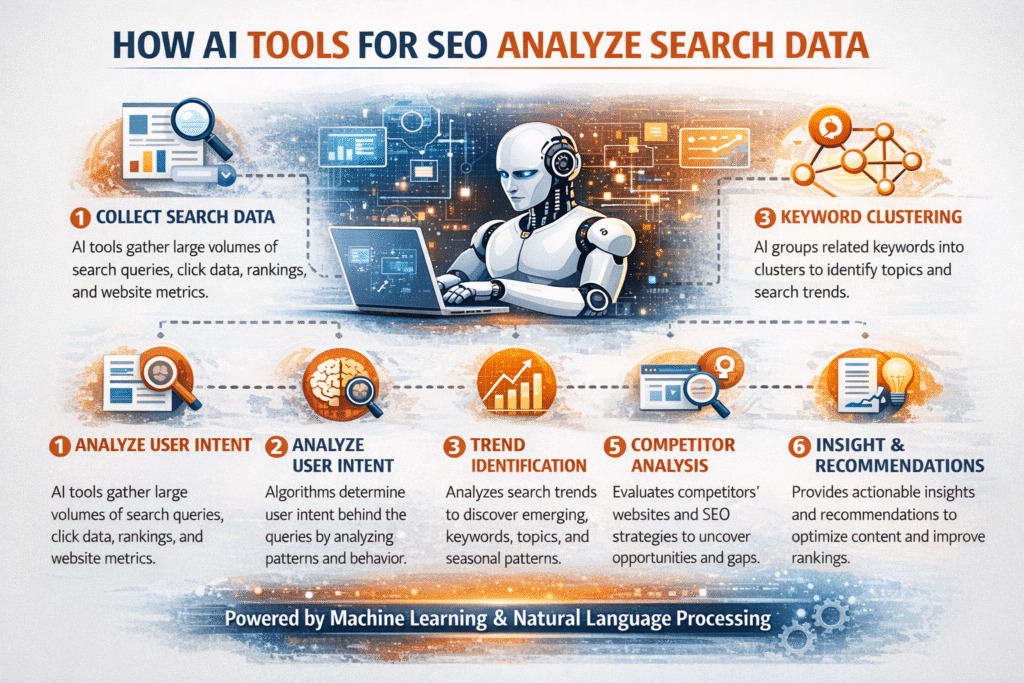
Search engine optimization has become significantly more complex over the last few years. With millions of new webpages published every day and search engines constantly refining their ranking algorithms, marketers must analyze enormous amounts of data to stay competitive. This growing complexity is one of the main reasons why AI tools for SEO are being adopted so quickly across the digital marketing industry.
Artificial intelligence allows SEO professionals to process large datasets, identify ranking opportunities, and optimize content far more efficiently than traditional manual workflows. Instead of spending hours reviewing spreadsheets and SERP results, marketers can use AI tools for SEO to analyze keyword trends, study competitor strategies, and generate optimization insights within minutes. This shift toward automation is helping businesses scale their SEO strategies while maintaining high levels of accuracy and performance.
One of the biggest advantages of AI-powered SEO platforms is speed. Traditional SEO research often required multiple tools and manual analysis to identify relevant keywords or evaluate competitor pages. AI-driven platforms can now analyze thousands of search queries, content structures, and ranking signals simultaneously. According to industry research conducted by Semrush, AI-assisted workflows can reduce SEO research time by up to 60%, allowing marketers to focus more on strategic decision-making rather than repetitive analysis tasks.
To better understand why marketers are moving toward artificial intelligence, it is helpful to compare how traditional SEO workflows differ from AI-powered SEO processes.
| SEO Activity | Traditional SEO Method | AI-Powered SEO Method |
| Keyword research | Manual research using spreadsheets and keyword tools | Automated keyword discovery and clustering |
| Competitor analysis | Reviewing competitor pages one by one | AI analyzes multiple SERPs instantly |
| Content optimization | Manual keyword placement and editing | AI recommends keywords, structure, and semantic topics |
| Data analysis | Limited datasets and slower insights | Large-scale data processing and predictive analysis |
| SEO workflow speed | Hours or days of manual work | Minutes with automated analysis |
Another key factor behind the rapid adoption of AI tools for SEO is the growing role of search intent in modern search algorithms. Search engines such as Google no longer rely solely on keyword matching to rank content. Instead, they analyze user intent, contextual relevance, and content quality. AI tools use natural language processing to understand how search queries are structured and how users interact with search results. This enables marketers to create content that aligns more closely with what users are actually searching for.
The increasing scale of search activity also plays a major role in the adoption of AI-powered SEO platforms. Google processes more than 8.5 billion searches every day, meaning businesses must compete in a highly dynamic and data-intensive environment. AI technologies help marketers identify opportunities within this vast search ecosystem by analyzing patterns in keyword trends, ranking behavior, and user engagement signals.
Another important advantage of AI tools for SEO is their ability to uncover insights that might be difficult to detect through manual analysis. By analyzing large volumes of search data, AI platforms can identify keyword clusters, topical relationships, and emerging search trends that help businesses build stronger content strategies.
Many marketers are also combining AI tools for SEO with broader artificial intelligence strategies across their marketing workflows. For example, businesses that integrate AI into their overall marketing strategy often use AI-powered tools not only for SEO but also for content planning, advertising, and audience targeting. If you want to understand how artificial intelligence is transforming the marketing industry, you can explore our guide on AI in digital marketing, which explains how AI technologies are reshaping modern marketing strategies.
Similarly, artificial intelligence is also improving how marketers plan and organize their content strategies. AI-powered platforms can help identify trending topics, audience interests, and keyword opportunities that guide editorial planning. For a deeper understanding of how AI supports content strategy development, you can read our article on AI tools for content planning and research, which explains how marketers use AI to build smarter content calendars.
As the digital landscape continues to evolve, the role of artificial intelligence in SEO will only grow stronger. Marketers who adopt AI tools for SEO gain the ability to analyze search data faster, optimize content more effectively, and respond quickly to algorithm changes. These advantages allow businesses to maintain a competitive edge in search rankings while building sustainable long-term SEO strategies.
In the next section, we will explore the key features that define modern AI tools for SEO and what marketers should look for when choosing the right platform for their optimization strategies.
Key Features to Look for in AI SEO Tools
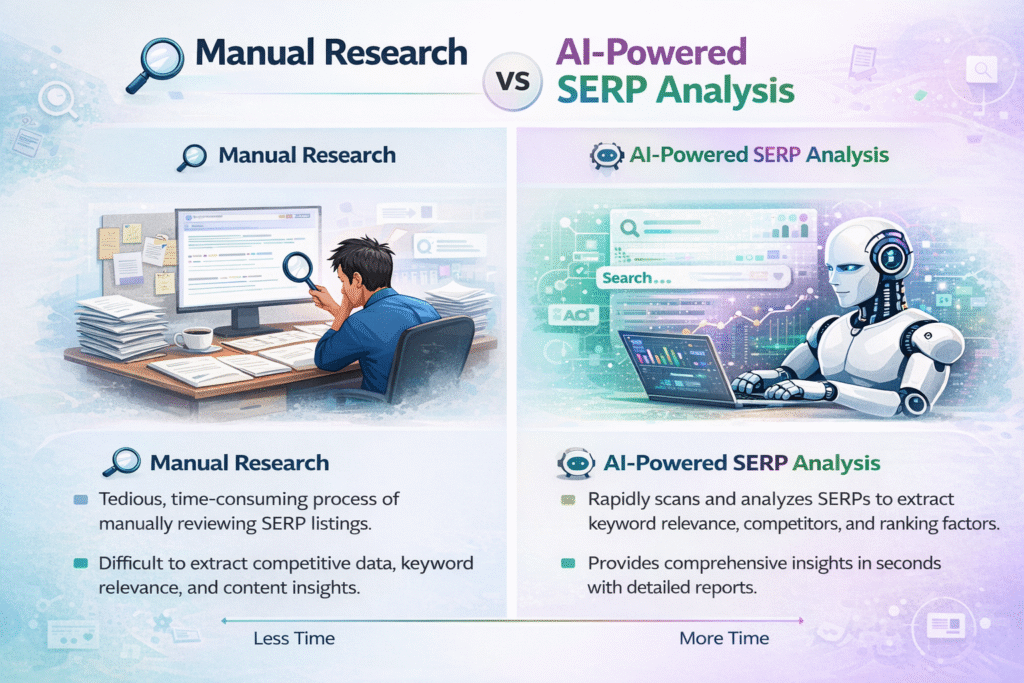
As the use of artificial intelligence continues to grow across the digital marketing industry, not all SEO tools offer the same capabilities. While many platforms claim to be AI-powered, the effectiveness of these tools often depends on the features they provide and how well they analyze search data. Understanding the key features of AI tools for SEO can help marketers choose platforms that genuinely improve search performance rather than simply automate basic tasks.
One of the most important features in modern AI tools for SEO is intelligent keyword clustering. Traditional keyword research often focuses on identifying individual keywords based on search volume and competition. However, search engines increasingly evaluate content based on topical relevance rather than isolated keywords. AI-powered tools can analyze thousands of related search queries and group them into clusters that represent broader topics. This helps marketers build comprehensive content strategies that target entire subject areas rather than single keywords.
Another critical feature is search intent analysis. Search engines are becoming increasingly effective at understanding what users truly want when they perform a search. AI-driven SEO tools analyze the structure of search engine results pages and identify patterns in top-ranking content to determine the dominant search intent behind a query. By understanding whether a search is informational, navigational, or transactional, marketers can create content that better aligns with user expectations and improves their chances of ranking higher.
Content optimization is also a core capability of many advanced AI tools for SEO. These tools analyze high-ranking pages for a target keyword and provide recommendations for improving content relevance. For example, they may suggest related keywords, semantic phrases, content structure improvements, and readability adjustments. Some platforms even offer real-time optimization guidance while content is being written, ensuring that articles remain aligned with SEO best practices from the beginning.
Technical SEO auditing is another important feature offered by many AI-powered platforms. Search engines evaluate numerous technical factors when ranking websites, including page speed, mobile responsiveness, internal linking structure, and crawlability. AI tools can automatically scan websites to identify technical issues that may affect search visibility. These automated audits help marketers quickly detect problems and prioritize improvements that can enhance overall website performance.
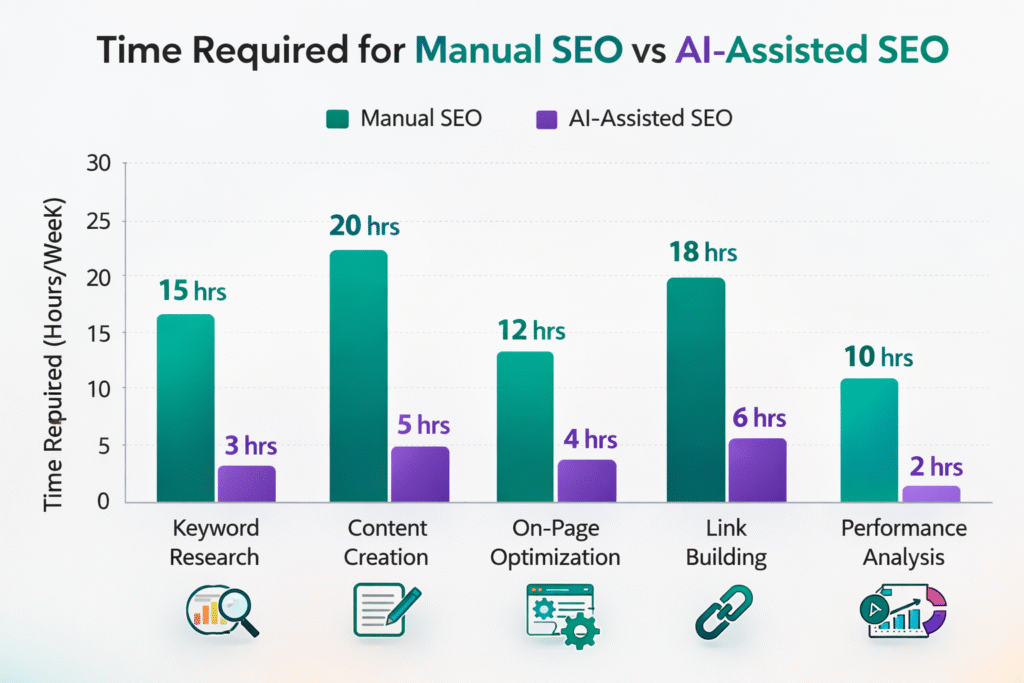
Competitor intelligence is also a major advantage provided by AI tools for SEO. Instead of manually reviewing competitor websites, AI-powered platforms can analyze competitor content, backlink profiles, and ranking patterns to identify strategic opportunities. By understanding which keywords competitors are targeting and how their content performs in search results, marketers can develop more effective strategies to compete in the same search landscape.
To better understand the essential capabilities of modern AI SEO platforms, the following table highlights several key features and explains why they are important for search engine optimization.
| Feature | Why It Matters for SEO |
| Keyword clustering | Helps build topical authority by grouping related search queries into content themes |
| Search intent analysis | Ensures content aligns with what users are actually searching for |
| Content optimization | Improves keyword usage, semantic coverage, and content relevance |
| Technical SEO auditing | Identifies technical issues that may impact rankings |
| Competitor analysis | Reveals competitor strategies and ranking opportunities |
| SERP data analysis | Provides insights into ranking patterns and search trends |
These capabilities demonstrate why AI tools for SEO are becoming essential for modern digital marketing strategies. By combining advanced data analysis with automation, these tools allow marketers to make better optimization decisions while saving significant amounts of time.
Artificial intelligence is also transforming how marketers plan their broader digital strategies. Many SEO professionals integrate AI-powered insights with other marketing channels, including advertising, content marketing, and audience targeting. If you want to explore how artificial intelligence is shaping modern marketing strategies beyond SEO, you can read our article on AI in digital marketing, which explains the broader impact of AI across the marketing ecosystem.
Additionally, many of these features work best when combined with strong content planning strategies. AI-powered platforms can help identify trending topics, analyze audience interests, and generate structured content ideas for blogs and websites. For a deeper look at how marketers use artificial intelligence to build smarter editorial strategies, you can explore our guide on AI tools for content planning and research, which explains how AI helps streamline content planning and topic discovery.
Choosing the right AI tools for SEO ultimately depends on your goals, workflow, and level of experience. Some tools focus primarily on content optimization, while others specialize in technical SEO analysis or large-scale keyword research. In the next section, we will explore 10 powerful AI tools for SEO you should try in 2026, examining how each platform works and how it can support different aspects of search engine optimization.
1. Surfer SEO
Surfer SEO is one of the most popular AI SEO tools, used for content optimization and on-page SEO. The platform analyzes top-ranking pages in search results and provides data-driven recommendations that help writers structure their content more effectively. Instead of guessing how to optimize an article, Surfer evaluates ranking patterns and suggests improvements based on real SERP data.
One of Surfer’s main features is AI-powered content optimization. The tool analyzes high-ranking pages for a target keyword and recommends improvements related to keyword usage, headings, content length, and structure. These insights help writers align their articles with what search engines currently reward in search results.
Surfer SEO also uses natural language processing (NLP) to recommend related keywords and semantic phrases. This helps writers cover a topic more comprehensively rather than relying on a single keyword, which improves topical relevance and increases the chances of ranking for multiple search queries.
Another important capability is SERP data analysis. Surfer studies the structure and content patterns of top-ranking pages to identify optimization opportunities. According to Surfer’s data analysis system, the platform evaluates 500+ on-page ranking signals when analyzing webpages.
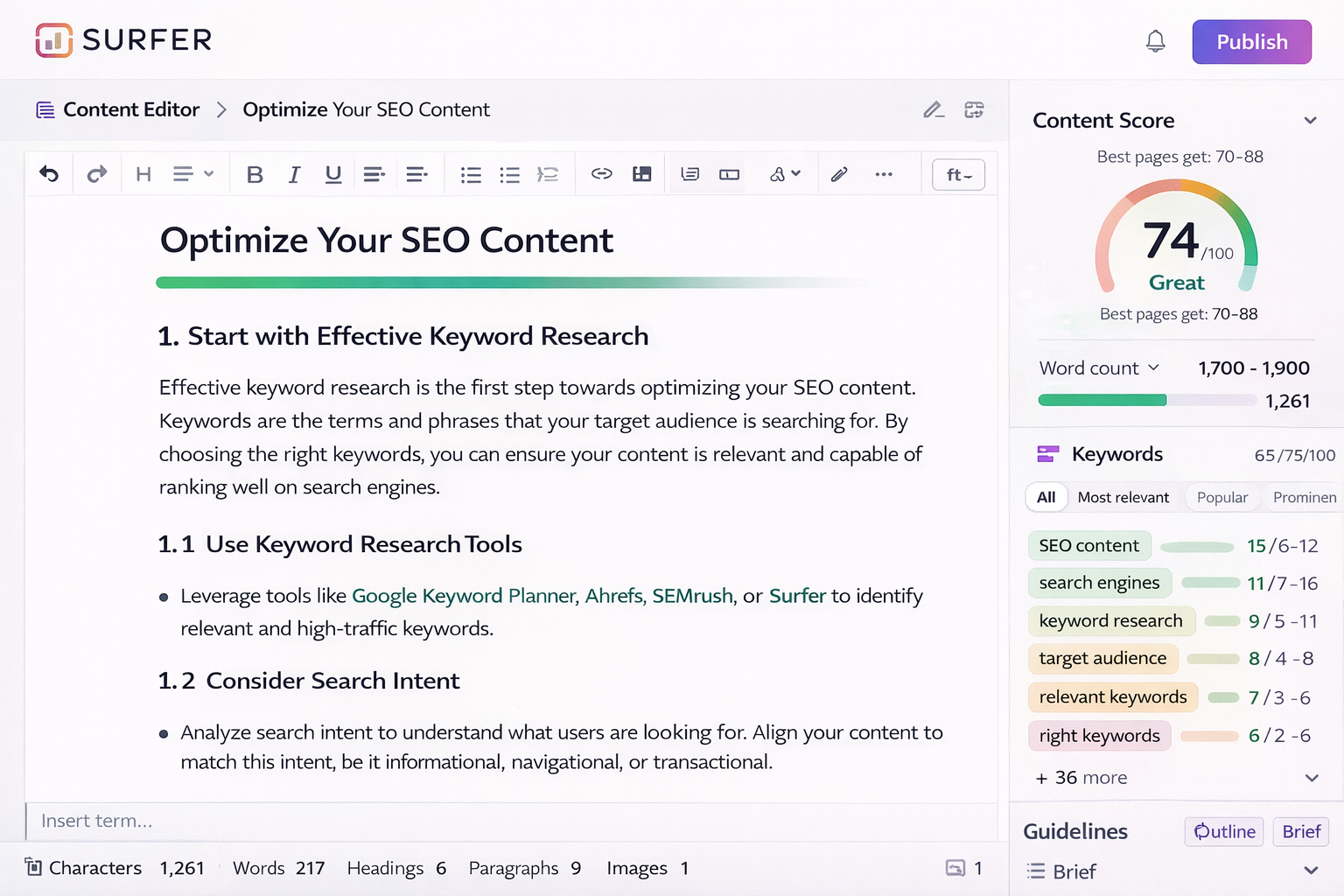
This image shows the Surfer SEO Content Editor interface, highlighting how the platform provides real-time keyword suggestions, content scores, and optimization recommendations while writing SEO-focused articles.
2. Semrush AI SEO Toolkit
Semrush is one of the most comprehensive platforms among modern AI tools for SEO, offering powerful features for keyword research, competitor analysis, and website optimization. The platform uses artificial intelligence and large-scale search data to help marketers identify ranking opportunities and improve their SEO strategies.
One of Semrush’s strongest capabilities is AI-powered keyword research. The platform analyzes billions of search queries to suggest relevant keywords, long-tail variations, and search intent insights. This helps marketers discover high-potential keywords that can drive organic traffic.
Semrush also provides competitor analysis tools that allow marketers to study which keywords competitors rank for and how their content performs in search results. These insights make it easier to identify gaps in content strategies and find opportunities to compete in the same search landscape.
Another key feature is the site audit system, which scans websites for technical SEO issues such as broken links, crawl errors, and slow-loading pages. Fixing these issues helps improve overall website performance and search visibility.
Semrush maintains one of the largest keyword databases in the SEO industry, containing over 25 billion keywords globally, which allows marketers to access extensive search data for their SEO campaigns.
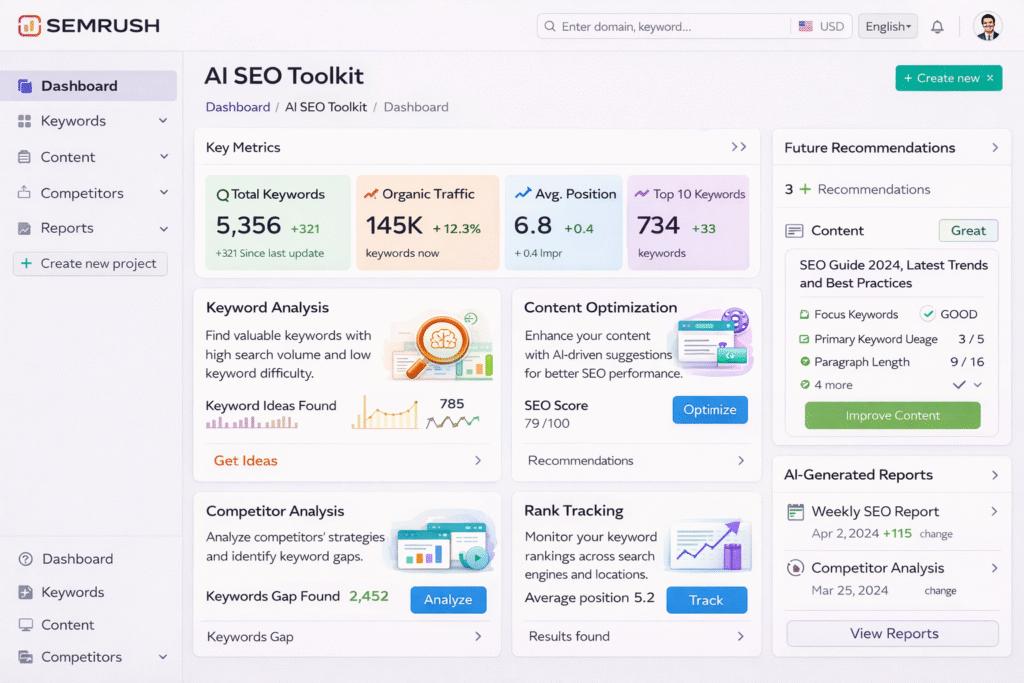
This image shows the Semrush dashboard interface, highlighting tools for keyword research, competitor analysis, and site auditing that help marketers improve their SEO performance.
3. Ahrefs AI Features
Ahrefs is a powerful SEO platform widely used for keyword research, backlink analysis, and competitor insights. As one of the most reliable AI tools for SEO, Ahrefs helps marketers analyze search trends and identify opportunities to improve their rankings.
One of Ahrefs’ key features is its advanced keyword research system, which provides data on keyword difficulty, search volume, and traffic potential. This allows marketers to identify keywords that offer strong ranking opportunities.
Another major capability of Ahrefs is its backlink analysis tool. Since backlinks remain one of the most important ranking factors, Ahrefs helps marketers analyze competitor link profiles and discover new link-building opportunities.
Ahrefs also offers SERP analysis tools that allow users to evaluate the pages currently ranking for a keyword. By analyzing factors such as content depth, domain authority, and backlink profiles, marketers can better understand what it takes to compete in search results.
According to Ahrefs, its crawler analyzes more than 8 billion webpages every day, making it one of the largest SEO data sources available.
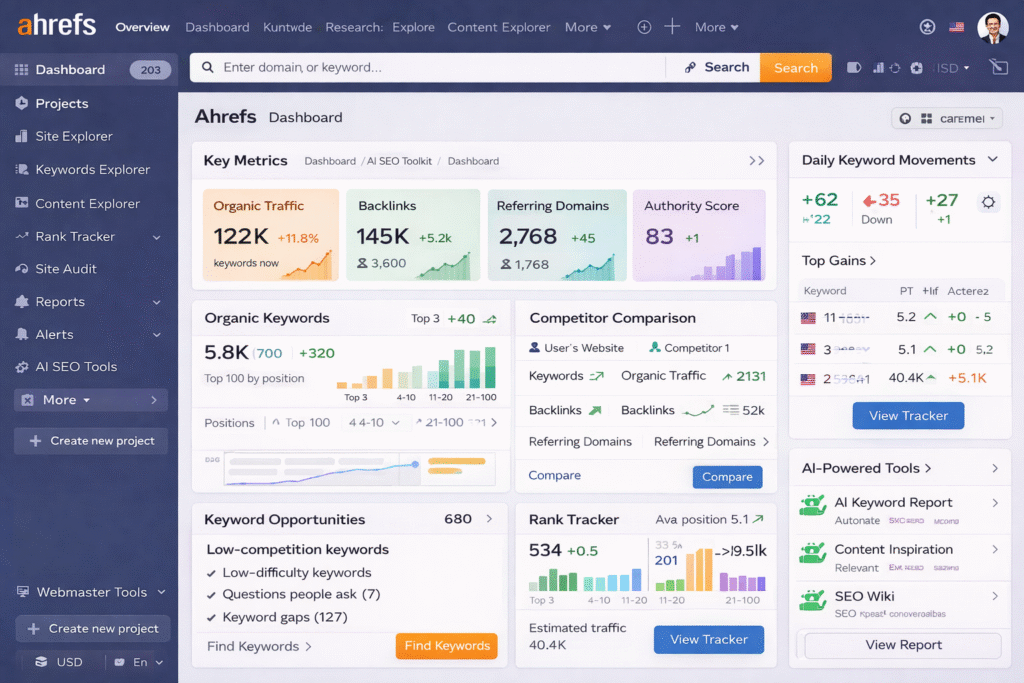
This image shows the Ahrefs dashboard interface, highlighting backlink analysis, keyword research, and SERP overview features used to evaluate search competition.
4. Jasper AI
Jasper AI is a popular AI writing assistant that helps marketers create SEO-friendly content more efficiently. While it is primarily known as a content generation tool, it has become one of the useful AI tools for SEO for teams that produce large volumes of optimized content.
One of Jasper’s main features is AI-powered content generation. Writers can input a topic or keyword, and Jasper generates structured content suggestions such as introductions, outlines, and paragraphs. This significantly reduces the time required to produce long-form articles.
While AI writing tools speed up content production, understanding the difference between AI-generated vs human-written content is important for maintaining quality and originality in SEO content.
Jasper also helps improve SEO-focused writing workflows. Many marketers combine Jasper with keyword research tools to generate content around target keywords while maintaining readability and structure.
Another advantage of Jasper AI is its ability to maintain a consistent tone and writing style, helping businesses create content that aligns with their brand voice while remaining optimised for search engines.
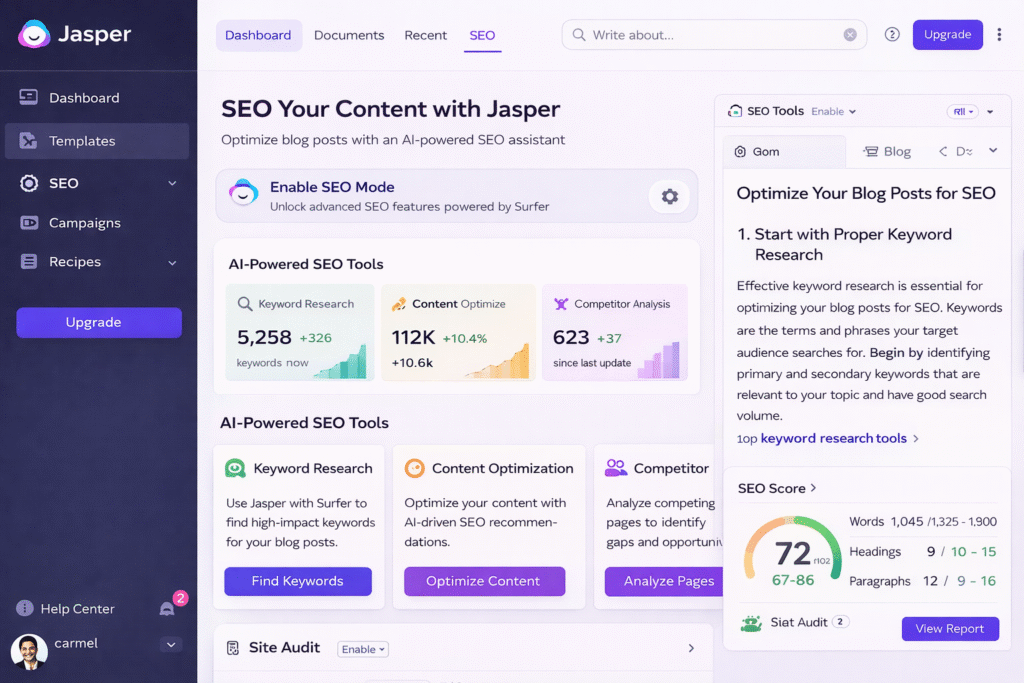
This image shows the Jasper AI writing interface, demonstrating how the platform generates SEO-friendly content suggestions and assists writers in creating structured blog articles.
5. Frase
Frase is one of the most effective AI tools for SEO for content research and optimization. The platform helps marketers analyze search engine results pages and generate structured content briefs based on what currently ranks in search results. This makes it easier to create articles that align with search intent and ranking patterns.
One of Frase’s most useful features is its AI-powered content brief generator. The tool analyzes top-ranking pages for a keyword and automatically creates outlines that include recommended headings, key questions, and important subtopics to cover in the article.
Frase also performs SERP topic analysis, allowing marketers to understand how search engines interpret a topic. By analyzing the language and themes used by high-ranking pages, the platform recommends keywords and phrases that improve topical relevance.
Another key capability is AI-assisted writing, which helps users generate paragraphs, summaries, and topic explanations within the editor. While the content still requires human editing, it significantly speeds up the writing process.
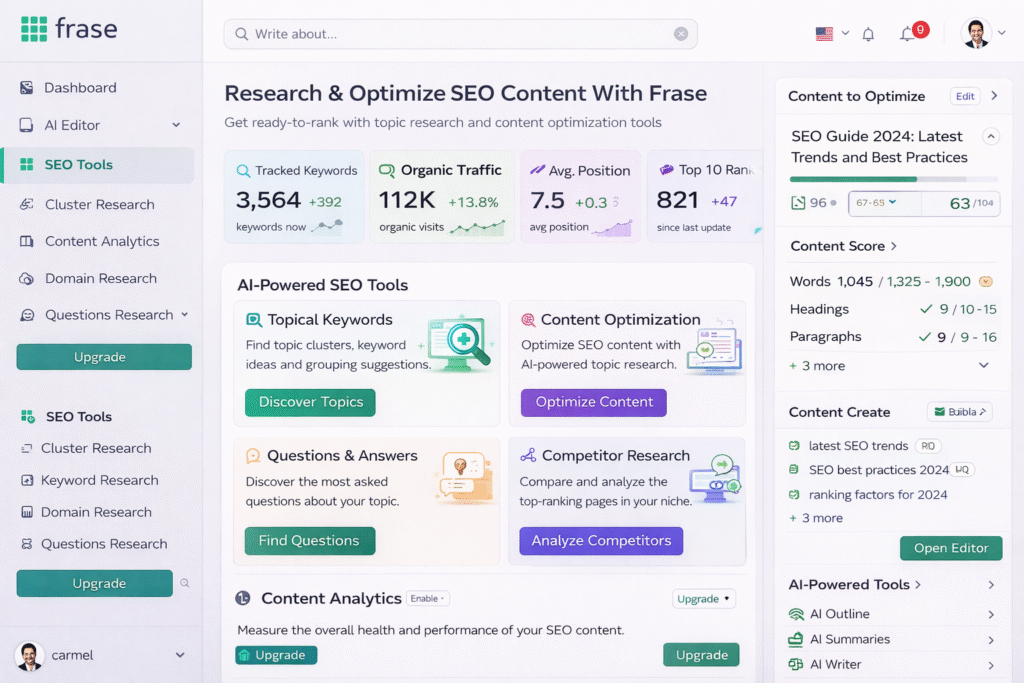
This image shows the Frase content editor interface, highlighting how the platform generates topic suggestions, content briefs, and optimization scores based on SERP analysis.
6. MarketMuse
MarketMuse is an advanced AI-powered platform focused on building topical authority and improving long-term content strategies. Unlike many traditional SEO tools that focus on individual keywords, MarketMuse analyzes entire topic ecosystems, making it one of the most strategic AI tools for SEO.
One of the core features of MarketMuse is its AI-driven content planning system. The platform analyzes thousands of webpages within a topic and identifies the related subtopics that should be covered to establish strong topical authority.
MarketMuse also provides content gap analysis, which compares a website’s existing content with competitor websites. This helps marketers identify missing topics and opportunities to expand their content coverage.
Another valuable feature is its content optimization recommendations, which guide writers on improving keyword usage, topic depth, and semantic relevance. These insights help create more comprehensive articles that perform better in search results.
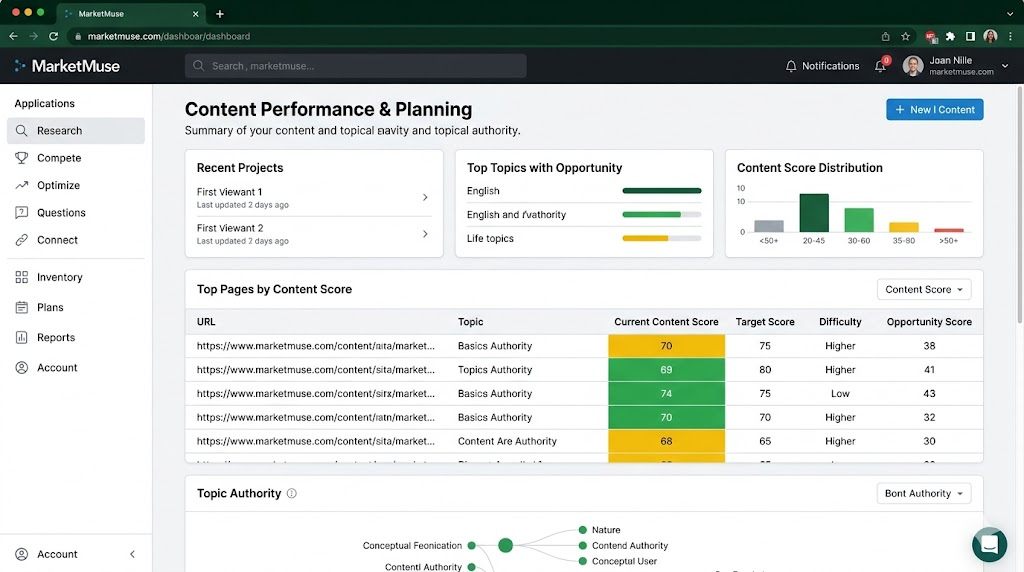
This image shows the MarketMuse dashboard interface, illustrating how the platform identifies topic clusters, content gaps, and optimization recommendations for SEO-focused content strategies.
7. Outranking
Outranking is a powerful platform designed to combine content creation, optimization, and keyword analysis into one workflow. As one of the growing AI tools for SEO, Outranking helps marketers create data-driven content that aligns with search intent and ranking factors.
One of the key features of Outranking is its AI-powered SEO content optimization system. The platform analyzes top-ranking pages for a keyword and suggests improvements related to headings, keyword usage, and content structure. These recommendations help writers create articles that match the patterns seen in successful search results.
Outranking also provides automated keyword clustering, which groups related keywords into topic clusters. This allows marketers to target entire subject areas instead of individual keywords, helping websites build stronger topical authority.
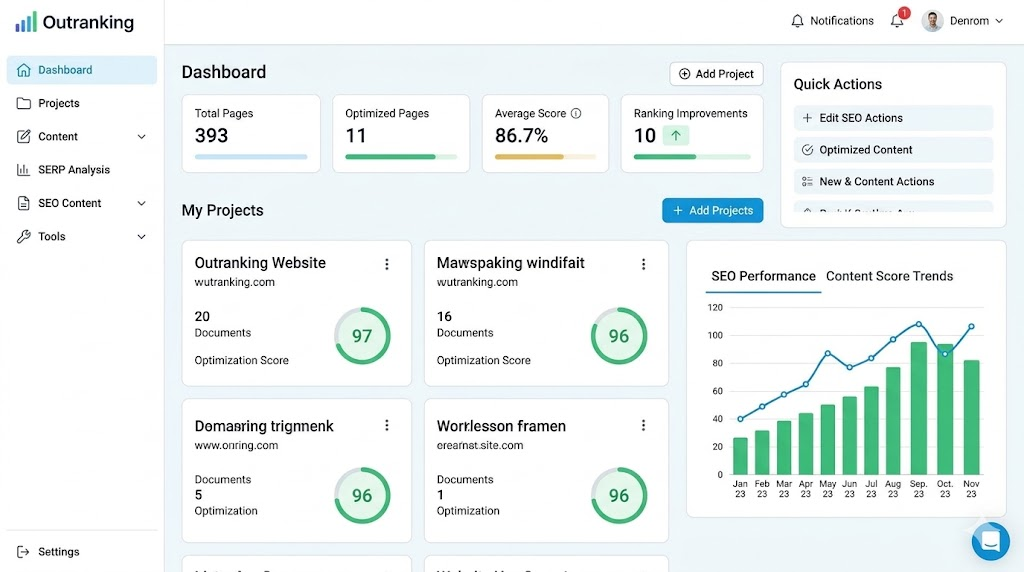
Another helpful feature is AI-assisted content generation, which helps writers create outlines and expand content sections quickly while keeping the article optimized for search engines.
This image shows the Outranking content optimization interface, demonstrating how the platform analyzes SERP data and provides AI-powered recommendations for improving SEO content.
8. RankIQ
RankIQ is designed specifically for bloggers and niche website owners who want to find low-competition keywords and rank faster in search engines. Because of its focused approach, RankIQ has become one of the practical AI tools for SEO for content creators who rely heavily on organic traffic.
One of the main features of RankIQ is its AI-powered keyword library, which provides curated keyword opportunities based on niche topics. These keywords are selected using AI analysis to identify queries with strong traffic potential and manageable competition.
RankIQ also includes a content optimization system that recommends keywords, phrases, and topic coverage improvements. As writers add these suggestions to their articles, the platform provides a score that indicates how well the content is optimized.
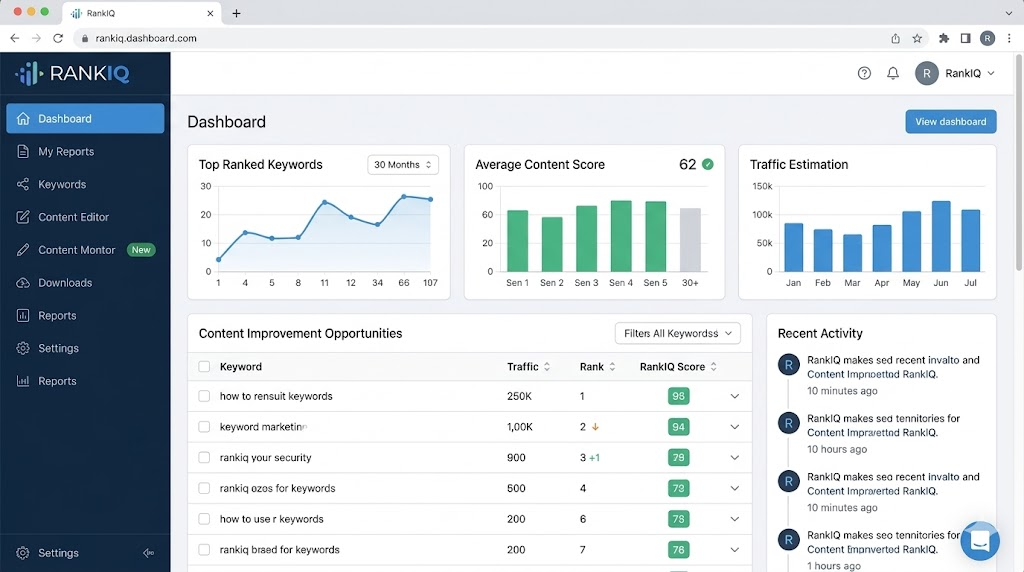
This makes RankIQ particularly useful for bloggers who want a simple way to improve their SEO content without using multiple complex tools.
This image shows the RankIQ dashboard interface, highlighting keyword suggestions, optimization scores, and content recommendations for blog articles. Many beginners who start blogging after they learn digital marketing at home for free use AI-powered SEO tools to research keywords and optimize their content.
9. Alli AI
Alli AI focuses primarily on technical SEO automation and large-scale optimization. Unlike many AI tools for SEO that concentrate only on content or keyword research, Alli AI helps marketers implement SEO changes directly across their websites.
One of the most valuable features of Alli AI is its technical SEO automation. The platform can update meta tags, internal links, schema markup, and other optimization elements across hundreds of webpages simultaneously.
Alli AI also provides real-time SEO recommendations based on search data and competitor analysis. These suggestions help marketers improve page structure, keyword placement, and overall on-page optimization.
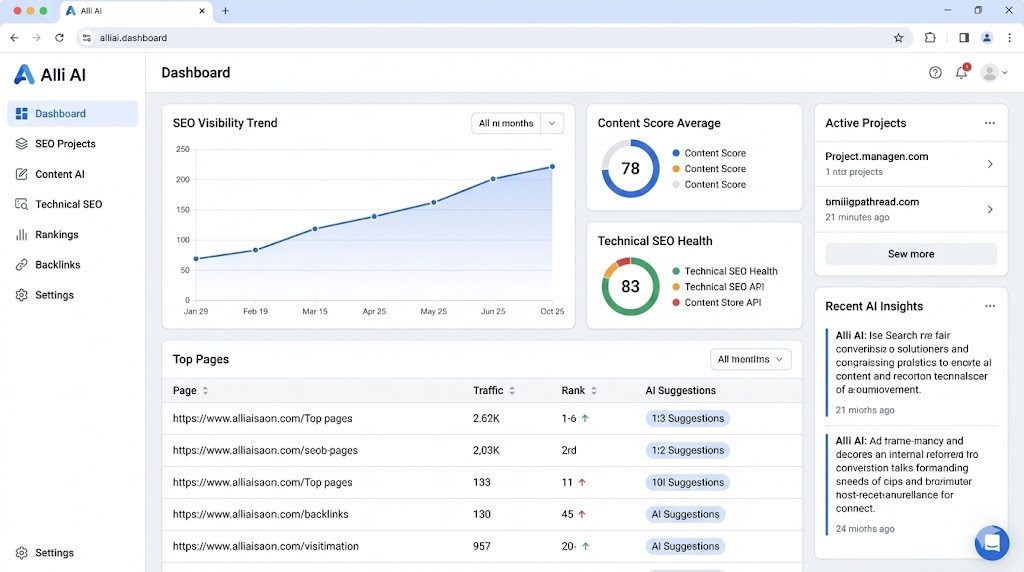
Another powerful capability is its SEO A/B testing feature, which allows marketers to test different optimization strategies and measure their impact on rankings and traffic.
This image shows the Alli AI optimization dashboard, illustrating how marketers can deploy SEO changes across multiple webpages and monitor optimization results.
10. NeuralText
NeuralText is an all-in-one platform that combines keyword research, SERP analysis, and AI-powered writing tools. Because it integrates multiple SEO functions into a single system, it has become one of the most versatile AI tools for SEO for marketers who want to streamline their content workflows.
One of NeuralText’s main features is AI-powered keyword clustering, which groups related search queries into topic clusters. This helps marketers build comprehensive content strategies and improve topical authority.
The platform also provides SERP analysis tools that evaluate top-ranking pages for a keyword. By studying how these pages structure their content and use keywords, NeuralText generates recommendations that help writers create more competitive articles.
Another important capability is its AI writing assistant, which helps generate blog outlines, introductions, and content sections. This significantly speeds up the content creation process while keeping the article aligned with SEO best practices.
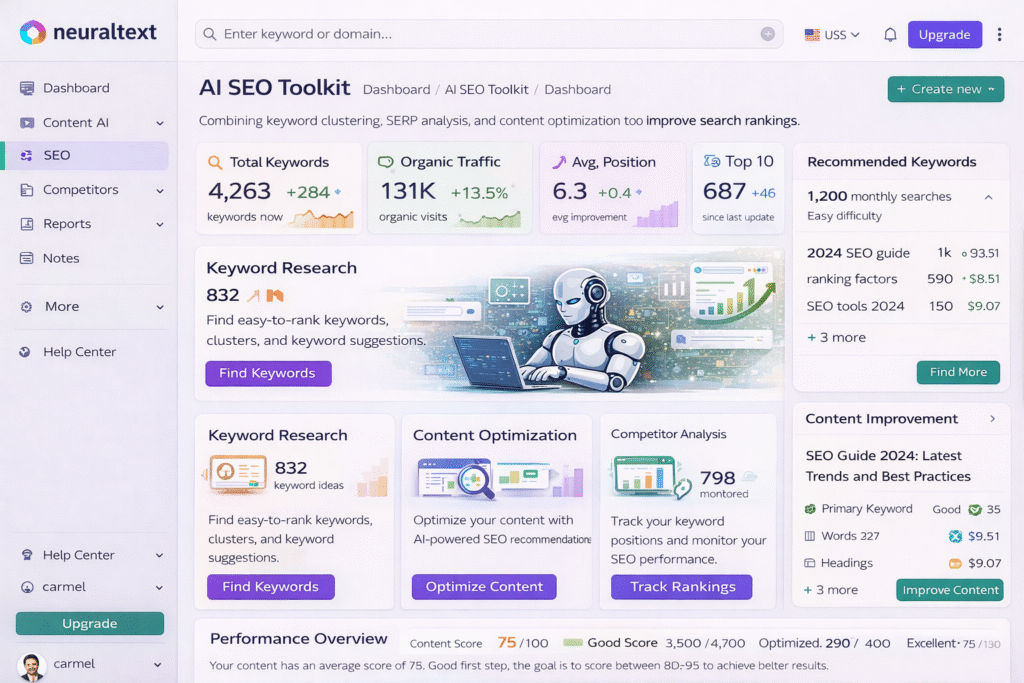
This image shows the NeuralText content editor interface, demonstrating how the platform provides keyword suggestions, topic clusters, and AI-assisted writing features for SEO-focused content.
How AI Tools for SEO Improve Rankings
Artificial intelligence has transformed the way marketers approach search engine optimization. Instead of relying entirely on manual analysis, AI tools for SEO allow marketers to process large volumes of search data quickly and identify patterns that influence rankings. These tools help streamline multiple aspects of SEO, including keyword discovery, content optimization, and competitor analysis.
One of the biggest advantages of AI-powered SEO platforms is their ability to analyze search intent. Modern search engines prioritize content that answers user queries clearly and comprehensively. AI tools analyze the structure of top-ranking pages and identify the topics, keywords, and semantic relationships that contribute to higher visibility in search results. This insight allows marketers to create content that aligns more closely with what users are searching for.
Another important benefit of using AI tools for SEO is improved keyword clustering. Instead of targeting individual keywords separately, AI-powered systems group related queries into topic clusters. This helps marketers build comprehensive content strategies that cover entire topics rather than isolated search terms. As a result, websites can establish stronger topical authority and increase their chances of ranking for multiple related keywords.
AI platforms also accelerate competitor analysis. Rather than manually reviewing competitor websites, these tools analyze multiple search results simultaneously to identify ranking patterns. Marketers can quickly discover which pages attract the most traffic, which keywords competitors are targeting, and how content is structured across high-ranking websites.
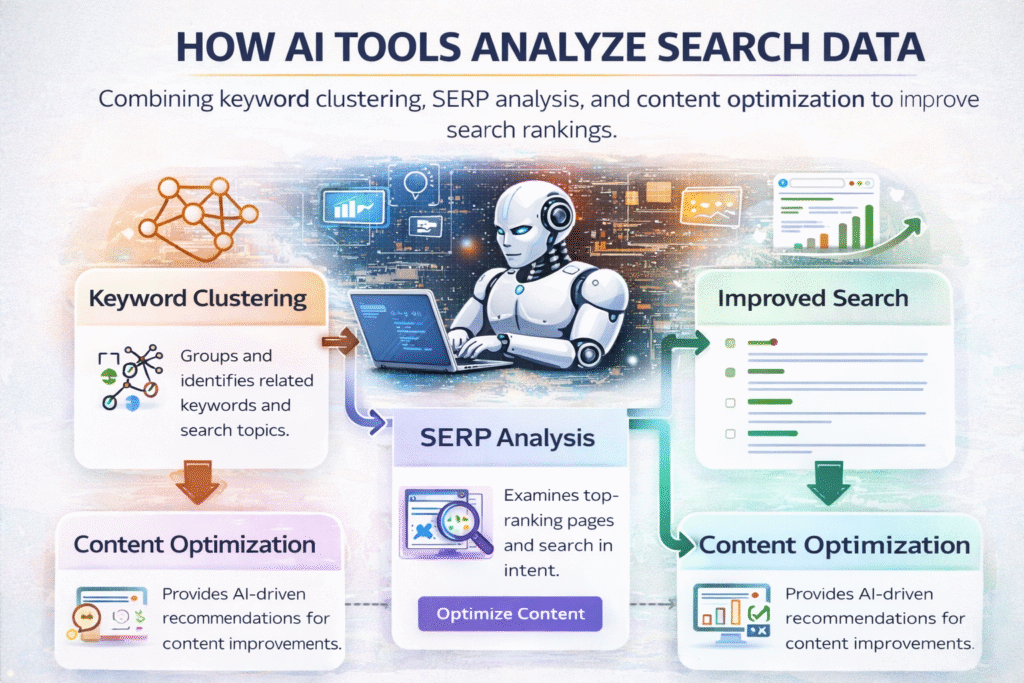
This diagram shows how AI tools analyze search data by combining keyword clustering, SERP analysis, and content optimization to improve search rankings.
By automating data analysis and providing actionable insights, AI tools for SEO help marketers focus more on strategy and content quality. Businesses that adopt these technologies can improve efficiency, uncover new ranking opportunities, and adapt more quickly to search engine algorithm changes.
AI Tools for SEO vs Traditional SEO Tools
Before artificial intelligence became widely integrated into marketing platforms, most SEO strategies relied heavily on manual research and analysis. While traditional SEO tools still provide valuable data, AI tools for SEO enhance this process by automating complex tasks and identifying patterns across large datasets.
Traditional tools typically require users to interpret data themselves. For example, keyword research might involve reviewing search volumes, analyzing keyword difficulty, and manually grouping related queries. AI-powered tools automate this process by clustering keywords and identifying search intent patterns automatically.
This table compares traditional SEO workflows with AI-powered SEO processes, highlighting differences in speed, automation, and data analysis capabilities.
| Feature | Traditional SEO Tools | AI SEO Tools |
| Keyword research | Manual analysis | Automated clustering |
| Content optimization | Manual editing | AI recommendations |
| SERP analysis | Limited datasets | Large-scale analysis |
| Data insights | Slower interpretation | Instant insights |
| Workflow efficiency | Time-intensive | Highly automated |
Although traditional tools remain useful, integrating AI tools for SEO into the workflow allows marketers to analyze more data, automate repetitive tasks, and improve optimization accuracy.
Challenges and Limitations of AI SEO Tools
Despite their advantages, AI tools for SEO are not perfect solutions. Like any technology, they have limitations that marketers should consider when integrating them into their strategies.
One challenge is over-reliance on automation. AI tools can provide recommendations based on data patterns, but they cannot fully replace human judgment. Successful SEO strategies still require creativity, strategic thinking, and an understanding of audience needs.
Another limitation is content quality. While AI-powered writing assistants can generate text quickly, search engines increasingly prioritize helpful and original content. Google’s helpful content guidelines emphasize the importance of expertise and value for readers. As a result, AI-generated content should always be reviewed, edited, and refined by human writers.
Additionally, some AI platforms rely on datasets that may not always reflect real-time search changes. Search algorithms evolve frequently, which means marketers should combine AI insights with ongoing analysis and experimentation.
Understanding these limitations ensures that AI tools for SEO are used as strategic assistants rather than complete replacements for human expertise.
The Future of AI Tools for SEO
Artificial intelligence is expected to play an even larger role in search engine optimization over the next decade. As search engines incorporate more machine learning technologies into their ranking algorithms, marketers will increasingly rely on AI tools for SEO to interpret search data and adapt their strategies.
One emerging trend is predictive SEO. Future AI systems may analyze search behavior and forecast which topics or keywords are likely to grow in popularity. This would allow marketers to create content before demand peaks, gaining a competitive advantage in search results.
Another development is the rise of multimodal search. Search engines are increasingly analyzing images, videos, and voice queries alongside traditional text-based searches. AI-powered SEO platforms will likely expand their capabilities to optimize content across these different formats.
This timeline illustrates the evolution of SEO from traditional keyword optimization to AI-driven and predictive SEO strategies.
As artificial intelligence continues to evolve, marketers who adopt AI tools for SEO early will be better positioned to understand search trends, optimize content effectively, and maintain strong visibility in search results.
Conclusion
Artificial intelligence is rapidly transforming the world of search engine optimization. Tasks that once required hours of manual research can now be completed in minutes with the help of AI tools for SEO. From keyword discovery and content optimization to competitor analysis and technical auditing, these platforms provide powerful insights that help marketers improve their search strategies.
However, the true value of AI in SEO comes from combining automation with human expertise. AI tools can analyze vast datasets and identify optimization opportunities, but successful SEO still depends on strategic thinking, high-quality content, and a deep understanding of user intent.
By leveraging the right tools and integrating them into a well-structured SEO strategy, businesses can increase efficiency, uncover new ranking opportunities, and build stronger organic visibility in an increasingly competitive digital landscape.
What are AI tools for SEO?
AI tools for SEO are software platforms that use artificial intelligence technologies such as machine learning and natural language processing to automate tasks like keyword research, content optimization, competitor analysis, and technical SEO auditing.
Which AI tool is best for SEO beginners?
Tools such as Surfer SEO, Frase, and RankIQ are often considered beginner-friendly because they provide clear optimization recommendations and simple interfaces.
Can AI improve Google rankings?
AI tools cannot guarantee rankings, but they help improve optimization by analyzing SERP data, identifying keyword opportunities, and recommending improvements for content and technical SEO.
Are AI SEO tools worth using?
Yes. Many marketers use AI tools to save time on research, discover ranking opportunities, and optimize content more efficiently.
Do AI tools replace SEO experts?
No. AI tools assist SEO professionals by automating analysis and providing insights, but strategy, creativity, and decision-making still require human expertise.
Are AI-generated articles safe for SEO?
AI-generated content can be useful, but it should always be reviewed and edited by humans to ensure quality, accuracy, and compliance with search engine guidelines.
How do AI tools analyze search intent?
Most AI SEO platforms use natural language processing to analyze search queries and evaluate patterns among top-ranking pages in search results.
What is keyword clustering in AI SEO tools?
Keyword clustering groups related search queries together so marketers can create content that targets entire topics instead of individual keywords.
Are AI SEO tools expensive?
Pricing varies widely. Some platforms offer affordable plans for bloggers, while enterprise tools used by agencies may cost significantly more.
How can beginners start using AI for SEO?
Beginners can start by using AI tools for keyword research, content optimization, and topic discovery to build a strong SEO foundation.
💡 Interested in learning more? Contact RKDMT – Raju Kumar Digital Marketer – Best Digital Marketing Training Institute
🔗www.rajukumardigitalmarketing.com
📞 +91-7303933302, +91-9217057127
📧 rkdmt@rajukumardigitalmarketer.com

Founder at Digital Marketing Marvel | Founder at RKDMT – Raju Kumar Digital Marketing Trainer | Best Digital Marketing Trainer in Delhi/NCR – Digiperform | Project Manager | 5+ years | Genius Study Abroad & Inlingua’s Digital Marketing Head | Learn Digital Marketing