



Overview of B2B Marketing Channels That Boost Revenue
In today’s competitive digital economy, businesses can no longer rely on guesswork or scattered marketing efforts to grow. Success depends on choosing the right b2b marketing channels that attract high-quality leads, build long-term relationships, and generate consistent revenue. As buying behavior becomes more research-driven and decision-makers demand value before committing, companies must build smarter, more targeted channel strategies to stay ahead.
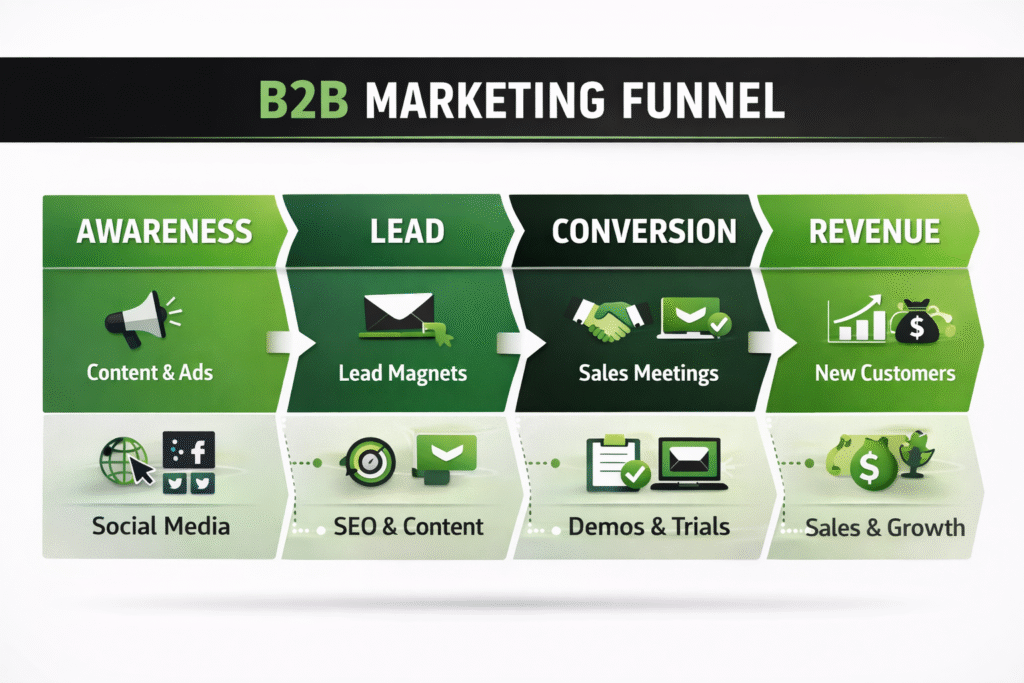
B2B marketing channels refer to the platforms and methods businesses use to reach, engage, and convert other businesses. These channels include organic strategies like SEO and content marketing, paid channels like Google Ads and LinkedIn Ads, outbound outreach, email nurturing, partnerships, webinars, and account-based marketing. Each channel serves a unique role in the growth funnel — from brand awareness and lead generation to conversion and customer retention.
Choosing the right channel mix is not just a marketing decision — it’s a revenue decision. Businesses that invest in the wrong channels often struggle with wasted budgets, poor-quality leads, and unpredictable sales performance.
On the other hand, companies that implement a clear B2B marketing strategy can build a predictable pipeline, reduce customer acquisition costs, and improve overall return on investment. The right channels ensure your message reaches the right decision-makers at the right time, increasing the likelihood of conversion and long-term loyalty.
One of the biggest advantages of well-optimized b2b marketing channels is their ability to support sustainable revenue growth. When aligned with Revenue-driven marketing goals, these channels help businesses attract high-intent prospects, shorten sales cycles, improve deal size, and increase customer lifetime value.
For example, content marketing and SEO can drive long-term organic traffic and authority, while paid advertising and account-based marketing can target high-value enterprise clients with precision. Meanwhile, email marketing and marketing automation help nurture leads and convert interest into revenue without manual effort.
Scalability is another major reason b2b marketing channels matter. As a company grows, its marketing system must grow with it — without drastically increasing costs. The right channel strategy allows businesses to expand into new markets, reach broader audiences, automate lead nurturing, and maintain consistent performance at scale.
Whether you’re a startup trying to generate your first steady leads or an established enterprise aiming to optimize multi-channel ROI, investing in effective b2b marketing channels builds a foundation for long-term success.
This guide is designed to give you a complete, practical understanding of how modern b2b marketing channels work and how they contribute to revenue growth. You’ll learn what the most effective channels are, how they impact different stages of the buyer journey, how to choose the best channels for your business model, and how to measure their real financial impact. We’ll also explore proven strategies, real-world examples, emerging trends, and tools that support scalable Digital marketing for B2B.
By the end of this guide, you’ll have a clear roadmap for building a high-performing marketing channel strategy that doesn’t just increase visibility — but drives measurable business results. Whether your goal is lead generation, sales growth, pipeline acceleration, or brand authority, mastering b2b marketing channels will help you turn marketing into a predictable and scalable revenue engine.
What Are B2B Marketing Channels?
To understand how businesses grow and generate revenue, it’s essential to clearly define b2b marketing channels and how they function in a modern business environment.
B2B marketing channels are the platforms, strategies, and communication methods companies use to promote their products or services to other businesses rather than individual consumers. These channels help organizations reach decision-makers, attract qualified leads, build trust, nurture long-term relationships, and convert prospects into high-value customers.
Common examples of b2b marketing channels include content marketing, search engine optimization (SEO), paid advertising, email marketing, LinkedIn outreach, account-based marketing (ABM), partnerships, webinars, events, and outbound sales.
Rather than working in isolation, b2b marketing channels are most effective when combined into a structured, multi-channel system. When aligned with sales and business goals, they create a predictable pipeline that supports lead generation, conversion, retention, and revenue growth.
Businesses that strategically invest in the right channels can reduce acquisition costs, improve lead quality, and scale faster than competitors relying on scattered marketing efforts.
B2B Marketing Channels vs B2C Marketing Channels
Although B2B and B2C marketing sometimes use the same platforms, their approach and execution are fundamentally different. B2C marketing focuses on appealing to individual consumers, often driven by emotional decision-making, shorter sales cycles, and impulse purchases. In contrast, b2b marketing channels target organizations, teams, and senior decision-makers, where buying decisions are more logical, research-based, and financially significant.
Key differences include:
- Longer buying cycles due to approvals, contracts, and budgets
- Multiple stakeholders are involved in decision-making
- Higher deal values require stronger trust and credibility
- Greater emphasis on education, such as case studies, demos, and whitepapers
- Relationship-driven marketing, focused on long-term value rather than one-time purchases
Understanding how B2B marketing works means recognizing that success is not just about visibility — it’s about authority, credibility, and measurable return on investment.
How B2B Marketing Channels Support the Buyer Journey
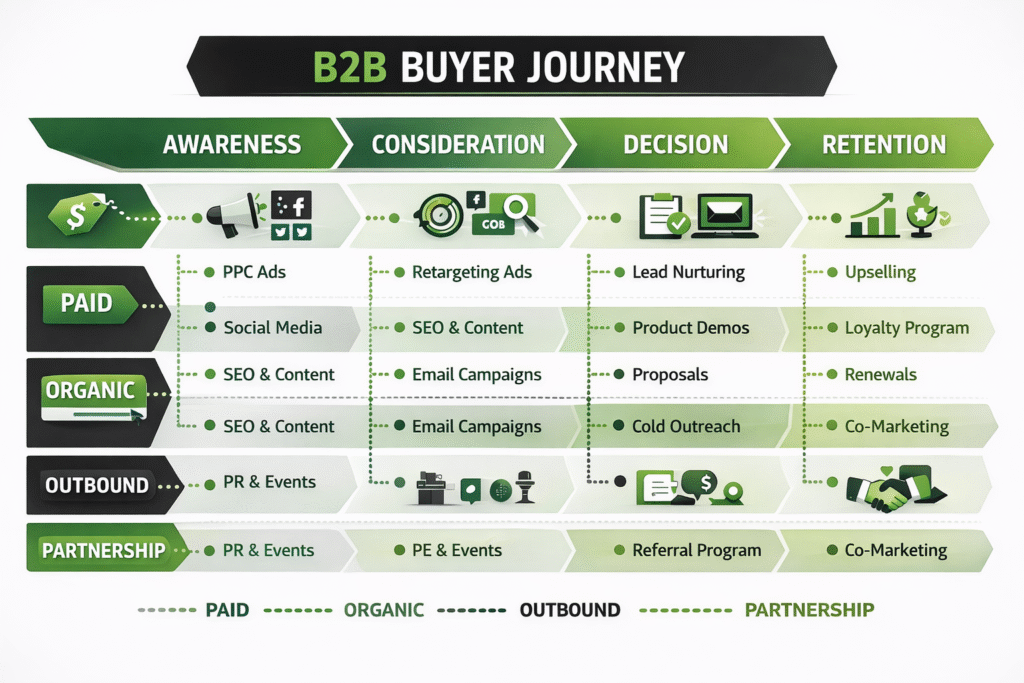
One of the most important roles of b2b marketing channels is guiding potential customers through the buyer journey, from first awareness to final purchase and long-term retention. Each channel supports a specific stage of this journey and helps move prospects closer to conversion.
For example:
- Awareness stage: SEO, blogs, social media, and paid ads introduce your brand
- Consideration stage: Case studies, webinars, email nurturing, and retargeting build trust and authority
- Decision stage: Sales calls, demos, testimonials, and account-based marketing drive conversions
- Retention stage: Email marketing, customer success programs, and community-building increase lifetime value
A clear understanding of the B2B buyer journey explained helps businesses choose the most effective channels at each stage, ensuring marketing budgets are spent wisely and opportunities are not lost.
When implemented strategically, b2b marketing channels do more than generate website traffic — they create sustainable demand, strengthen relationships with high-value clients, and build a scalable engine for long-term business growth. As you continue through this guide, you’ll gain deeper insights into how different channels work together to drive performance, revenue, and competitive advantage.
How B2B Marketing Channels Drive Revenue
At their core, b2b marketing channels exist to achieve one primary goal: turn attention into revenue. While different channels serve different purposes, the most successful businesses treat marketing as a structured pipeline that moves prospects from discovery to purchase — and beyond.
The revenue impact of b2b marketing channels follows a clear flow:
Channel → Lead → Conversion → Revenue
Each stage builds on the previous one. Marketing channels such as SEO, paid ads, social media, email, partnerships, and outbound outreach act as entry points into your funnel. These channels attract potential buyers, capture their interest, and convert them into leads.
Once leads enter the system, nurturing campaigns, sales enablement, and personalized communication help convert them into paying customers. Over time, retention and upselling efforts transform customers into long-term revenue sources.
This structured pipeline ensures that marketing is not just about visibility — it becomes a predictable, measurable revenue engine. Businesses that master this flow through strong Lead generation for B2B can reduce reliance on guesswork and build stable, scalable income streams.
From Marketing Channels to Revenue Growth
Different b2b marketing channels contribute to revenue in different ways. Some generate high-volume leads at the top of the funnel, while others focus on high-intent decision-makers closer to purchase. When combined strategically, they create a balanced growth system.
For example:
- SEO and content marketing drive long-term organic leads and authority
- Paid advertising generates faster, high-intent demand
- Email marketing and automation nurture leads until they are ready to convert
- Account-based marketing (ABM) targets high-value enterprise prospects
- Partnerships and referrals bring in trusted, warm leads with higher close rates
The key is not to rely on a single channel, but to align multiple channels with specific business goals. Companies that follow smart Revenue growth strategies use performance data to double down on the channels that produce the highest-quality leads and strongest return on investment.
Impact of B2B Marketing Channels on Customer Lifetime Value (CLV)
Beyond generating initial sales, b2b marketing channels play a critical role in increasing Customer Lifetime Value (CLV) — the total revenue a business earns from a customer over time.
Well-optimized channels:
- Attract higher-quality customers who stay longer
- Improve retention through email marketing, content, and customer engagement
- Enable cross-selling and upselling through personalized campaigns
- Strengthen brand trust, leading to repeat business and referrals
For instance, consistent content marketing keeps your brand top-of-mind, while targeted email campaigns encourage repeat purchases and contract renewals. Over time, this compounds revenue without requiring the same level of acquisition cost — making marketing more profitable and sustainable.
Examples of Revenue-Generating B2B Marketing Channels
Some b2b marketing channels are especially effective at driving revenue when used strategically:
- Search Engine Optimization (SEO): Generates ongoing organic leads with low long-term cost
- Google Ads & LinkedIn Ads: Captures high-intent prospects actively searching for solutions
- Email Marketing: Converts nurtured leads into customers through personalized communication
- Webinars & Events: Attracts decision-makers and builds trust before sales conversations
- Outbound Sales & LinkedIn Outreach: Creates direct revenue opportunities through targeted prospecting
Each of these channels contributes differently — some deliver speed, others deliver scale, and some deliver high-value enterprise deals. The most successful companies continuously test, measure, and optimize their channel mix to maximize revenue impact.
Why Revenue-Focused Channel Strategy Matters
Without a revenue-focused approach, marketing becomes a cost center rather than a growth engine. But when b2b marketing channels are aligned with sales targets, funnel metrics, and customer value, marketing transforms into a profit driver.
By understanding how channels influence lead quality, conversion rates, and long-term customer value, businesses can allocate budgets more intelligently, improve forecasting accuracy, and build sustainable competitive advantage.
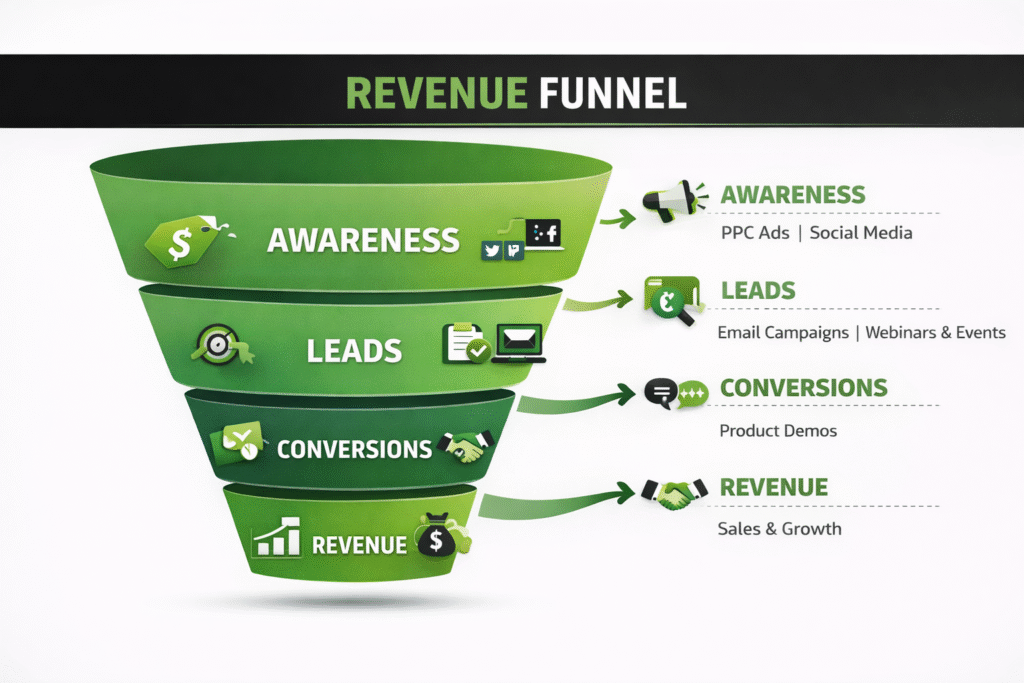
As we move forward in this guide, you’ll learn how each major channel performs, how to evaluate ROI, and how to select the right b2b marketing channels to maximize growth, efficiency, and long-term revenue.
Content Marketing (Blogs, Guides, Case Studies)
Among all b2b marketing channels, content marketing stands out as one of the most powerful and sustainable drivers of revenue. Unlike short-term promotional tactics, content marketing builds long-term visibility, authority, trust, and demand — all of which directly influence lead quality and conversion rates.
At its core, content marketing in B2B focuses on educating decision-makers, solving real business problems, and guiding prospects through the buying journey. Because B2B purchases often involve multiple stakeholders, long sales cycles, and high contract values, buyers rely heavily on informative, data-backed, and credible content before making a decision.
A well-executed B2B content marketing strategy does more than attract traffic — it generates qualified leads, nurtures prospects, supports sales conversations, and strengthens brand credibility.
SEO Blogs — Driving Long-Term Organic Leads
SEO-focused blogs are one of the most scalable content assets within b2b marketing channels. They help businesses rank on search engines for relevant keywords, attract high-intent prospects, and generate consistent inbound leads over time.
When optimized correctly, SEO blogs can:
- Bring in organic traffic from decision-makers searching for solutions
- Build topic authority and industry credibility
- Support lead generation through gated content, demos, and email signups
- Reduce dependency on paid advertising by creating compounding traffic growth
The real value of SEO content for B2B lies in its longevity. Unlike ads that stop working once budgets run out, SEO blogs continue generating leads months or even years after publishing. Over time, a strong blog strategy creates a predictable pipeline of inbound opportunities, lowering acquisition costs and improving ROI.
SEO blogs also play a key role in nurturing prospects. A potential client might discover your brand through a blog post, explore related guides, read case studies, and eventually request a demo — all without direct sales outreach. This makes SEO-driven content one of the most efficient and cost-effective b2b marketing channels for revenue growth.
Case Studies — Turning Proof into Conversions
While blogs attract traffic, case studies are designed to convert interest into revenue. They serve as real-world proof that your product or service delivers results — something B2B buyers value highly when evaluating risk.
Case studies strengthen b2b marketing channels by:
- Demonstrating measurable outcomes and ROI
- Addressing objections through real client experiences
- Supporting sales teams during closing conversations
- Increasing trust among enterprise-level decision-makers
A strong case study doesn’t just describe what you did — it tells a clear story of a business challenge, the strategy implemented, and the tangible results achieved. This storytelling approach helps prospects visualize how your solution could work for their own organization, making it easier to justify purchasing decisions internally.
In revenue terms, case studies often influence higher deal sizes, faster closing times, and higher conversion rates, especially in high-ticket B2B services, SaaS, consulting, and enterprise solutions.
Whitepapers & Lead Magnets — Capturing High-Intent Prospects
Whitepapers, eBooks, reports, and other lead magnets are critical assets in advanced b2b marketing channels. These long-form resources allow businesses to exchange valuable insights for contact information, turning anonymous website visitors into identifiable leads.
Effective lead magnets help:
- Capture high-intent prospects interested in deeper insights
- Segment leads based on industry, role, or business needs
- Support email nurturing and sales follow-up
- Position your brand as a thought leader and authority
Because B2B buyers often conduct extensive research before contacting sales, whitepapers and guides serve as trusted educational tools that move prospects further down the funnel. When combined with email automation, remarketing, and CRM integration, lead magnets become a powerful revenue engine — not just a content asset.
Why Content Marketing Drives Revenue in B2B
Content marketing strengthens b2b marketing channels by supporting every stage of the buyer journey:
- Awareness: SEO blogs and educational articles attract new prospects
- Consideration: Guides, comparisons, and case studies build trust
- Decision: Proof-driven content supports conversion
- Retention: Ongoing content keeps customers engaged and loyal
Unlike one-off campaigns, content marketing compounds in value. Each new blog, guide, or case study adds to your digital asset library, increasing brand reach, organic visibility, and long-term lead flow.
When aligned with sales goals, analytics, and conversion tracking, content marketing becomes a revenue-generating system — not just a branding activity.
Search Engine Optimization (SEO)
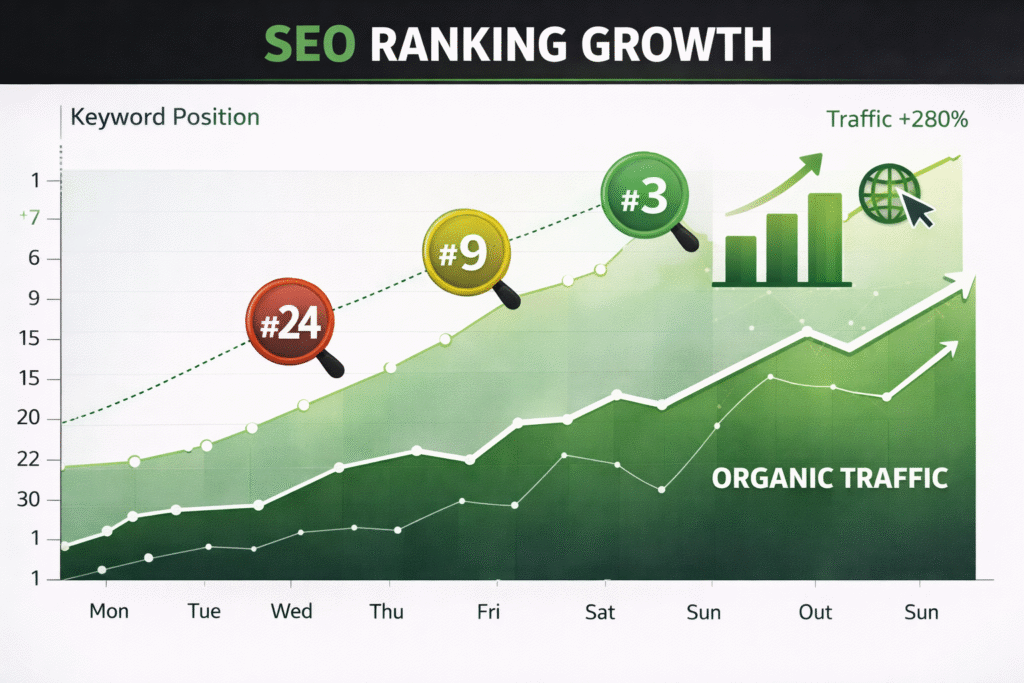
Among all b2b marketing channels, Search Engine Optimization (SEO) is one of the most effective long-term drivers of organic leads and revenue. SEO focuses on improving a website’s visibility in search engines, helping businesses attract decision-makers who are actively searching for solutions.
Organic search traffic is especially valuable because it brings in high-intent prospects with a real business need. Unlike paid ads, SEO continues generating leads even without ongoing ad spend, making it a cost-efficient and scalable growth channel over time. A strong B2B SEO strategy allows companies to build authority, increase trust, and create a steady inbound pipeline.
The long-term revenue value of SEO lies in its compounding impact. As content ranks higher and gains authority, traffic and lead flow increase without proportional cost increases. This lowers customer acquisition costs and improves overall marketing ROI — making SEO one of the most sustainable b2b marketing channels for revenue growth.
A successful SEO approach relies on a keyword-driven strategy. Through effective Keyword research for B2B, businesses can target high-intent search terms that align with buyer needs and commercial opportunities. By creating optimized content around these keywords — from blog posts to service pages — companies can attract prospects at every stage of the buyer journey.
When executed correctly, SEO transforms a website into a consistent revenue-generating asset, supporting both short-term visibility and long-term business growth.
Pay-Per-Click Advertising (Google Ads, LinkedIn Ads)
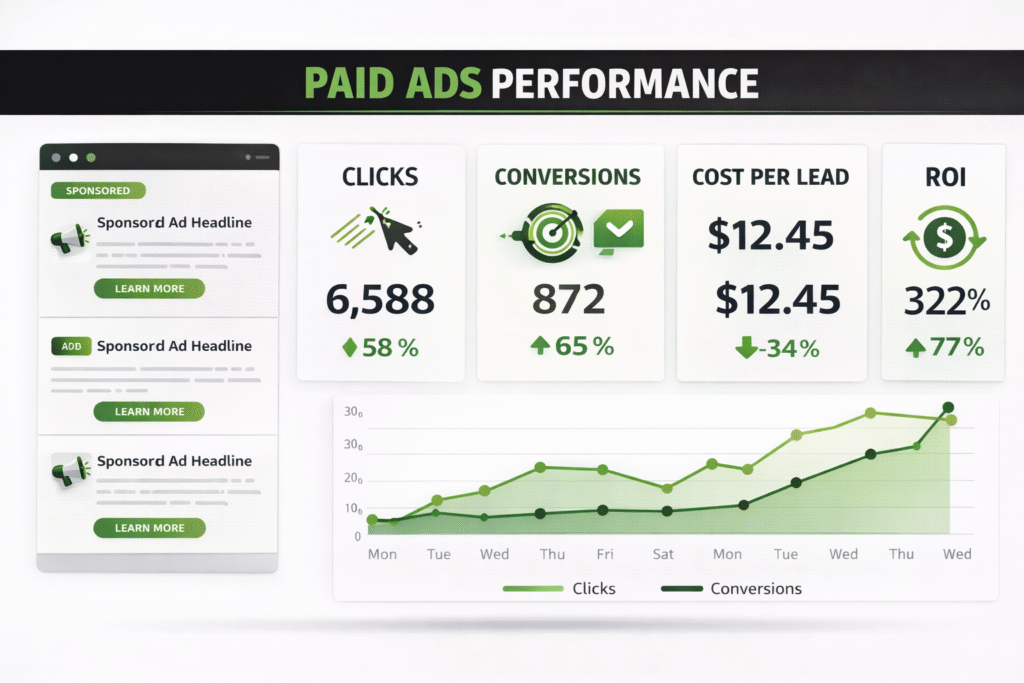
Within b2b marketing channels, Pay-Per-Click (PPC) advertising is one of the fastest ways to generate high-intent leads and immediate revenue. Platforms like Google Ads and LinkedIn Ads allow businesses to target decision-makers who are actively searching for solutions or match specific job roles, industries, and company sizes.
PPC is especially effective for capturing prospects who are ready to buy. A well-optimized B2B Google Ads campaign can drive qualified traffic to service pages, demos, and landing pages, helping businesses convert demand into sales quickly. Meanwhile, LinkedIn Ads for B2B enable precise targeting of senior professionals, making them ideal for account-based marketing and enterprise lead generation.
One of PPC’s biggest strengths is scalability. Budgets can be adjusted based on performance, allowing companies to scale winning campaigns and pause underperforming ones. This flexibility makes PPC a powerful channel for testing offers, entering new markets, and accelerating pipeline growth without long waiting periods.
ROI measurement is also a major advantage of paid advertising. Businesses can track impressions, clicks, conversions, cost per lead, and revenue attribution in real time. This data-driven approach helps marketers optimize targeting, refine messaging, and allocate budgets to the most profitable campaigns.
When used strategically, PPC becomes a revenue acceleration engine — complementing long-term organic channels while delivering immediate lead flow within a balanced b2b marketing channels strategy.
Email Marketing & Marketing Automation
Among effective b2b marketing channels, email marketing plays a critical role in lead nurturing, conversions, and long-term revenue growth. While some channels focus on acquiring leads, email ensures those leads are consistently engaged, educated, and guided toward a purchase decision.
A strong B2B email marketing strategy helps businesses build relationships with prospects over time by delivering personalized content, product updates, case studies, and offers directly to their inbox. This is especially important in B2B, where buying cycles are longer and decision-makers require multiple touchpoints before converting.
Marketing automation takes email performance further by creating automated funnels that move leads through the buyer journey without manual effort. Businesses can set up workflows to onboard new leads, nurture prospects based on behavior, re-engage inactive users, and follow up after demos or inquiries. These automated systems improve efficiency while ensuring no opportunity is lost.
Email marketing also supports conversion optimization by targeting the right message at the right time. Segmentation, personalization, A/B testing, and performance tracking allow marketers to refine campaigns and increase open rates, click-through rates, and final conversions. Over time, this improves lead quality, sales velocity, and overall ROI.
When integrated with CRM systems and other b2b marketing channels, email marketing becomes a reliable revenue driver — turning warm leads into paying customers and helping businesses scale growth with consistency.
Social Media Marketing for B2B
Within modern b2b marketing channels, social media marketing plays a growing role in building authority, generating demand, and influencing buying decisions. While it may not always drive instant conversions, it strongly supports brand trust, lead nurturing, and long-term pipeline growth.
LinkedIn is the most powerful platform for B2B, enabling companies to establish thought leadership, connect with decision-makers, and share valuable insights. A strong LinkedIn marketing for B2B approach helps brands stay visible during the research and consideration stages of the buyer journey.
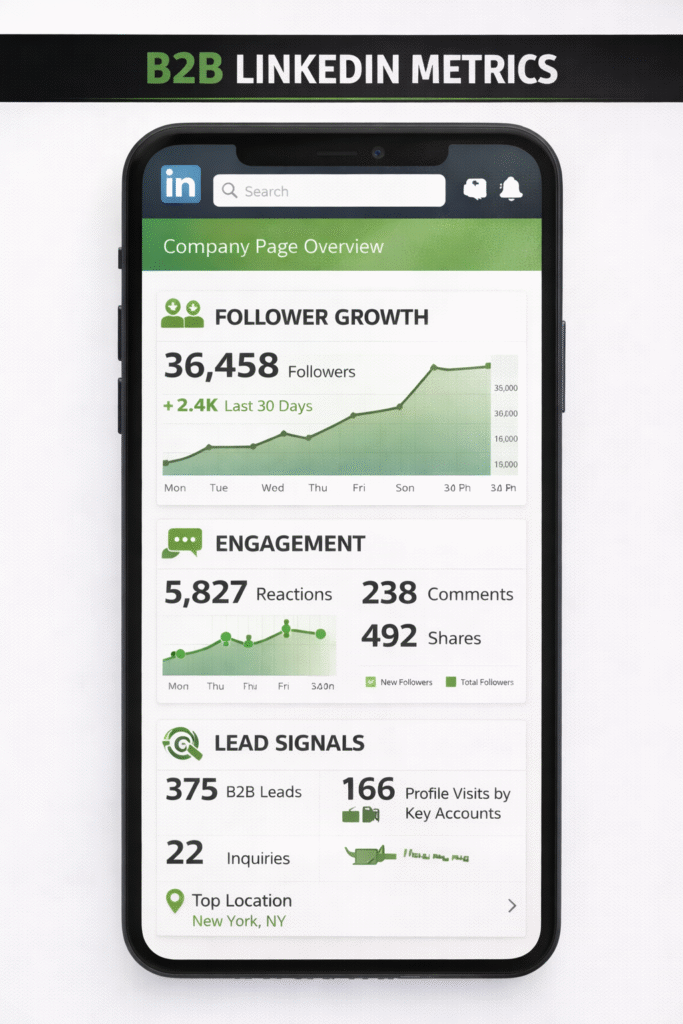
Platforms like Twitter/X and YouTube also contribute by amplifying expertise, sharing industry trends, publishing educational content, and supporting content distribution. These channels are especially effective for increasing reach, reinforcing credibility, and driving traffic to core conversion assets such as blogs, case studies, and landing pages.
Personal branding for founders and executives further strengthens B2B social media impact. When leaders actively share insights, experiences, and opinions, it humanizes the brand, builds trust, and attracts higher-quality business opportunities.
When integrated into a broader B2B social media marketing strategy, social platforms become a valuable influence and demand-generation channel, supporting sales, partnerships, and long-term revenue within a complete b2b marketing channels ecosystem.
Account-Based Marketing (ABM)
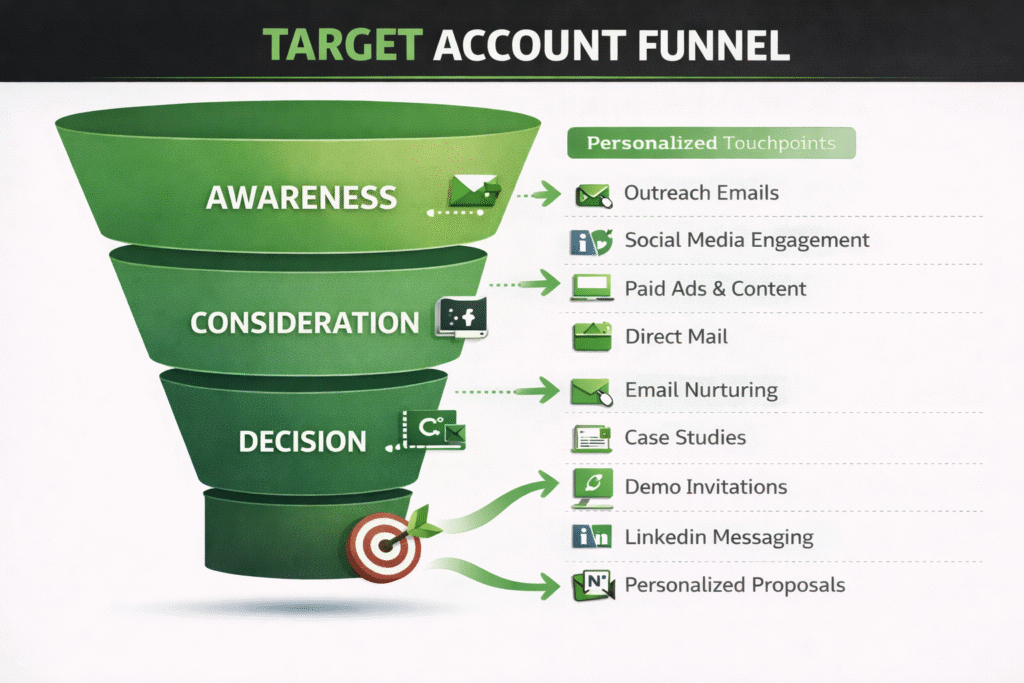
Among advanced b2b marketing channels, Account-Based Marketing (ABM) focuses on targeting high-value enterprise clients with personalized, highly strategic campaigns. Instead of marketing to a broad audience, ABM concentrates resources on specific companies that offer the greatest revenue potential.
An effective Account-based marketing strategy aligns marketing and sales teams to identify target accounts, understand decision-makers, and deliver tailored messaging across multiple touchpoints. This personalized approach increases engagement, builds stronger relationships, and improves conversion rates — especially for high-ticket B2B deals.
ABM becomes even more powerful when combined with CRM integration and data-driven personalization. By tracking account behavior, interaction history, and pipeline activity, businesses can deliver relevant content, follow-ups, and offers at the right time. This creates a more focused buying experience and shortens sales cycles.
In Enterprise B2B marketing, ABM is particularly valuable because it prioritizes deal quality over lead quantity. When executed correctly, it drives larger contract values, higher close rates, and stronger long-term customer relationships — making it one of the most profitable b2b marketing channels for scalable revenue growth.
Influencer & Partnership Marketing
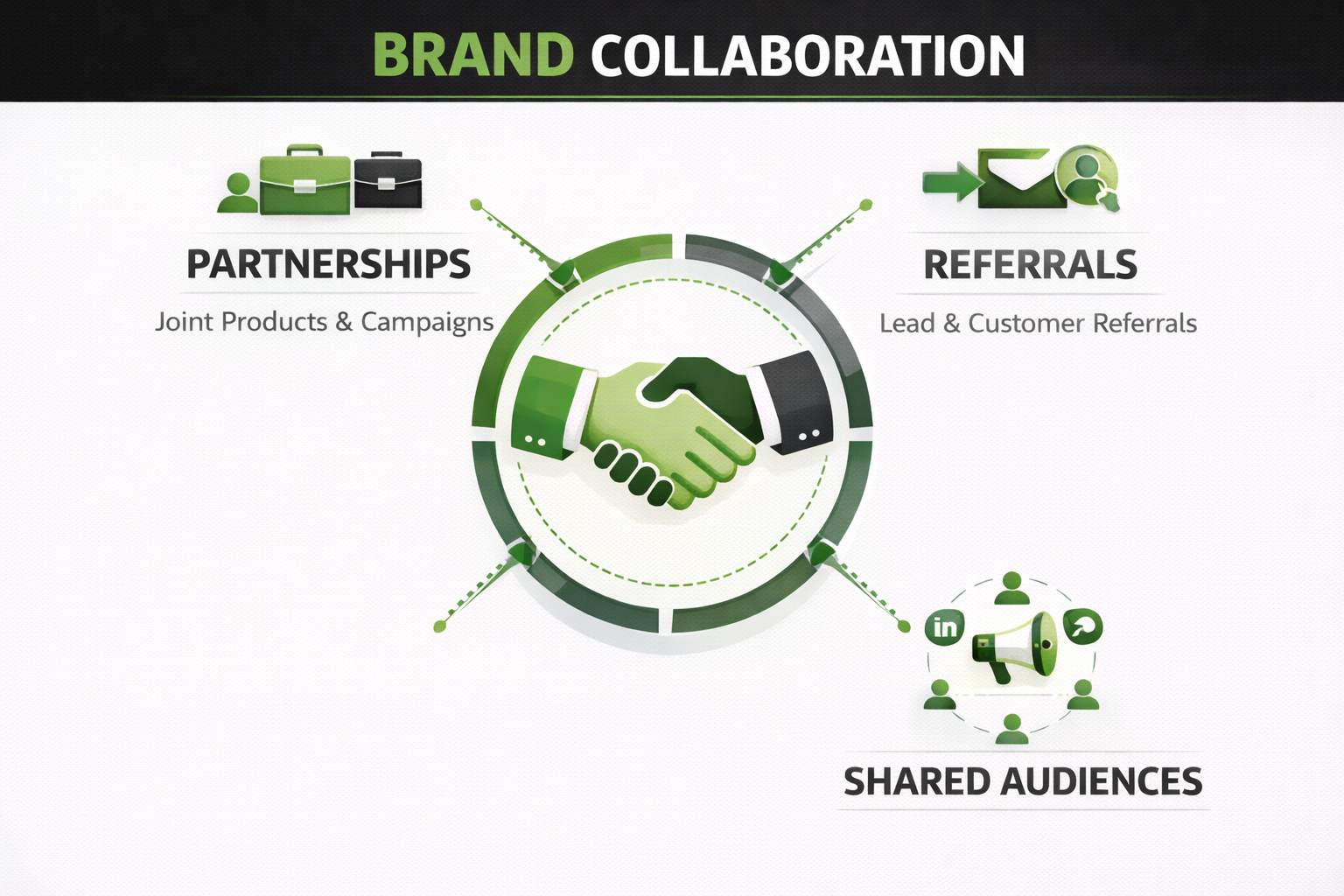
Within expanding b2b marketing channels, influencer and partnership marketing focuses on leveraging trusted industry voices and strategic allies to reach qualified audiences and accelerate revenue growth. In B2B, influence is driven less by celebrities and more by experts, thought leaders, communities, and business partners with strong credibility.
Industry partnerships allow businesses to co-market products, share audiences, host joint webinars, publish collaborative content, and generate high-quality leads through mutual trust. These partnerships often produce warmer prospects because recommendations come from sources buyers already respect.
A strong B2B influencer marketing approach can also boost brand authority by featuring niche creators, industry professionals, or founders who speak directly to decision-makers. This helps build trust, shorten buying cycles, and improve lead conversion rates.
Affiliate and referral models further strengthen partnership-driven revenue. By rewarding partners, customers, or creators for successful referrals, businesses can create a performance-based growth channel that delivers low-cost, high-intent leads.
When executed strategically, Strategic brand partnerships become a scalable revenue channel, expanding reach, improving credibility, and generating consistent business opportunities within a broader b2b marketing channels strategy.
Webinars, Events & Community Marketing

Within high-impact b2b marketing channels, webinars, events, and community marketing are powerful tools for attracting high-intent decision-makers and accelerating trust. These channels work especially well in B2B because they enable direct interaction, education, and relationship-building with potential buyers.
A strong B2B webinar marketing approach allows businesses to showcase expertise, demonstrate solutions, answer real-time questions, and capture qualified leads who are actively interested in solving a problem. Since webinar attendees often include managers, founders, and senior professionals, lead quality tends to be higher than in many other channels.
Industry events, conferences, and virtual summits also play a key role in authority-building. By hosting or participating in relevant events, companies can strengthen brand credibility, expand professional networks, and influence buying decisions earlier in the customer journey. A well-planned Event marketing strategy supports both brand visibility and revenue opportunities by connecting sales teams with warm, engaged prospects.
Over time, communities, user groups, and professional networks help maintain long-term engagement, encourage referrals, and increase customer lifetime value — making events and communities a valuable revenue-supporting pillar within a complete b2b marketing channels strategy.
Also Read Our: Why SEO for B2B Businesses Matters More Than Ever
Marketplace & Review Platforms
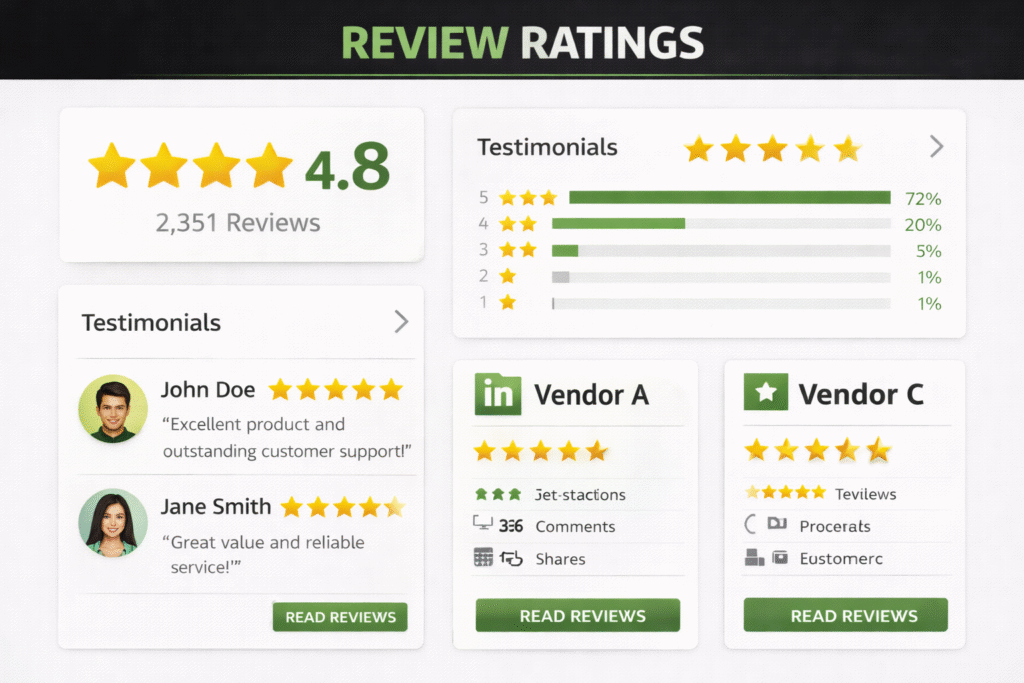
Within performance-driven b2b marketing channels, marketplace and review platforms play a key role in building trust and generating high-intent leads. Platforms like G2, Capterra, and Clutch help buyers compare solutions, read real customer feedback, and shortlist vendors before making purchasing decisions.
These platforms are especially effective for SaaS and service-based businesses, where credibility and social proof heavily influence buying choices. Being active on B2B review platforms increases brand visibility, strengthens reputation, and attracts prospects who are already in the decision-making stage.
For companies focused on SaaS lead generation, review marketplaces offer warm, conversion-ready traffic — users visiting these sites often have clear intent to evaluate providers and move forward with a purchase.
When optimized with strong profiles, positive reviews, and clear value propositions, marketplace listings become a reliable revenue-driving channel, supporting lead acquisition and deal closures within a broader b2b marketing channels strategy.
Affiliate, Referral & Partner Programs
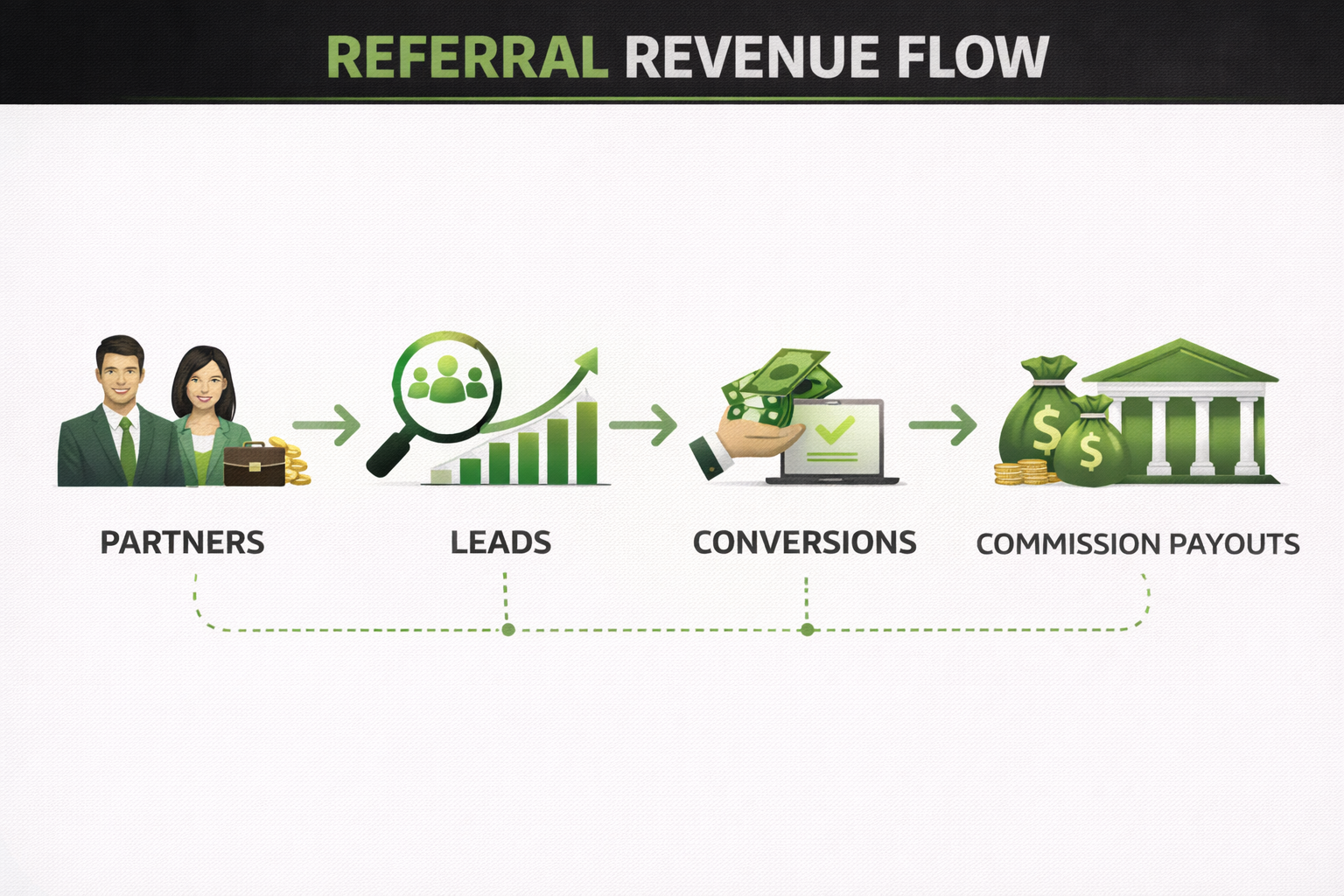
Within results-driven b2b marketing channels, affiliate, referral, and partner programs offer a powerful model for performance-based growth. These channels rely on external partners, customers, or affiliates to promote your business in exchange for commissions or incentives — ensuring you pay primarily for actual results, not just exposure.
A strong B2B referral marketing system turns satisfied customers, agencies, and industry contacts into revenue-generating advocates. Since referrals often come with built-in trust, leads from this channel typically convert faster and close at higher deal values.
Similarly, B2B affiliate marketing enables businesses to build partner-driven pipelines by collaborating with publishers, consultants, and niche platforms that already reach their target audience. This creates a scalable, low-risk growth channel that expands reach without increasing internal marketing costs.
When managed effectively, affiliate and partner programs become a high-ROI revenue engine, strengthening long-term growth within a complete b2b marketing channels strategy.
Best B2B Marketing Channels by Business Type
Not all b2b marketing channels perform the same across industries. The most effective channel mix depends on factors such as deal size, sales cycle length, target audience, budget, and business maturity. Choosing the right channels based on your business type can significantly improve lead quality, conversion rates, and long-term revenue.
Below is a breakdown of the most effective b2b marketing channels for key business segments.
SaaS Businesses
SaaS companies benefit from scalable, data-driven, and inbound-focused b2b marketing channels that generate consistent demo requests, free trial signups, and product-led growth.
Top-performing channels include:
- SEO & content marketing for long-term inbound lead generation
- Google Ads & LinkedIn Ads for high-intent and account targeting
- Email marketing & automation for onboarding and nurturing
- Review platforms (G2, Capterra) to build trust and influence decisions
- Webinars & product demos to convert evaluation-stage users
For SaaS brands, strong B2B SaaS marketing channels focus on reducing customer acquisition cost, improving trial-to-paid conversions, and increasing lifetime value through retention campaigns.
Also Read Our: What Is B2B Marketing Strategy? Scale Faster Today
Agencies & Service-Based Businesses
Agencies thrive on authority, credibility, and relationship-building. Their most effective b2b marketing channels emphasize proof, visibility, and outbound connection with potential clients.
High-impact channels include:
- LinkedIn marketing & personal branding to attract business clients
- Case studies & portfolio content to showcase real results
- Outbound sales & cold outreach for direct lead generation
- Referral & partner programs to tap into trusted networks
- Content marketing & thought leadership to establish expertise
For agencies, b2b marketing channels should prioritize trust-building, reputation, and consistent deal flow, rather than high-volume traffic.
Manufacturing & Industrial Businesses
Manufacturing companies often operate in niche markets with longer sales cycles, requiring b2b marketing channels that focus on lead qualification, relationship-building, and technical education.
Effective channels include:
- SEO for product and industry keywords to attract relevant buyers
- Trade shows, events, and webinars to connect with decision-makers
- Email marketing for distributor and buyer nurturing
- LinkedIn outreach to target procurement managers and executives
- Content marketing with technical guides, specs, and case studies
In this segment, b2b marketing channels work best when they support high-value negotiations, long-term contracts, and account-based selling.
Enterprise Businesses
Enterprise organizations require b2b marketing channels that support large deal sizes, multi-stakeholder decision-making, and long buying cycles. Precision, personalization, and account targeting are key.
Best-performing channels include:
- Account-Based Marketing (ABM) to target high-value accounts
- LinkedIn Ads & executive outreach for decision-maker engagement
- Enterprise-level events & private webinars to build relationships
- Thought leadership content to establish brand authority
- CRM-integrated email nurturing to manage long pipelines
For enterprise brands, b2b marketing channels should focus on quality over quantity, driving fewer but higher-value opportunities.
Startups & Early-Stage Businesses
Startups need fast, cost-effective, and scalable b2b marketing channels to generate traction, validate demand, and acquire early customers without overspending.
Most effective channels include:
- SEO & content marketing for long-term organic growth
- Social media & founder branding to build visibility and credibility
- Cold outreach & LinkedIn prospecting for early client acquisition
- Communities, partnerships, and networking to gain traction
- Referral programs to leverage word-of-mouth growth
A strong Marketing strategy for startups focuses on speed, experimentation, and ROI, helping founders identify which b2b marketing channels deliver results before scaling budgets.
How to Choose the Right Channels for Your Business
While industry matters, the best b2b marketing channels are ultimately determined by:
- Target customer type (SMBs, mid-market, or enterprise)
- Sales cycle length (short vs long decision timelines)
- Budget and resources available
- Deal size and revenue goals
- Customer acquisition cost vs lifetime value
Businesses that align channels with their specific goals can build more efficient funnels, higher-quality pipelines, and stronger revenue outcomes.
Rather than trying every channel at once, successful companies test a few core b2b marketing channels, measure performance, and double down on what drives the highest ROI. Over time, this creates a focused, scalable marketing system built around profitability rather than guesswork.
Comparing B2B Marketing Channels by ROI & Revenue Impact
Not all b2b marketing channels deliver the same return on investment (ROI) or revenue impact. Some channels generate quick wins, while others build long-term, compounding growth. Understanding how each channel performs in terms of cost, lead quality, scalability, and revenue potential helps businesses allocate budgets more effectively and maximize profitability.
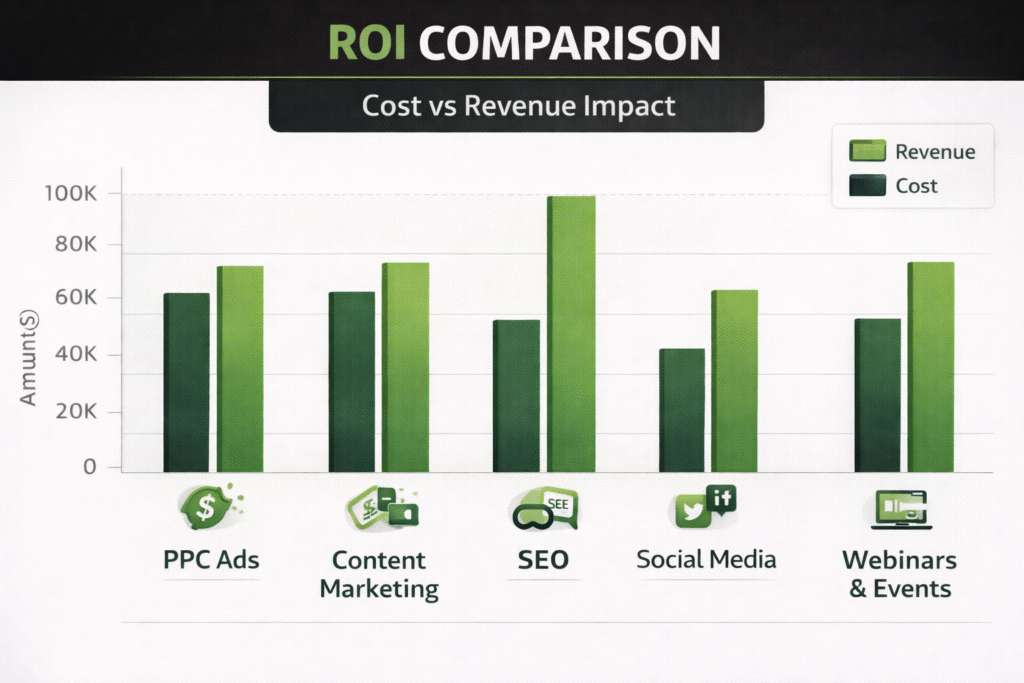
The key is not to choose the “most popular” channel — but the one that aligns best with your sales cycle, deal size, target audience, and growth goals.
High-ROI Long-Term Channels
Some b2b marketing channels excel at generating sustainable, long-term ROI with lower ongoing costs.
SEO & Content Marketing
These channels typically offer high long-term ROI because content continues generating traffic and leads long after it’s published. While they require time and effort upfront, they often reduce customer acquisition costs over time and build strong brand authority.
Email Marketing & Marketing Automation
Email consistently ranks among the highest ROI channels due to low distribution costs and strong conversion potential. When automated effectively, it nurtures leads, improves retention, and increases customer lifetime value.
These channels are ideal for businesses focused on scalable growth, predictable lead flow, and long-term profitability.
Fast-Revenue & High-Intent Channels
Some b2b marketing channels deliver faster revenue by targeting prospects who are already ready to buy.
Pay-Per-Click Advertising (Google Ads & LinkedIn Ads)
PPC generates immediate visibility and high-intent leads, making it effective for quick pipeline growth. While costs can be higher, ROI remains strong when campaigns are optimized and conversion tracking is in place.
Outbound Sales & LinkedIn Outreach
Direct outreach works well for high-value deals, especially in enterprise and service-based industries. It allows businesses to proactively target ideal clients rather than waiting for inbound leads.
These channels are best suited for companies that need quick deal flow or rapid market entry.
High-Trust & High-Conversion Channels
Certain b2b marketing channels produce higher conversion rates because they rely on trust, credibility, and warm introductions.
Referrals, Affiliate & Partner Programs
Leads from referrals often close faster and at higher deal values because trust is already established. These channels also operate on a performance-based model, improving ROI efficiency.
Review Platforms & Marketplaces
Platforms like G2, Capterra, and Clutch attract decision-ready buyers comparing vendors. These channels typically drive fewer leads, but with higher purchase intent and conversion probability.
These channels work best for businesses prioritizing quality over volume.
Authority-Building & Influence Channels
Some b2b marketing channels indirectly drive revenue by strengthening brand authority, trust, and long-term influence.
Webinars, Events & Community Marketing
These channels generate high-quality decision-maker leads and build stronger relationships over time.
Social Media & Thought Leadership
While social media may not always deliver direct conversions, it supports demand generation, credibility, and pipeline influence — especially when founders and executives build personal brands.
These channels are valuable for long-term positioning and reputation-driven growth.
Balancing Cost, Lead Quality & Scalability
When comparing b2b marketing channels, businesses should evaluate:
- Customer acquisition cost (CAC) vs revenue potential
- Lead quality vs lead volume
- Time to revenue (fast vs long-term channels)
- Scalability without increasing costs proportionally
- Impact on customer lifetime value (CLV)
High-performing companies rarely rely on a single channel. Instead, they combine:
- One or two fast-revenue channels (e.g., PPC, outbound)
- One or two long-term growth channels (e.g., SEO, content)
- One trust-driven channel (e.g., referrals, reviews, partnerships)
This balanced mix ensures both short-term pipeline growth and long-term revenue stability.
Choosing Channels Based on ROI Goals
The best b2b marketing channels depend on your business priorities:
- If you want quick revenue, focus on paid ads and outbound
- If you want long-term ROI, invest in SEO, content, and email
- If you want higher deal quality, prioritize referrals, ABM, and partnerships
- If you want brand authority, build webinars, thought leadership, and communities
By continuously tracking ROI, testing performance, and reallocating budgets to top-performing channels, businesses can build a profitable, scalable, and data-driven marketing engine.
How to Choose the Right B2B Marketing Channels
Choosing the right b2b marketing channels is not about copying competitors or chasing trends — it’s about aligning your budget, goals, audience, and sales process with channels that drive real business results. The most successful companies treat channel selection as a strategic decision, not a random experiment.
With so many available options — from SEO and paid ads to ABM, partnerships, email, and outbound — selecting the right mix can determine whether marketing becomes a growth engine or a cost center.
Budget-Based Decision-Making
Your budget plays a major role in determining which b2b marketing channels are realistic and sustainable.
- Low budget: Focus on cost-effective channels like SEO, content marketing, social media, referrals, and outbound outreach
- Mid-range budget: Combine organic channels with PPC, email automation, and webinars
- High budget: Invest in Account-Based Marketing (ABM), paid media at scale, enterprise events, and multi-channel campaigns
Some channels, such as SEO and content marketing, require time and consistency but deliver strong long-term ROI. Others, like PPC and outbound sales, can generate faster results but may require ongoing spending.
The key is to balance short-term revenue channels with long-term scalable channels, ensuring immediate pipeline growth without sacrificing future profitability.
A strong foundation starts with how to build a B2B marketing plan that aligns spending with expected ROI and revenue timelines.
Matching Channels to Funnel Stages
Different b2b marketing channels perform better at different stages of the buyer journey. Selecting channels based on funnel alignment ensures you attract, nurture, and convert leads effectively.
Top of Funnel (Awareness):
- SEO & content marketing
- Social media & thought leadership
- YouTube, blogs, and educational content
Middle of Funnel (Consideration):
- Email marketing & nurturing
- Webinars & events
- Case studies, whitepapers, and retargeting ads
Bottom of Funnel (Decision):
- PPC for high-intent keywords
- Account-Based Marketing (ABM)
- Sales outreach, demos, and personalized offers
Post-Purchase (Retention & Expansion):
- Email marketing & customer success content
- Community building & loyalty programs
- Upsell and cross-sell campaigns
By mapping b2b marketing channels to funnel stages, businesses ensure they are not just generating leads — but moving prospects toward revenue.
Understanding Your Target Audience & Sales Cycle
The best b2b marketing channels depend heavily on who you are targeting and how long your sales cycle is.
- If you target enterprise clients, ABM, LinkedIn Ads, executive outreach, and private events may perform best
- If you target SMBs or startups, SEO, outbound sales, and paid search often deliver faster traction
- If your sales cycle is short, PPC and direct outreach may convert faster
- If your sales cycle is long, content marketing, email nurturing, and webinars are more effective
You should also consider where your buyers spend time — search engines, LinkedIn, communities, email, review platforms, or offline events — and prioritize channels accordingly.
Also Read Our: Powerful Trends & AI in B2B SEO Reshaping Growth
Building a Channel Testing Framework
Rather than committing fully to every channel, successful teams adopt a channel testing framework to identify what actually works.
A smart testing process includes:
- Selecting 2–4 priority b2b marketing channels to test
- Defining clear success metrics (leads, conversions, revenue, CAC)
- Running controlled campaigns for 60–90 days
- Measuring performance and ROI
- Scaling winning channels and cutting underperformers
This approach prevents wasted budget and ensures decisions are based on data, not assumptions.
A structured Marketing channel selection guide helps businesses stay focused and prioritize channels that deliver measurable results.
Evaluating Channels Based on ROI & Business Goals
Not all b2b marketing channels should be judged by the same metrics. The right evaluation depends on your objective:
- Fast revenue: PPC, outbound sales, ABM
- Long-term growth: SEO, content marketing, email automation
- High-quality leads: Referrals, partnerships, review platforms
- Brand authority: Webinars, thought leadership, PR, social media
Businesses should regularly track:
- Customer acquisition cost (CAC)
- Lead-to-customer conversion rate
- Revenue per channel
- Customer lifetime value (CLV)
- Time to close deals
This ensures budgets are allocated to channels that maximize profitability and sustainability.
Creating a Balanced Multi-Channel Strategy
The most resilient companies don’t rely on just one channel. Instead, they build a balanced portfolio of b2b marketing channels, such as:
- One fast-growth channel (PPC or outbound)
- One long-term channel (SEO or content)
- One trust-based channel (referrals or reviews)
- One authority channel (events or thought leadership)
This reduces risk, stabilizes lead flow, and ensures consistent revenue even if one channel underperforms.
Final Thought: Choose Strategy Over Trends
There is no universal “best” option — the right b2b marketing channels are the ones that align with your business model, budget, target customers, and revenue goals.
By matching channels to funnel stages, testing performance, tracking ROI, and refining strategy over time, businesses can build a scalable, profitable, and data-driven marketing engine that supports sustainable growth.
Final Thoughts — Maximizing Revenue with the Right Channels
Choosing and optimizing the right b2b marketing channels can be the difference between unpredictable growth and a scalable, revenue-driven business. As this guide has shown, there is no single channel that guarantees success — real results come from building a strategic, data-backed, and goal-oriented channel mix.
The most successful companies don’t treat marketing as an expense. Instead, they treat it as a growth engine that drives leads, conversions, customer retention, and long-term profitability. By aligning channels with business objectives, sales cycles, and customer behavior, organizations can create a system that consistently turns marketing activity into measurable revenue.
A strong B2B growth strategy starts with understanding which channels perform best for your business model. Long-term channels like SEO, content marketing, and email automation help build sustainable inbound demand. Faster channels like PPC, outbound outreach, and account-based marketing accelerate pipeline growth and close high-value deals. Trust-driven channels like referrals, partnerships, and review platforms improve conversion rates and customer lifetime value.
However, success doesn’t come from launching every channel at once — it comes from smart prioritization and testing. Businesses should continuously experiment with a few key b2b marketing channels, track performance, measure ROI, and scale what works best. Channel testing allows teams to avoid wasted budget, adapt to market changes, and stay ahead of competitors who rely on guesswork.
Equally important is adopting a revenue-first mindset. Instead of focusing only on vanity metrics like traffic, impressions, or followers, high-performing teams track metrics that directly impact revenue — such as lead quality, conversion rates, customer acquisition cost, deal value, and customer lifetime value. This ensures marketing decisions are tied to profitability, not just visibility.
Over time, businesses that refine their channel strategy build a balanced and resilient marketing ecosystem. Combining fast-revenue channels with long-term growth channels creates stability, reduces risk, and ensures consistent lead flow even when market conditions change. This multi-channel approach transforms marketing from a short-term tactic into a long-term competitive advantage.
As you implement or refine your b2b marketing channels, focus on clarity, consistency, and continuous optimization. Track results, learn from data, test new opportunities, and adjust your strategy based on performance. Use a Revenue optimization guide mindset — always asking which channels generate the highest return and how each one contributes to sustainable growth.
Ultimately, the right b2b marketing channels are the ones that align with your business goals, attract the right customers, and drive profitable revenue over time. By committing to strategic channel selection, disciplined testing, and revenue-focused execution, you can turn marketing into a predictable, scalable, and high-impact growth engine.
Interested in Learning more? Contact RKDMT – Raju Kumar Digital Marketer (Best Digital Marketing Training Institute)
🔗 www.rajukumardigitalmarketer.com
📞 +91-7303933302, +91-9217057127
📧 rkdmt@rajukumardigitalmarketer.com

Founder at Digital Marketing Marvel | Founder at RKDMT – Raju Kumar Digital Marketing Trainer | Best Digital Marketing Trainer in Delhi/NCR – Digiperform | Project Manager | 5+ years | Genius Study Abroad & Inlingua’s Digital Marketing Head | Learn Digital Marketing