


Benefits of Digital Marketing Course: How It Can Transform Your Career
Marketing has undergone a fundamental shift over the last decade. Businesses that once relied heavily on newspapers, billboards, cold calls, and TV ads are now prioritizing search engines, social media, email, mobile apps, and data-driven campaigns.
This move from traditional marketing to digital-first strategies isn’t a trend—it’s a response to how people actually discover, evaluate, and buy products today.
As a result, demand for digital skills has surged across industries. From startups and local businesses to global brands, organizations need professionals who understand online visibility, audience targeting, analytics, and conversion optimization.
This is why roles in SEO, social media, paid advertising, content marketing, and marketing analytics continue to grow faster than many traditional marketing positions.
Before committing time and money, however, most learners naturally research the benefits of digital marketing course options available to them.
They want clarity on career outcomes, real-world applicability, earning potential, and whether the skills taught will stay relevant in a rapidly changing digital landscape. This search isn’t about hype—it’s about making an informed career decision.
This article is designed to help you do exactly that. Whether you’re a student, working professional, business owner, or career switcher, you’ll gain a clear understanding of what a digital marketing course actually offers, how it aligns with today’s job market, and what value you can realistically expect.
Along the way, we’ll also touch on essential digital marketing fundamentals and explain how digital marketing works in practical, career-focused terms—so you can confidently decide if this path is right for you.
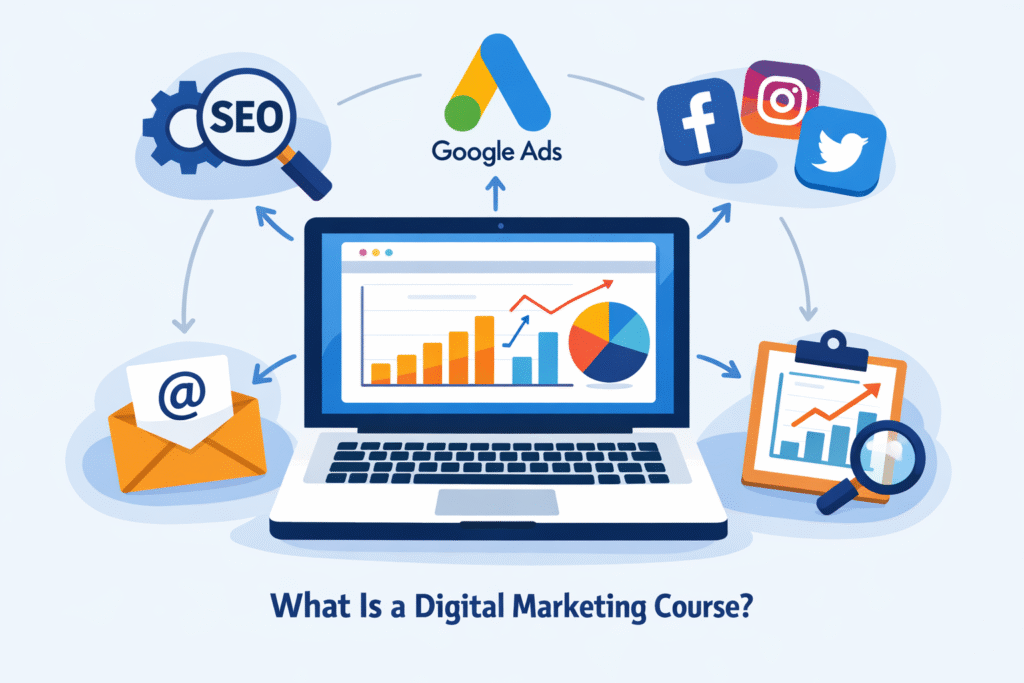
What Is a Digital Marketing Course?
A digital marketing course is a structured learning program designed to teach how businesses promote products, services, and brands using online channels. It’s built for people who want practical, job-ready skills—whether they’re absolute beginners, students, or professionals switching careers.
At its core, the course explains how digital platforms connect businesses with audiences in measurable, scalable ways.
Unlike random tutorials or isolated tips found online, a course brings everything together into a clear roadmap. This is also where many learners begin to understand the real benefits of digital marketing course programs—clarity, structure, and hands-on exposure instead of scattered information.
Definition of a Digital Marketing Course
A digital marketing course teaches the strategies, tools, and techniques used to attract, engage, and convert audiences online. It focuses on how traffic is generated, how users behave across platforms, and how results are tracked and optimized over time.
One important distinction beginners should understand is the difference between theory-based learning and practical training:
- Theory-based learning explains concepts such as customer journeys, funnels, branding, and marketing psychology. This helps you understand why certain strategies work.
- Practical training focuses on execution—setting up campaigns, using tools, analyzing data, and making real-time decisions based on performance.
Good courses balance both. They don’t just explain concepts; they show how those concepts are applied in real campaigns, helping learners build confidence and real-world competence.
Core Modules Typically Included
Most digital marketing courses follow a modular structure so beginners can learn step by step. While the depth may vary, these core areas are usually covered:
- SEO (Search Engine Optimization)
Learning how websites rank on search engines, how keywords and content work together, and how to optimize pages for long-term organic traffic. - Social Media Marketing
Understanding how platforms like Instagram, Facebook, LinkedIn, and others are used for brand building, audience engagement, and lead generation. - Google Ads & Paid Advertising
Training on paid campaigns, including search ads, display ads, and basic campaign optimization to drive immediate traffic and results. - Content Marketing
Creating and distributing valuable content that attracts the right audience and supports SEO, social media, and paid campaigns. - Email Marketing
Learning how to build email lists, design campaigns, and nurture leads through automated and personalized communication. - Analytics & Reporting
Using data to measure performance, understand user behavior, and improve marketing decisions over time.
Together, these modules give learners exposure to the main types of digital marketing while helping them develop practical online marketing skills that businesses actively look for. By the end, beginners gain a clear picture of how different channels work together—and where their own interests and strengths may fit within the digital marketing ecosystem.
Why Understanding the Benefits of Digital Marketing Course Matters Before Enrolling
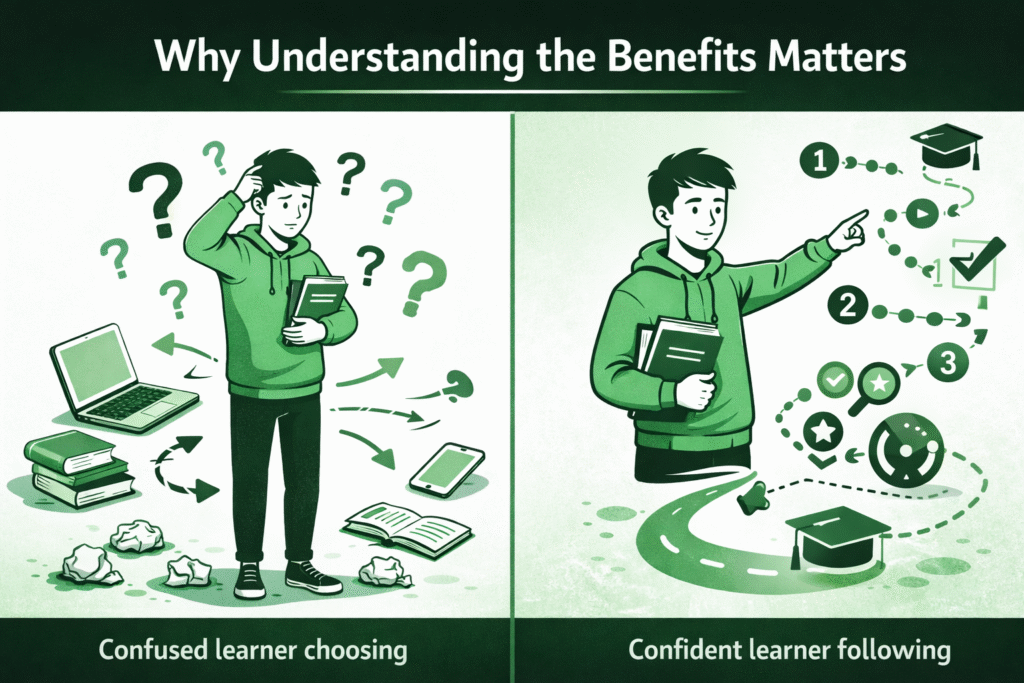
Before enrolling in any program, understanding why a digital marketing course is valuable is just as important as knowing what it teaches. Many learners jump in based on trends, ads, or peer suggestions—only to realize later that the course doesn’t match their expectations, skill level, or career goals. This is where clarity around the benefits of a digital marketing course becomes essential.
One of the biggest differences lies between random learning and structured learning. Random learning often means watching disconnected videos, reading scattered blogs, or experimenting without direction. While this can build awareness, it usually lacks depth, sequence, and accountability. A structured course, on the other hand, follows a logical progression—helping learners move from fundamentals to execution with clarity and confidence.
Knowing the benefits in advance also helps you evaluate course quality more effectively. Instead of being impressed by buzzwords or long module lists, you start asking smarter questions:
• Does the course offer hands-on practice?
• Does it teach strategy and execution?
• Does it cover current tools and platforms?
• Is there guidance on real-world application?
When you understand what a good course should deliver, it becomes easier to avoid outdated, overly theoretical, or purely promotional programs.
Most importantly, understanding the benefits helps you align learning with your career goals. A student aiming for an entry-level role, a working professional seeking a switch, a freelancer building services, or a business owner wanting growth all need different outcomes. Clear awareness ensures the course you choose supports your long-term direction instead of adding confusion or wasted effort.
If you’re serious about building skills that translate into real opportunities, this clarity becomes the foundation for deciding how to choose a digital marketing course and mapping out a realistic digital marketing career roadmap—before you invest your time, money, and energy.
Top Benefits of Digital Marketing Course for Students and Beginners
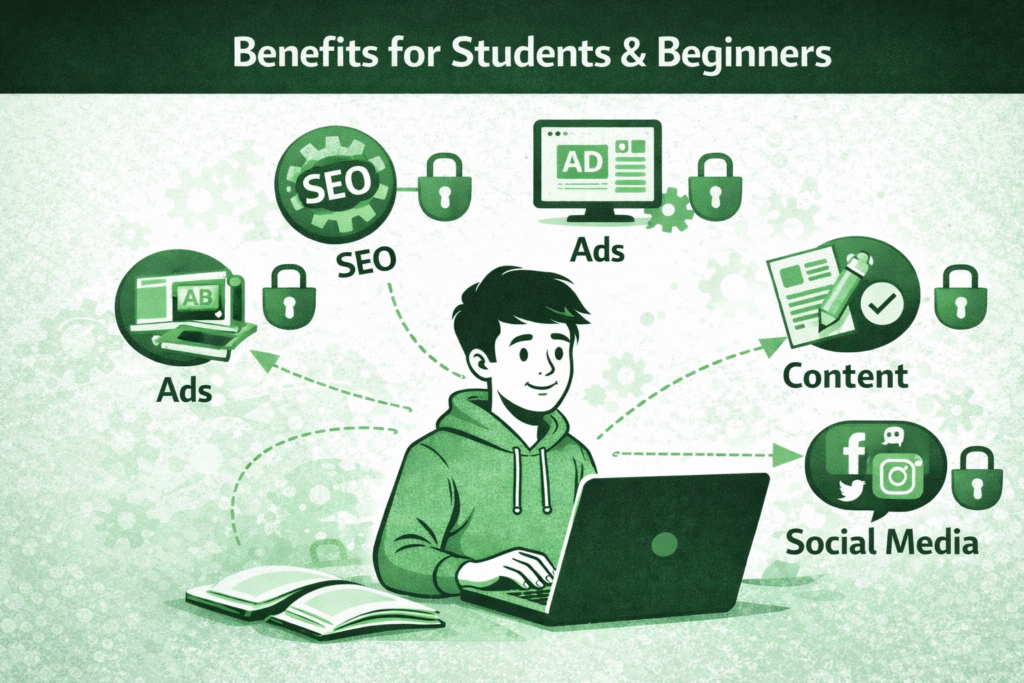
For students and freshers, digital marketing stands out as one of the few career paths where you don’t need years of prior experience to get started. A well-designed course helps beginners move from zero knowledge to practical capability in a structured, confidence-building way. This is why the benefits of digital marketing course programs are especially relevant for those at the beginning of their careers.
Builds Industry-Relevant Skills from Scratch
One of the biggest advantages for students is accessibility. You don’t need a technical background, coding knowledge, or prior marketing experience to begin. Courses are typically designed assuming the learner is starting from the basics.
Instead of overwhelming you with scattered concepts, a structured learning path introduces ideas step by step—starting with how digital platforms work, then gradually moving into execution and optimization. This approach helps beginners understand not just what to do, but why they are doing it, making learning far more effective and less intimidating.
Practical Exposure Through Live Projects and Tools
Textbooks and theory alone are not enough in digital marketing. What truly makes a difference is hands-on practice. Good courses emphasize real-world exposure by allowing learners to work on live projects, simulations, or practical assignments using industry tools.
This hands-on learning bridges the gap between knowledge and application. Instead of just reading about SEO, ads, or analytics, students actually perform tasks—setting up campaigns, analyzing data, and making decisions based on results. This practical experience builds confidence and prepares beginners for real workplace expectations.
Improves Employability Across Multiple Industries
Another key advantage is versatility. Digital marketing skills are not limited to one sector. Students trained in these skills can find opportunities across IT, eCommerce, education, healthcare, startups, and many other industries.
Because nearly every business today needs an online presence, beginners with the right skill set can explore a wide range of entry-level digital marketing jobs. Over time, these foundational capabilities also evolve into specialized roles, making digital marketing a flexible and future-ready career choice.
Overall, for students and freshers, the learning journey is not just about acquiring tools—it’s about building confidence, clarity, and practical digital marketing skills for beginners that translate directly into real opportunities.
Benefits of Digital Marketing Course for Career Switchers
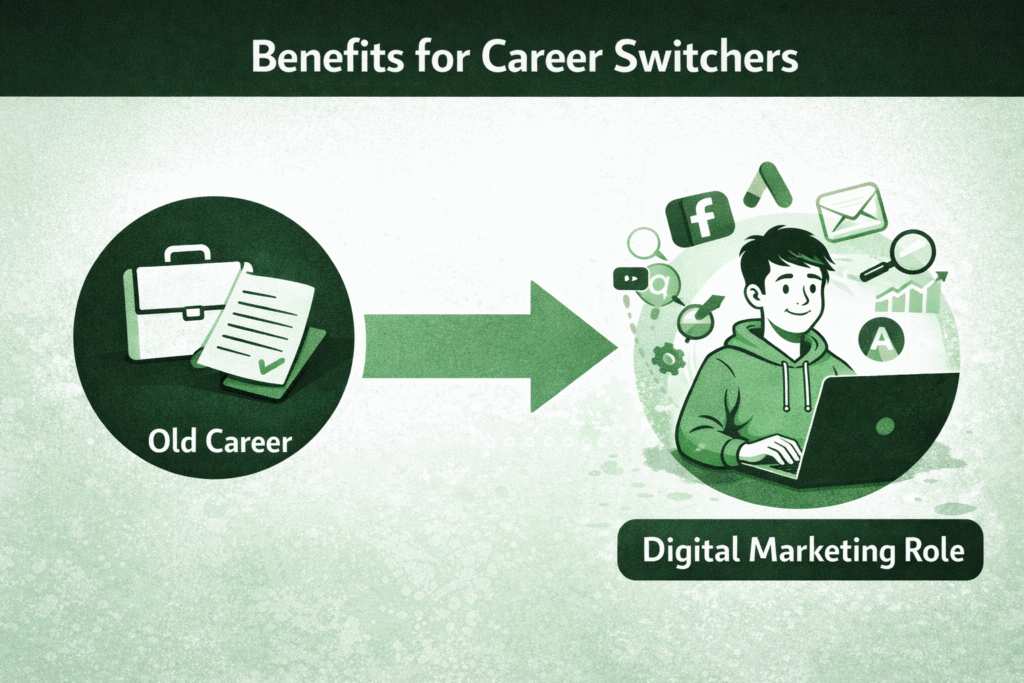
For professionals feeling stuck in their current roles or industries, digital marketing offers a realistic and accessible path to reinvention. Unlike many traditional career changes that demand years of education or starting from the bottom, digital marketing is skill-driven and results-focused. This makes the benefits of a digital marketing course especially appealing to career switchers who want faster, more practical outcomes.
Low Barrier to Entry Compared to Traditional Career Shifts
One of the biggest advantages is how low the entry barrier is. You don’t need to go back to college for a long degree or invest years in formal education. Most digital marketing courses are designed to be beginner-friendly, even for learners coming from completely unrelated fields like sales, finance, operations, teaching, or engineering.
The transition is skill-based rather than qualification-based. What matters is what you can do—how well you understand platforms, execute campaigns, analyze data, and optimize results. This makes digital marketing far more approachable than many traditional career switches.
Faster Career Transition with Measurable Skills
Digital marketing allows professionals to show proof of competence quickly. Instead of relying only on past job titles, learners can build portfolios, case studies, and campaign results during or after a course.
Hiring in this field is often portfolio-driven. Recruiters and clients look for evidence—campaign performance, traffic growth, lead generation, or conversion improvements. Certifications combined with real, measurable outcomes help career switchers demonstrate value, even without prior marketing experience.
This results-oriented nature significantly shortens the transition time compared to careers where progress depends on seniority alone.
Flexibility to Move into Multiple Roles
Another major advantage is role flexibility. Digital marketing is not a single job—it’s an ecosystem of specialized roles. Based on your interests and strengths, you can move into positions such as:
- SEO executive
- Performance marketer
- Content strategist
- Marketing analyst
This flexibility allows professionals to pivot within the field as they grow, without needing to restart their careers again. Over time, many career switchers also move into leadership, consulting, or freelance roles.
For anyone considering a career change to digital marketing, understanding this role diversity and skill overlap is crucial. It also helps clarify digital marketing roles and responsibilities, making the transition more strategic and less risky.
Benefits of Digital Marketing Course for Working Professionals
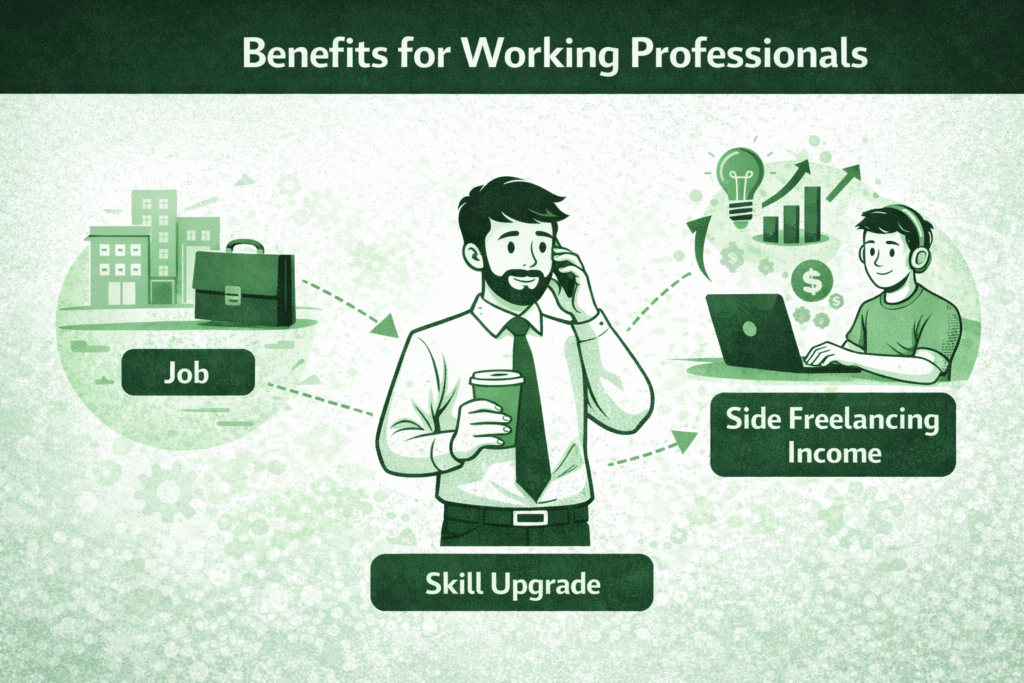
For working professionals, digital marketing is less about starting over and more about staying relevant, competitive, and future-ready. As industries evolve and roles become increasingly digital-first, the benefits of digital marketing course go beyond learning new tools—they directly impact career growth, income potential, and long-term stability.
Helps Professionals Stay Relevant in a Digital Economy
Today’s workplace is shaped by automation, AI-driven marketing platforms, and data-backed decision-making. Traditional marketing instincts alone are no longer enough. Professionals who understand how automation tools work, how AI optimizes ads and content, and how data influences strategy are far more valuable to modern organizations.
A digital marketing course helps bridge this gap. It equips professionals with the ability to interpret performance metrics, adapt to algorithm changes, and work confidently with modern marketing technology—ensuring their skills don’t become outdated as the digital economy continues to evolve.
Opens Doors to Promotions and Salary Growth
As companies shift toward digital-first business models, employees who bring digital expertise naturally stand out. Professionals with digital marketing skills are often considered for expanded responsibilities, cross-functional roles, and leadership positions.
Whether it’s managing campaigns, overseeing online growth strategies, or leading digital initiatives, these capabilities can directly contribute to promotions and salary increases. Employers value professionals who can connect strategy with measurable results—and digital marketing does exactly that.
Enables Side Income and Freelancing Opportunities
One of the most practical advantages for working professionals is flexibility. Digital marketing skills can be used beyond a full-time job—opening doors to consulting, freelance projects, and personal brand building.
Many professionals start by taking on small freelance assignments or consulting for local businesses, eventually creating steady side income streams. Over time, these opportunities can grow into independent careers or powerful personal brands. This makes digital marketing especially attractive for those looking to upskill with digital marketing while also exploring freelancing in digital marketing without leaving their current roles.
Overall, for working professionals, a digital marketing course is not just about learning—it’s about leverage: leveraging skills for relevance, growth, and financial flexibility in a rapidly changing job market.
Skill-Based Learning vs Traditional Degrees – A Practical Comparison
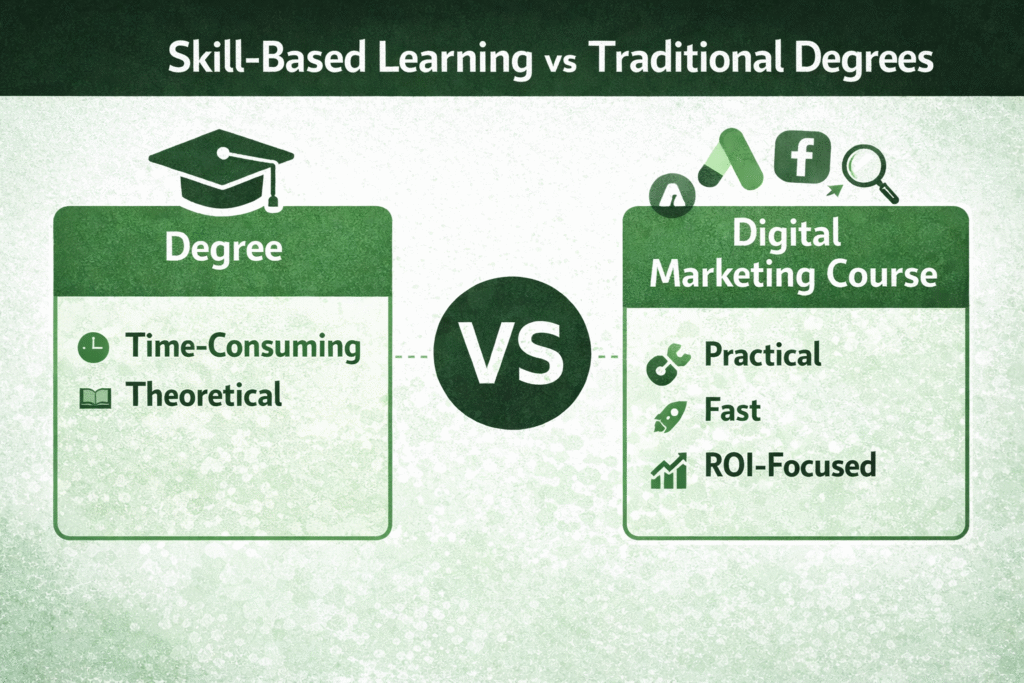
Choosing between a traditional degree and a skill-based digital marketing course often comes down to practicality—time, cost, and real-world outcomes. For learners focused on employability and faster returns, understanding this comparison helps set realistic expectations and avoid unnecessary detours.
Time Investment Comparison
Traditional degrees typically require three to four years of full-time commitment, with a large portion spent on theory, general education subjects, and exams. While this approach builds academic depth, it delays entry into the job market.
Skill-based digital marketing courses, on the other hand, are designed for speed and focus. Most programs run from a few weeks to several months, concentrating only on relevant, in-demand skills. Learners start practicing almost immediately, making this path far more time-efficient for those who want quicker career movement.
Cost vs ROI
Degree programs often involve high tuition fees, additional expenses, and long-term financial commitments. The return on investment (ROI) is uncertain and heavily dependent on market conditions, institution reputation, and post-graduation placement.
Digital marketing courses usually cost significantly less and are outcome-oriented. The ROI is easier to measure because learners acquire monetizable skills quickly—through jobs, freelance work, or business growth. When paired with rising demand (see digital marketing industry growth statistics), the cost-to-benefit ratio strongly favors skill-based learning for many professionals.
Job Readiness and Practical Output
A key difference lies in job readiness. Degree holders may graduate with theoretical knowledge but limited hands-on exposure. Employers often still need to provide extensive training before real responsibility is assigned.
Skill-based learning emphasizes execution. Learners finish with portfolios, campaign experience, certifications, and measurable results. This practical output aligns closely with hiring expectations and modern recruitment practices, especially as companies adapt to the future of digital marketing careers.
In practical terms, traditional degrees build foundations, but skill-based digital marketing courses accelerate action. For learners prioritizing speed, affordability, and real-world impact, this comparison often makes the decision clearer.
How a Digital Marketing Course Helps You Build a Real Career (Not Just Knowledge)
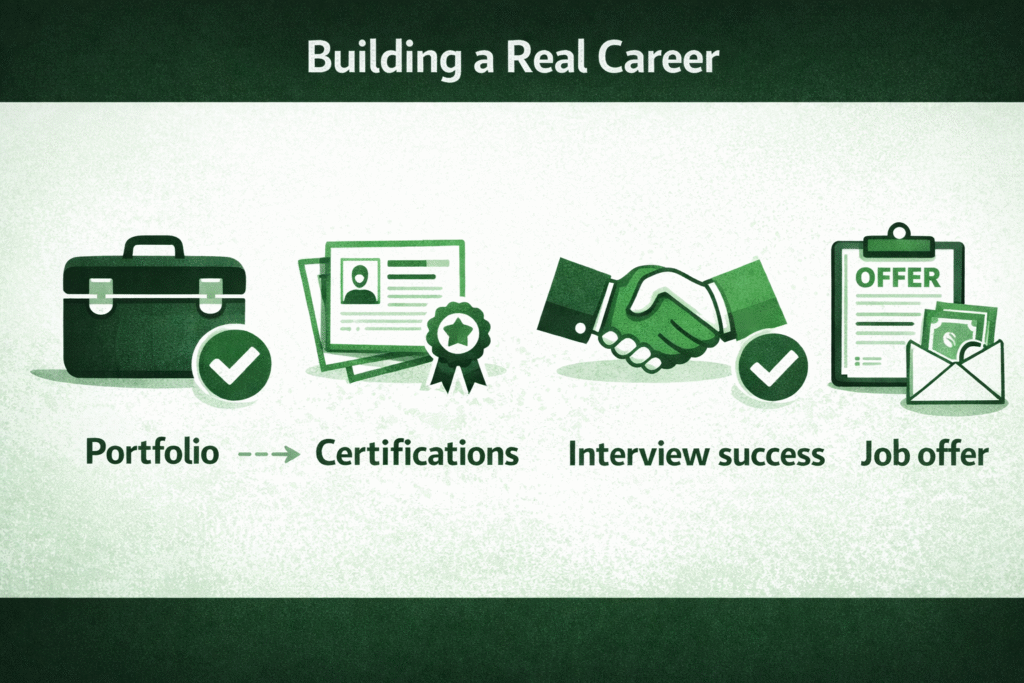
Many people hesitate to enroll in a digital marketing course because they fear it will add knowledge—but not real career value. In reality, a well-structured course is designed to go far beyond theory. Its true purpose is to prepare you for the job market with tangible outcomes that employers and clients actually care about.
Portfolio Creation and Real Campaign Experience
One of the strongest career advantages of a digital marketing course is portfolio development. Instead of only learning concepts, learners work on practical assignments, mock projects, or live campaigns that demonstrate real skills.
These portfolios may include SEO audits, ad campaign setups, content plans, analytics reports, or conversion improvements. When applying for jobs or freelance work, showing what you’ve done matters far more than explaining what you know. Reviewing digital marketing portfolio examples also helps learners understand industry expectations and benchmark their own work.
Certifications That Strengthen Your Resume
Certifications act as credibility signals—especially for beginners and career switchers. Many digital marketing courses prepare learners for recognized certifications or provide completion credentials that validate their skills.
While certificates alone don’t guarantee jobs, they strengthen resumes by showing structured learning, tool familiarity, and commitment to professional growth. Combined with practical experience, digital marketing certifications help candidates stand out in competitive hiring processes and pass initial screening stages.
Interview Readiness and Practical Confidence
Perhaps the most underrated benefit is confidence. Candidates who have worked on real tasks can speak clearly in interviews—explaining strategies, tools used, challenges faced, and results achieved.
This practical confidence transforms interviews from memorized answers into real conversations. Learners understand how decisions are made, how campaigns are optimized, and how performance is measured. As a result, they don’t just qualify on paper—they demonstrate readiness to perform from day one.
Ultimately, a digital marketing course helps bridge the gap between learning and earning. It builds a career foundation based on proof, practice, and performance—not just information.
Long-Term Career Benefits of Digital Marketing Course
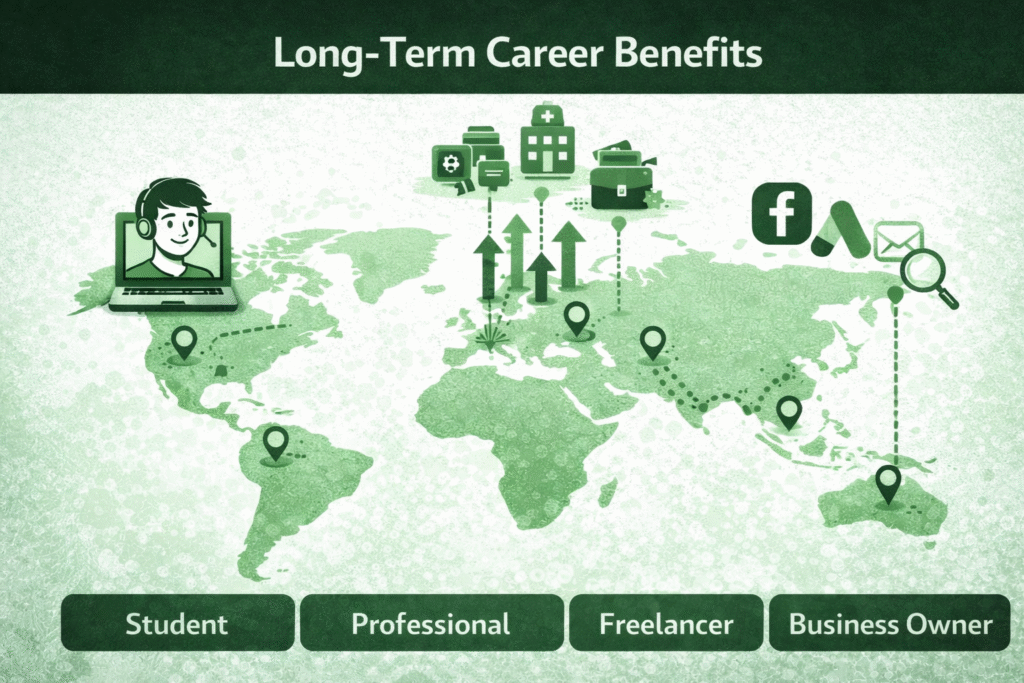
Choosing a career path isn’t just about immediate job placement—it’s about long-term stability, growth, and relevance. This is where the benefits of digital marketing course programs become especially clear. Digital marketing is not tied to a single industry, tool, or trend; it evolves continuously, creating sustained opportunities for those who keep learning.
High Demand Across Industries
Digital marketing skills are needed wherever businesses exist—which means almost everywhere. From IT companies and eCommerce brands to education, healthcare, finance, real estate, and startups, every industry relies on digital channels to reach customers.
As businesses compete online, demand for professionals who understand traffic, visibility, engagement, and conversions remains consistently high. This cross-industry relevance protects professionals from being locked into one narrow career track and supports long-term employability.
Global Career Opportunities and Remote Work
One of the most powerful long-term advantages is geography independence. Digital marketing skills are globally transferable—what works in one market often applies, with adaptation, to others.
This opens doors to international clients, global companies, and remote-first roles. Many professionals work with overseas teams, freelance for global brands, or hold fully remote positions. Exploring remote digital marketing jobs also allows professionals to balance lifestyle flexibility with career growth—something few traditional roles offer.
Continuous Growth with Evolving Platforms
Digital marketing never stands still. Search engines update algorithms, social platforms introduce new formats, and tools become more intelligent through AI and automation. While this may seem challenging, it’s actually a long-term advantage.
Professionals who enjoy learning and adapting continue to grow alongside the industry. Skills compound over time, making experienced digital marketers increasingly valuable. Understanding the future scope of digital marketing helps learners see this field not as a one-time skill set, but as a career that evolves—and rewards those who evolve with it.
In the long run, digital marketing offers something rare: relevance, resilience, and room to grow—no matter how the job market changes.
Common Myths About Digital Marketing Courses (And the Reality)
Digital marketing has grown rapidly, and with that growth comes misinformation. Many people hesitate to enroll in courses because of assumptions that sound logical on the surface—but don’t hold up in real-world practice. Addressing these misconceptions is essential for making an informed decision.
“Digital Marketing Is Easy”
Myth: Digital marketing is often portrayed as quick, effortless work with instant results.
Reality: While entry is accessible, mastery is not easy. Digital marketing involves strategy, analysis, creativity, and continuous optimization. Algorithms change, competition increases, and performance must be measured and improved constantly.
A course doesn’t make the field “easy”—it makes the learning process structured. It helps learners avoid trial-and-error chaos and builds skills methodically, which is very different from claiming the work requires little effort.
“Anyone Can Learn from YouTube”
Myth: Free videos are enough to become a digital marketer.
Reality: YouTube and blogs are great for exposure, but they are fragmented, outdated, and rarely follow a learning sequence. Beginners often don’t know what to learn first, what to ignore, or how concepts connect.
Structured courses provide a guided path, updated frameworks, practice environments, and feedback—something random tutorials can’t offer. This distinction becomes clearer when comparing self-learning vs structured courses, especially for beginners who need direction.
“Courses Don’t Guarantee Jobs”
Myth: If a course doesn’t promise a job, it has no value.
Reality: No ethical course can guarantee a job—because hiring depends on skills, effort, and execution. What a good course does guarantee is preparation: practical skills, portfolio work, interview readiness, and confidence.
Courses don’t replace effort; they amplify it. Understanding common digital marketing myths helps learners set realistic expectations and choose programs that focus on outcomes, not false promises.
When these myths are removed, digital marketing courses become easier to evaluate—not as shortcuts, but as structured pathways to real skills and real careers.
Who Should Enroll in a Digital Marketing Course?
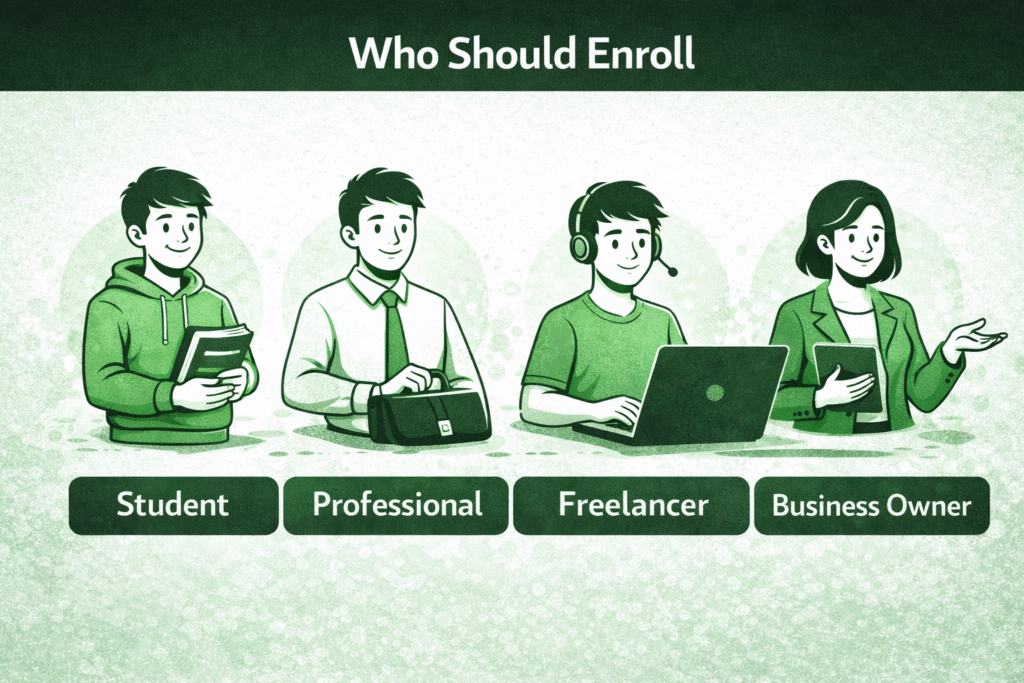
A digital marketing course is not designed for just one type of learner. Its flexibility and practicality make it suitable for people at very different stages of their careers. Understanding where you fit helps you decide whether this learning path aligns with your goals and expectations.
Students
Students who want job-ready skills alongside or after formal education benefit greatly from digital marketing courses. These programs help bridge the gap between academic learning and industry requirements by focusing on practical execution, tools, and real-world use cases.
For students, digital marketing offers early exposure to in-demand skills, internship opportunities, and entry-level roles—often without waiting years for traditional qualifications to translate into employment.
Career Switchers
Professionals looking to move out of stagnant or declining roles often find digital marketing to be a practical alternative. Since it’s skill-based and results-driven, career switchers can transition without starting from zero academically.
Courses provide structure, portfolios, and measurable skills—making it easier to explain the transition to recruiters and demonstrate value beyond past job titles.
Business Owners
For business owners, enrolling in a digital marketing course is less about getting a job and more about gaining control. Understanding how SEO, ads, content, and analytics work helps owners make better decisions, reduce dependency on agencies, and evaluate marketing performance effectively.
Even when marketing is outsourced, knowledge ensures smarter strategy, clearer communication, and better ROI.
Freelancers and Creators
Freelancers, creators, and solopreneurs use digital marketing to grow visibility, attract clients, and build personal brands. Courses help them package their skills, price services correctly, and deliver measurable results.
Whether the goal is client acquisition, audience growth, or monetization, digital marketing provides tools that scale individual effort into sustainable income opportunities.
By identifying your persona, you can approach a digital marketing course with clarity—not just about whether to enroll, but why it makes sense for you.
How to Choose the Right Digital Marketing Course to Maximize Benefits
With so many options available, choosing the right digital marketing course can feel overwhelming. Yet, this decision directly impacts how much value you actually gain from learning. A thoughtful evaluation helps ensure you don’t just enroll—but enroll right.
Curriculum Depth and Practical Coverage
The first thing to assess is what the course teaches and how deeply it goes. A strong curriculum should cover core areas like SEO, paid ads, social media, content, email, and analytics—while also showing how these pieces work together.
Look for practical coverage, not just topic names. Does the course include real tools, live projects, case studies, and performance analysis? A shallow curriculum may look impressive on paper but fail to build real skills. Comparing options carefully helps identify the best digital marketing course for long-term outcomes, not short-term excitement.
Trainer Experience and Industry Exposure
Who teaches the course matters as much as what is taught. Trainers with real industry experience bring context that textbooks and recorded videos cannot. They explain why certain strategies work, what mistakes to avoid, and how real campaigns behave under pressure.
Industry exposure also means up-to-date knowledge. Digital marketing changes fast, so instructors should actively work in or closely track the field—not rely on outdated examples or static slides.
Placement Support and Mentorship
While no course can ethically guarantee a job, strong placement support adds significant value. This may include resume guidance, interview preparation, portfolio reviews, mock interviews, or internship opportunities.
Equally important is mentorship. Access to feedback, doubt-clearing sessions, and strategic guidance helps learners stay aligned and confident. Using a structured digital marketing course checklist ensures you evaluate support systems—not just content—before making a final decision.
Ultimately, the right course is one that aligns with your goals, learning style, and career stage. When chosen carefully, it doesn’t just teach skills—it maximizes outcomes.
Final Thoughts – Are the Benefits of Digital Marketing Course Worth It?
When you step back and look at the full picture, the value of a digital marketing course becomes clear. It’s not just about learning tools or platforms—it’s about building skills that translate into real opportunities. From career flexibility and industry relevance to income potential and long-term growth, the advantages span professional, personal, and financial dimensions.
Throughout this guide, we’ve seen how structured learning helps learners avoid confusion, save time, and focus on what actually matters. Instead of piecing together random information, a well-designed course provides clarity, direction, and momentum. This structured approach accelerates progress, builds confidence, and prepares learners for real-world expectations much faster than trial-and-error learning.
Ultimately, the benefits of digital marketing course programs are most powerful when learners approach them with clear goals and informed intent. Whether you’re starting out, switching careers, upskilling, or growing a business, the right course can act as a catalyst—not a shortcut, but a smarter path forward.
The next step isn’t rushing into enrollment—it’s making a thoughtful decision. When learning is aligned with purpose, action becomes easier, outcomes become clearer, and growth becomes sustainable.
💡 Interested in learning more? Contact RKDMT – Raju Kumar Digital Marketer – Best Digital Marketing Training Institute
🔗 www.rajukumardigitalmarketer.com
📞 +91-7303933302, +91-9217057127
📧 rkdmt@rajukumardigitalmarketer.com
What is a digital marketing course?
A digital marketing course teaches how to promote products, services, or brands using online channels such as search engines, social media, paid ads, email, and analytics. It focuses on practical, job-oriented skills rather than only theory.
Do I need prior experience to enroll in a digital marketing course?
No. Most digital marketing courses are designed for beginners and start from the basics. No technical background, coding skills, or marketing experience is required.
How long does it take to complete a digital marketing course?
Course duration varies by institute and depth, but most programs range from a few weeks to several months. The focus is on learning skills efficiently rather than spending years in formal education.
Are digital marketing courses suitable for career switchers?
Yes. Digital marketing is skill-based, making it one of the most practical options for career switchers. Professionals from non-marketing backgrounds can transition by building portfolios and measurable results.
Will a digital marketing course guarantee a job?
No course can ethically guarantee a job. However, a good course prepares you with practical skills, portfolio work, certifications, and interview readiness, which significantly improves employability.
Can I learn digital marketing for free instead of taking a course?
Free resources can help you understand basics, but they are often scattered and outdated. A structured course provides a clear learning path, hands-on practice, mentorship, and faster skill development.
What job roles can I apply for after completing a digital marketing course?
Common entry and mid-level roles include SEO executive, social media marketer, performance marketer, content strategist, email marketer, and marketing analyst. Freelance and consulting opportunities are also common.
Is digital marketing a good long-term career option?
Yes. Digital marketing skills are in demand across industries and geographies. As platforms evolve, professionals who keep learning continue to grow, making it a sustainable long-term career.
Can working professionals do a digital marketing course alongside their job?
Yes. Many courses are designed with flexible schedules, allowing working professionals to upskill, prepare for promotions, or build side income without leaving their current job.
How do I choose the right digital marketing course?
Look for practical curriculum coverage, experienced trainers, hands-on projects, mentorship, and placement support. Avoid courses that focus only on theory or make unrealistic job promises.

Founder at Digital Marketing Marvel | Founder at RKDMT – Raju Kumar Digital Marketing Trainer | Best Digital Marketing Trainer in Delhi/NCR – Digiperform | Project Manager | 5+ years | Genius Study Abroad & Inlingua’s Digital Marketing Head | Learn Digital Marketing