


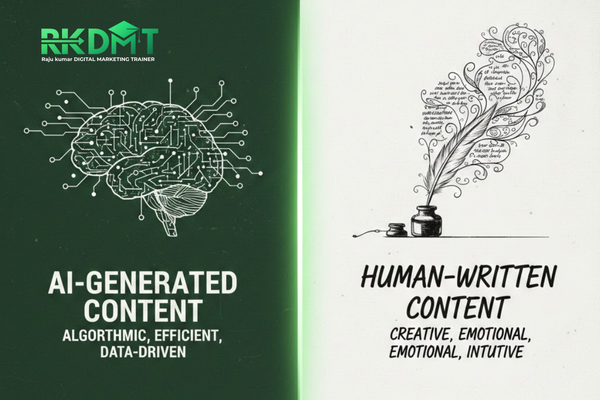
Comparison of AI-Generated vs. Human-Written Content
As a digital marketing trainer with 10+ years of hands-on experience, I’ve seen content creation evolve from simple blog writing to today’s AI-powered tools.
In the current AI era, content can be created in minutes using machines, while humans still bring experience, emotions, and real-world understanding to the table. This shift has changed how brands, students, and marketers approach content strategy.
The debate around AI-Generated vs. Human-Written Content has become a hot topic in digital marketing and SEO because Google now focuses more on content quality, usefulness, and user experience.
According to industry reports, over 65% of marketers already use AI tools for content ideas, but websites with expert-led, human-edited content still show 30–40% better engagement rates. This clearly shows that speed alone is not enough—value matters.
In this comparison of AI-Generated vs. Human-Written Content, you’ll learn the real differences, SEO impact, strengths, and limitations of both. I’ll also share practical examples to help you decide when to use AI, when to rely on human expertise, and how to combine both for better rankings and long-term growth.
What Is AI-Generated Content?
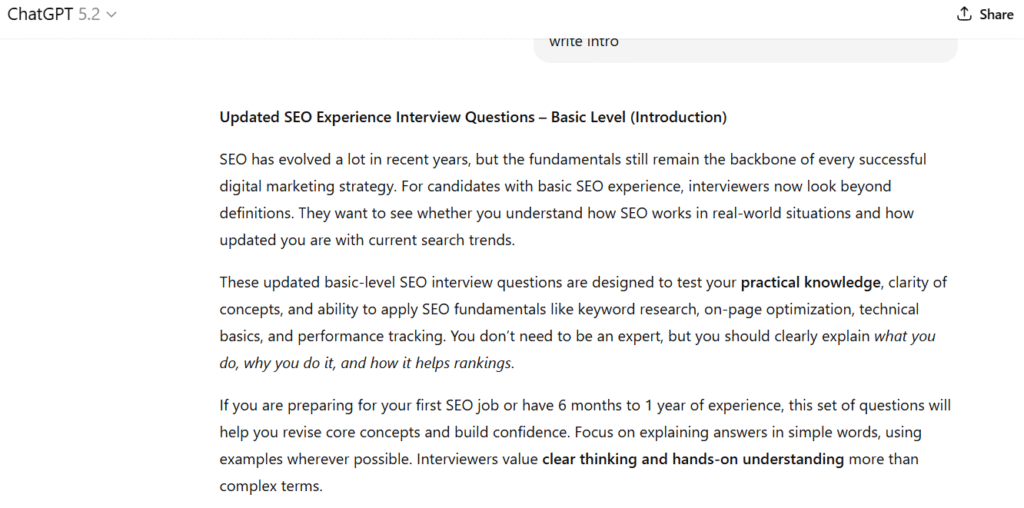
AI-generated content is any type of text, image, or media that is created using artificial intelligence instead of being written manually by a human.
These tools analyze large amounts of existing data from the internet and then predict and generate content based on patterns. Common examples include AI-written blog posts, product descriptions, social media captions, ad copies, and even email drafts.
Today, many marketers use popular AI content tools like ChatGPT, Jasper, Copy.ai, and Writesonic. According to a 2024 survey, nearly 70% of digital marketers use AI tools to speed up content creation, especially for first drafts and content ideas. For example, an AI tool can generate a 1,000-word blog in under a minute, which earlier used to take hours.
This is where AI-Generated vs. Human-Written Content becomes important to understand. AI works by using machine learning models trained on massive datasets. It does not think or feel like a human. Instead, it predicts the next word based on probability.
That’s why AI-generated content is fast and scalable, but it may lack originality, real experience, and emotional depth without human editing.
Also Read: How Does Social Media Algorithm Work in 2026?
What Is Human-Written Content?

Human-written content is content that is created by real people based on their knowledge, experience, and understanding of the audience. It is written with a clear purpose, natural flow, and personal touch.
Unlike automated tools, human writers think before they write, choose words carefully, and focus on solving real user problems with clarity and trust.
One of the biggest strengths of human-written content is creativity and emotion. Humans can share real experiences, opinions, case studies, and examples from daily work. For instance, when I explain a concept to my students, I use live examples from client projects—something AI cannot truly experience.
This emotional connection increases trust and engagement. In fact, studies show that content with personal experience and storytelling gets up to 2x higher time-on-page compared to generic content.
This is why the discussion around AI-Generated vs. Human-Written Content is so important. Human-written content still matters because Google’s E-E-A-T guidelines clearly value experience and expertise.
Websites that publish expert-led, original content are more likely to rank and retain users. AI can support the process, but human insight is what makes content meaningful, reliable, and long-lasting.
Also Read: What are Different Types of Facebook Ads Campaign Objectives
AI-Generated vs. Human-Written Content: Key Differences
| Factor | AI-Generated Content | Human-Written Content |
| Content Creator | Created by artificial intelligence tools | Created by real humans with experience |
| Speed | Very fast, content generated in seconds | Slower, needs research and writing time |
| Creativity | Limited, based on existing data patterns | High, includes original ideas and insights |
| Accuracy | May contain errors or outdated facts | More accurate with fact-checking |
| Emotional Connect | Low, sounds neutral or generic | Strong emotional and personal connection |
| Storytelling | Weak or basic | Strong with real-life examples |
| SEO Value | Good if reviewed and optimized | Strong for long-term SEO and trust |
| E-E-A-T | Cannot show real experience | Clearly shows experience and expertise |
| Cost | Lower cost for bulk content | Higher cost but better quality |
| Scalability | Easy to scale large volumes | Difficult to scale quickly |
| Risk | Risk of duplication or penalties if misused | Low risk when content is original |
| Best Use Case | Drafts, ideas, meta content, FAQs | Blogs, landing pages, case studies |
When we compare AI-Generated vs. Human-Written Content, the differences become very clear in real-world use. Both have strengths, but they work in very different ways.
Creativity & originality:
AI creates content by mixing existing data and patterns. It can sound good, but truly original ideas usually come from human thinking and experience. Human writers can share fresh opinions, unique examples, and personal insights, which AI cannot create on its own.
Accuracy & factual depth:
AI tools sometimes generate outdated or incorrect information if not reviewed. Humans can verify facts, add context, and explain topics in depth. This is important for SEO, where accuracy builds trust with users and search engines.
Emotional connection & storytelling:
Humans naturally connect with readers through emotions and stories. A personal example or real-life case study feels relatable and trustworthy. AI content often sounds neutral and lacks this emotional depth.
Speed & scalability:
AI wins in speed. It can generate content in seconds and handle bulk work easily. Human-written content takes more time but delivers higher quality and relevance.
Cost & efficiency:
AI is cost-effective for large volumes, while human-written content may cost more. However, human content usually performs better in engagement and conversions. That’s why a balanced approach works best when deciding between AI-Generated vs. Human-Written Content.
Also Read: What are Different Types of Google Ads Campaign Objectives
SEO Perspective: AI-Generated vs. Human-Written Content
From an SEO point of view, the debate around AI-Generated vs. Human-Written Content is not about who wrote the content, but how useful and reliable it is.
Google has clearly stated that AI-generated content is allowed as long as it is helpful, original, and created for users—not just for rankings. However, low-quality or mass-produced AI content can easily trigger ranking drops.
When we talk about E-E-A-T (Experience, Expertise, Authoritativeness, Trustworthiness), human-written content has a clear advantage. Humans can show real experience, industry knowledge, and credibility.
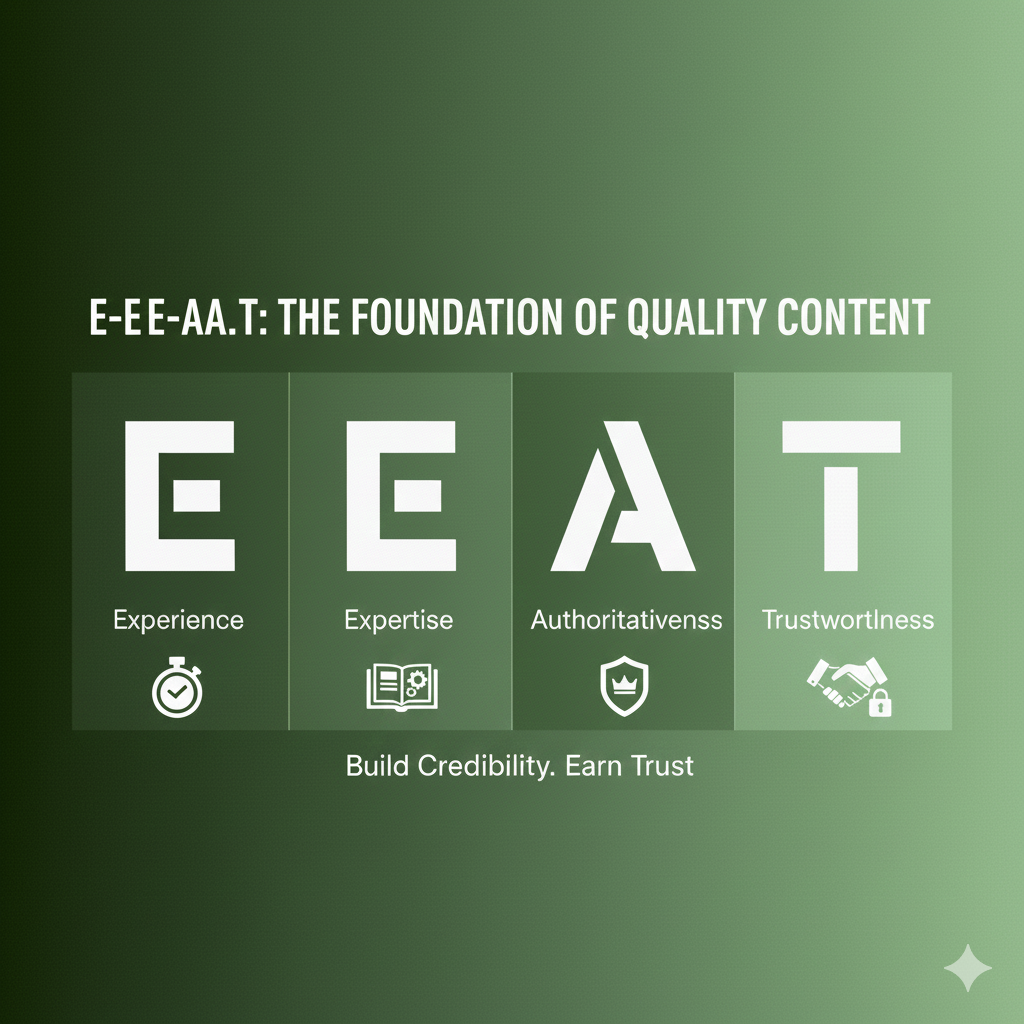
According to SEO studies, pages that demonstrate expertise and first-hand experience have 35–45% higher chances of ranking on page one compared to generic content. AI can assist, but it cannot replace real experience.
In terms of ranking potential and risks, AI content works well for support tasks like outlines, drafts, or FAQs. The risk comes when websites publish unedited AI content at scale. Many sites using automation without human review have seen traffic drops after Google core updates.
This proves that content quality always beats automation. To win in AI-Generated vs. Human-Written Content, the smart strategy is using AI as a tool and humans as decision-makers.
Pros and Cons of AI-Generated Content
AI-generated content has become popular because it helps marketers work faster, but it also comes with clear limitations. To understand AI-Generated vs. Human-Written Content better, it’s important to look at both sides.
Advantages of AI-generated content:
AI tools can create content very quickly. A task that takes hours for a human can be done in minutes. This helps in writing drafts, blog ideas, meta descriptions, and ad copies. AI is also cost-effective for bulk content and maintains consistency in tone.
Reports show that businesses using AI for content planning save up to 40% time in their content workflow.
Limitations of AI-generated content:
AI lacks real-life experience and emotions. It may generate content that sounds correct but feels generic or repetitive. There is also a risk of factual errors, outdated data, or over-optimization for keywords. Without human review, AI content can harm SEO and trust.
That’s why relying only on AI is risky, especially for ranking-focused content where quality and credibility matter most.
Pros and Cons of Human-Written Content
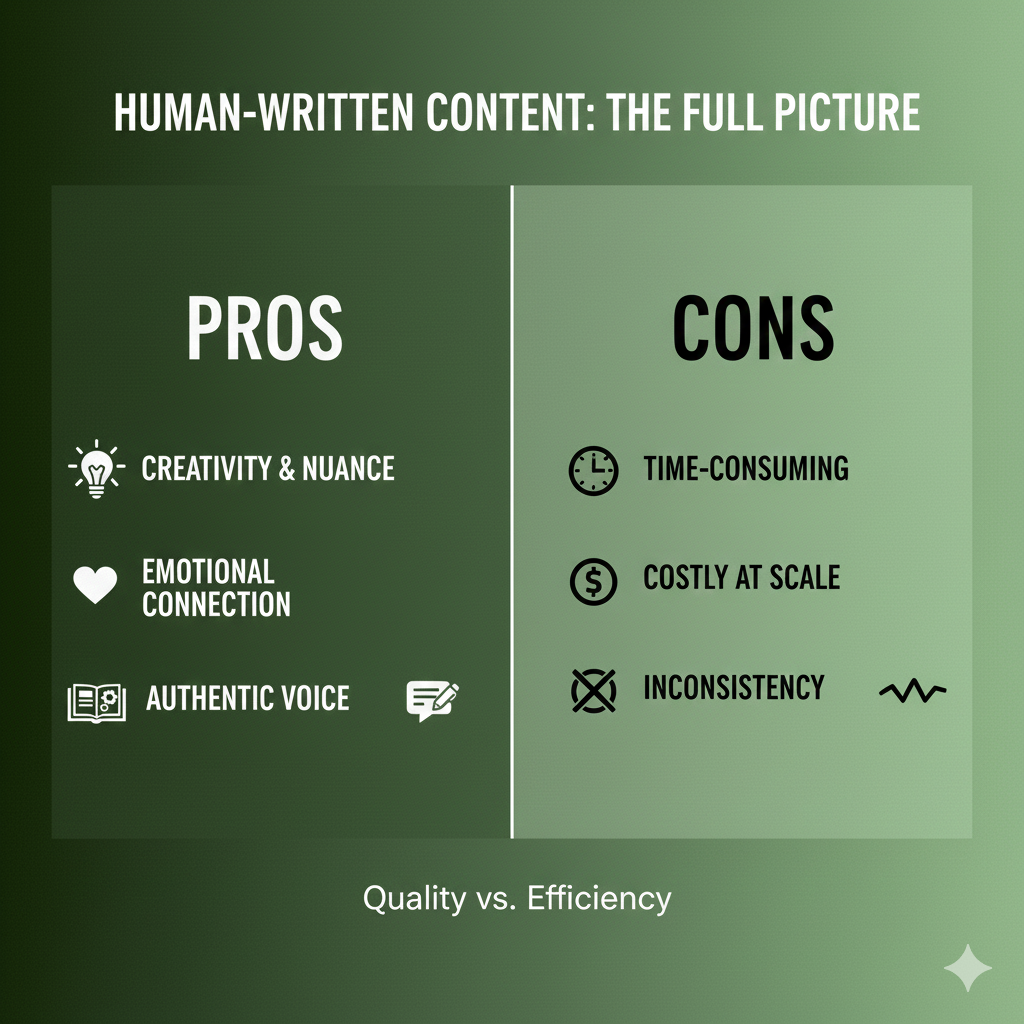
Human-written content has been the foundation of digital marketing and SEO for years. When comparing AI-Generated vs. Human-Written Content, human writing still plays a major role in building trust and long-term rankings.
Strengths of human-written content:
Human writers bring real experience, creativity, and clear understanding of user intent. They can explain complex topics in a simple way, share case studies, and add personal insights. Content written by experts usually gets better engagement.
In fact, studies show that human-led content can improve conversion rates by up to 30% because readers trust it more.
Challenges of human-written content:
The biggest challenge is time. Writing high-quality content takes research, planning, and editing. It can also be more expensive compared to AI tools, especially for large volumes.
However, these challenges are balanced by better quality, stronger SEO value, and long-term results. That’s why human-written content remains essential for serious brands and ranking-focused websites.
When to Use AI-Generated Content and When to Use Human-Written Content
To get the best results in today’s digital marketing landscape, it’s important to know when to use AI and when to rely on human expertise. This balance is the real solution in the discussion of AI-Generated vs. Human-Written Content.
Best use cases for AI-generated content:
AI works best for support tasks. You can use it for content ideas, outlines, first drafts, FAQs, meta titles, and social media captions. It is also useful when you need content quickly or in bulk. For example, many SEO teams use AI to generate draft descriptions for hundreds of pages and then refine them manually, saving a lot of time.
Best use cases for human-written content:
Humans should handle core content that affects trust and rankings. This includes blog posts, landing pages, case studies, thought leadership articles, and brand messaging. Content that needs real experience, emotional connection, and deep understanding of users should always be human-written.
Hybrid content strategy:
The smartest approach is combining both. Use AI for speed and structure, and humans for quality and accuracy. Data shows that websites using a hybrid strategy see up to 50% better content efficiency without losing SEO value. This balanced method helps you win in the long run while keeping content helpful and ranking-friendly.
Future of AI-Generated vs. Human-Written Content
The future of AI-Generated vs. Human-Written Content is not about replacement, but collaboration. AI tools are becoming smarter with better language models, improved accuracy, and faster content generation.
According to industry forecasts, the global AI content market is expected to grow by over 25% annually in the coming years, showing how deeply AI will be integrated into marketing workflows.
However, human involvement will remain critical. The strongest trend is Human + AI collaboration, where AI supports research, drafts, and optimization, while humans add experience, strategy, and quality control. Many top-ranking websites already follow this model—AI helps speed up work, but final content decisions are made by experts to ensure trust and originality.
For marketers, preparation is key. The focus should be on learning how to use AI tools smartly without depending on them blindly. Google will continue rewarding helpful, experience-driven content.
Those who understand when to automate and when to add human insight will stay ahead. In the long run, success will come to marketers who treat AI as a tool, not a shortcut.
Conclusion
When we look at the final comparison of AI-Generated vs. Human-Written Content, one thing is clear—both have value, but their roles are different. AI is fast, cost-effective, and helpful for support tasks, while human-written content brings trust, creativity, and real experience. Relying only on one can limit growth, especially when SEO and long-term rankings are the goal.
The key takeaway for businesses, students, and marketers is simple: quality always comes first. AI can help you work faster, but it cannot replace expertise, emotions, or user understanding. Students should focus on learning content fundamentals, not just tools.
Businesses should avoid publishing bulk, unedited AI content. Marketers should use AI to improve efficiency, not to shortcut effort.
My recommendation is a balanced content strategy. Use AI for ideas, structure, and speed, and use human expertise for accuracy, storytelling, and final delivery. This approach not only aligns with Google’s guidelines but also builds long-term trust, better engagement, and sustainable rankings in competitive search results.

Founder at Digital Marketing Marvel | Founder at RKDMT – Raju Kumar Digital Marketing Trainer | Best Digital Marketing Trainer in Delhi/NCR – Digiperform | Project Manager | 5+ years | Genius Study Abroad & Inlingua’s Digital Marketing Head | Learn Digital Marketing
Is Content Writer a Good Career in 2026? Pros, Cons & Career Scope
[…] Also Read : Comparison of AI-Generated vs. Human-Written Content […]